The cause of hair loss determines what can help. Small ingredient studies often test a particular lotion or multi-ingredient product. Their findings do not automatically apply to food, oils or supplements with a similar name.
Male-pattern androgenetic alopecia, autoimmune alopecia areata, deficiency-associated shedding and supplement-related harm are separate settings. These are educational references, not a ranked treatment list.
Decorative topic illustration.
Care basics come first
Have new or persistent hair loss assessed so pattern loss, patchy autoimmune loss, shedding, infection and inflammation are not confused.
Review recent illness, major weight change, medicines and dietary adequacy with a clinician.
Correct confirmed nutrient deficiencies; do not assume that extra hair vitamins improve well-nourished hair.
Discuss established diagnosis-specific treatments and ask a pharmacist to check any supplement or topical product.
Adequate calories and protein matter; no special powder or high-protein diet is established as treatment for hereditary hair loss.
How we chose these entries
Seventeen materials were selected for meaningful human research, nutritional context, common evidence errors or important safety findings. Safety and animal-study records are not treatment recommendations.
No ingredient here has established a general cure for hair loss. Evidence remains weak for many marketed botanicals, long-term effects and male-pattern outcomes. Protein adequacy stays in topic education; the women-only melatonin pilot is excluded. Combination trials were not split into extra single-ingredient claims.
No records match. Try another name or clear the filters.
Care and risk-reduction research
Read the outcome, preparation and limits. A studied benefit does not make every product effective.
Symptom support
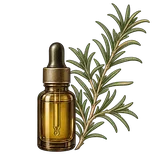
Rosemary essential oil
Ingredient reference illustration: Rosemary essential oil. Studied form: Standardized topical lotion containing at least 3.7 mg/mL 1,8-cineole; not a DIY essential-oil percentage. This does not verify the trial product or formulation, or show that it works. Decorative illustration; not an identification reference.
Salvia rosmarinus (syn. Rosmarinus officinalis) · Distilled aerial parts
Form
Standardized topical lotion containing at least 3.7 mg/mL 1,8-cineole; not a DIY essential-oil percentage
How it is used
topical
Evidence
Limited clinical evidence; one small active-comparator trial
Both groups’ hair counts increased from baseline at six months; neither improved significantly at three months. No between-group difference was detected. Without a placebo arm or a formal equivalence demonstration, this does not prove equivalence, and it does not compare rosemary with 5% minoxidil.
Condition and setting
androgenetic_alopecia
Cautions
Itching occurred in both groups. EMA describes contact dermatitis/hypersensitivity and advises against application to broken or irritated skin. No DIY formulation can be inferred.
Evidence, limits and sources for Rosemary essential oil
What was found
A lotion standardized to at least 3.7 mg of 1,8-cineole per mL, 1 mL twice daily for six months, compared with 2% minoxidil in a randomized single-blind study of 100 men. This is not a declared essential-oil percentage or 3.7 mg/mL of whole rosemary oil.
What this does not show
Single-blind, no placebo, 2% minoxidil comparator and no formal equivalence design; findings do not validate rosemary water, pure retail oil or a homemade dilution.
Exact ingredient
This is distilled rosemary oil in a specific studied lotion; rosemary leaf preparations are different.
Why we included it
A widely repeated claim needs exact-formulation and comparator correction.
Related material only
These are different ingredients or forms. Do not assume the same findings apply to them.
Symptom research preparation reference. The specific research preparation or product is not pictured. This symbol marks an evidence or safety record, not a recommended remedy.
Cucurbita pepo plus other ingredients · Pumpkin seed preparation in a proprietary multi-ingredient capsule
Form
Octa Sabal Plus, described in the paper as supplying pumpkin seed oil; full trial-batch co-ingredient composition incompletely documented
How it is used
oral
Evidence
Limited clinical evidence; small formulation-specific trial
Mean target-area hair count rose approximately 40% versus 10% with placebo; hair-thickness change did not differ. This was a small, supplier-funded trial, not evidence for a 40% restoration of whole-scalp coverage.
Condition and setting
androgenetic_alopecia
Cautions
Itching and mild abdominal discomfort were reported; long-term safety and generalizability remain uncertain.
Why no exact ingredient link?
No single-material ingredient entry represents this exact research preparation. The proprietary combination is different from culinary pumpkin seed oil or whole seeds. A current manufacturer listing does not certify the trial batch.
Evidence, limits and sources for Pumpkin-containing oral combination (Octa Sabal Plus)
What was found
The paper describes 400 mg/day pumpkin seed oil supplied as Octa Sabal Plus capsules for 24 weeks; 76 men with mild-to-moderate AGA were randomized to product or placebo.
What this does not show
A small supplier-funded trial of a branded combination does not isolate pure pumpkin oil. The manufacturer listing is not a trial-batch certificate, and target-area counts are not whole-scalp coverage.
Exact ingredient
The proprietary combination is different from culinary pumpkin seed oil or whole seeds. A current manufacturer listing does not certify the trial batch.
Why we included it
Preserves the real trial while preventing pure-oil attribution.
Related material only
These are different ingredients or forms. Do not assume the same findings apply to them.
Ingredient reference illustration: Saw palmetto fruit extract. Studied form: Oral extract; the trial abstract does not fully characterize extraction or standardization. This does not verify the trial product or formulation, or show that it works. Decorative illustration; not an identification reference.
Serenoa repens · Fruit (berries)
Form
Oral extract; the trial abstract does not fully characterize extraction or standardization
How it is used
oral
Evidence
Very limited evidence; NCCIH finds it insufficient for conclusions
Photographic improvement was reported in 38% with saw palmetto versus 68% with finasteride. NCCIH concludes that the small oral/topical hair-loss studies are too limited for a conclusion.
Condition and setting
androgenetic_alopecia
Cautions
Digestive symptoms, dizziness, and headache can occur. Discuss use with a clinician when taking medicines; pregnancy/breastfeeding use may be unsafe. Do not describe it as a proven substitute for finasteride.
Evidence, limits and sources for Saw palmetto fruit extract
What was found
Oral Serenoa repens 320 mg/day versus finasteride 1 mg/day for 24 months in an open-label study of 100 men with mild-to-moderate AGA. The abstract does not sufficiently characterize the extract to equate all retail products.
What this does not show
Open-label comparison and incompletely described extract. Neither whole berries nor topical preparations inherit the result; saw palmetto plus beta-sitosterol trials cannot isolate either ingredient.
Exact ingredient
This refers to a single-herb oral fruit extract, not whole berries or a topical product.
Why we included it
Common marketing claim has sparse and weaker-than-finasteride evidence.
Symptom research preparation reference. The specific research preparation or product is not pictured. This symbol marks an evidence or safety record, not a recommended remedy.
Isolated apple-derived procyanidin B2
Form
1% procyanidin B2 topical tonic
How it is used
topical
Evidence
Limited clinical evidence; small pilot
Target-area total hair count and certain hair-diameter measures improved relative to placebo. This small pilot does not validate eating apples, apple juice, apple-cider vinegar, or arbitrary oral apple extracts for regrowth.
Condition and setting
androgenetic_alopecia
Cautions
No adverse effects were observed in this small study; that does not establish uncommon-event or long-term safety. The authors’ optimistic “cure” language should not be repeated.
Why no exact ingredient link?
No single-material ingredient entry represents this exact research preparation. The isolated compound in a scalp preparation is different from eating apples.
Evidence, limits and sources for Apple-derived procyanidin B2
What was found
A 1% procyanidin B2 tonic for four months; double-blind study of 29 men, 19 active and 10 placebo.
What this does not show
Small pilot of a topical isolated compound; do not transfer the findings to apple food, vinegar or oral extracts.
Exact ingredient
The isolated compound in a scalp preparation is different from eating apples.
Why we included it
A small human trial of a distinct compound is separable from apple food.
Related material only
These are different ingredients or forms. Do not assume the same findings apply to them.
Symptom research preparation reference. The specific research preparation or product is not pictured. This symbol marks an evidence or safety record, not a recommended remedy.
Caffeine incorporated into a manufactured topical product
Form
0.2% caffeine-based Alpecin leave-on liquid, not shampoo or coffee
The trial met its chosen noninferiority criterion for change in anagen-hair proportion, a hair-cycle endpoint. It did not establish equivalent visible regrowth, hair density, or effectiveness of caffeine shampoo or coffee drinking.
Condition and setting
androgenetic_alopecia
Cautions
Open-label design, product-specific formulation, industry involvement, and endpoint selection limit interpretation. The tested topical product should not be replaced with homemade coffee/caffeine preparations.
Why no exact ingredient link?
No single-material ingredient entry represents this exact research preparation. The studied scalp liquid is different from coffee, beverages or oral caffeine.
Evidence, limits and sources for Caffeine-based scalp liquid
What was found
0.2% caffeine-based Alpecin Liquid, 2 mL twice daily, versus 5% minoxidil solution, 1 mL twice daily, for six months; 210 men randomized in an open-label, manufacturer-funded noninferiority trial.
What this does not show
Open-label, product-specific and industry-funded. The anagen-ratio endpoint does not establish equivalent visible regrowth, density or shampoo efficacy.
Exact ingredient
The studied scalp liquid is different from coffee, beverages or oral caffeine.
Why we included it
Distinguishes a leave-on clinical formulation from shampoos and coffee.
Related material only
These are different ingredients or forms. Do not assume the same findings apply to them.
Symptom research preparation reference. The specific research preparation or product is not pictured. This symbol marks an evidence or safety record, not a recommended remedy.
Mixed tocotrienols plus alpha-tocopherol
Form
Oral softgel combination, not alpha-tocopherol alone
How it is used
oral
Evidence
Limited clinical evidence; small trial with incompletely classified alopecia
Target-area hair number increased by 34.5% versus essentially no change with placebo; hair-clipping weight did not significantly improve. The result cannot establish pure tocotrienol efficacy or justify extrapolation to any vitamin E supplement.
Condition and setting
incompletely_classified_hair_loss
Cautions
Small trial and mixed preparation; limited long-term safety evidence. NIH warns that high-dose supplemental vitamin E, particularly alpha-tocopherol, can increase bleeding risk and interact with anticoagulants/antiplatelets; do not transfer that risk estimate to every tocotrienol dose as though proven identical.
Why no exact ingredient link?
No single-material ingredient entry represents this exact research preparation. The study tested a specific mixture containing tocotrienols and alpha-tocopherol, not every vitamin E supplement.
Evidence, limits and sources for Mixed tocotrienols with alpha-tocopherol
What was found
Oral capsules each containing 50 mg mixed tocotrienols plus 23 IU alpha-tocopherol, twice daily for eight months. Thirty-eight adults entered, 35 completed; 36 were men. Hair-loss diagnoses were not rigorously stratified.
What this does not show
Small combination trial with insufficient diagnostic stratification. Tocotrienols cannot be isolated from the co-administered tocopherol; no generic vitamin E regrowth claim. The overall treatment main effect was nonsignificant; authors reported a positive month-eight between-group pairwise comparison.
Exact ingredient
The study tested a specific mixture containing tocotrienols and alpha-tocopherol, not every vitamin E supplement.
Why we included it
Makes a positive pilot interpretable without merging vitamin E forms.
Related material only
These are different ingredients or forms. Do not assume the same findings apply to them.
Symptom research preparation reference. The specific research preparation or product is not pictured. This symbol marks an evidence or safety record, not a recommended remedy.
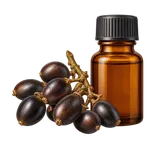
Thymus vulgaris; Rosmarinus officinalis; Lavandula angustifolia; Cedrus atlantica · Four essential oils in jojoba and grapeseed carrier oils
Form
Studied thyme, rosemary, lavender and cedarwood blend; not individual oils or culinary herbs
How it is used
topical
Evidence
Limited clinical evidence; older small combination trial
Photographic improvement occurred in 19/43 active versus 6/41 control patients. Evidence belongs to the blend and AA population, not any individual oil or AGA. The report does not establish modern comparative effectiveness.
Condition and setting
alopecia_areata
Cautions
Essential-oil sensitivity/irritation is possible; no home-mixing recipe is justified. Jojoba and grapeseed were carriers, including in the control group, not independently proven regrowth ingredients.
Why no exact ingredient link?
No single-material ingredient entry represents this exact research preparation. The combined essential oils and carriers were studied together. Whole thyme herb and the individual oils are not equivalent to that blend.
Evidence, limits and sources for Four-essential-oil scalp blend
What was found
The four essential oils in jojoba/grapeseed carrier oils, used topically with daily massage, versus carrier oils with massage; 86 AA patients randomized for seven months.
What this does not show
Evidence belongs to the blend and AA, not single oils, carriers or male-pattern AGA. Do not convert the historical formulation into a home recipe.
Exact ingredient
The combined essential oils and carriers were studied together. Whole thyme herb and the individual oils are not equivalent to that blend.
Why we included it
Prevents combination and AA results being assigned to individual oils or AGA.
Related material only
These are different ingredients or forms. Do not assume the same findings apply to them.
Symptom research preparation reference. The specific research preparation or product is not pictured. This symbol marks an evidence or safety record, not a recommended remedy.
Allium cepa · Crude juice from the bulb
Form
Historical topical crude-juice study; no standardized retail product or home recipe validated
How it is used
topical
Evidence
Very limited clinical evidence; small study with weak design reporting
The small study reported regrowth in 20/23 active participants at six weeks and 2/15 controls at eight weeks. These differently timed figures must not be presented as a same-time response comparison. The abstract does not establish robust randomization or credible blinding.
Condition and setting
alopecia_areata
Cautions
No established preparation standard, poor generalizability, and irritation concerns. Do not provide raw-onion scalp instructions, claim benefit for AGA, or infer pediatric recommendation from enrollment of children.
Why no exact ingredient link?
No single-material ingredient entry represents this exact research preparation. Topical onion juice is a different preparation and route from eating onions.
Evidence, limits and sources for Onion juice: topical research reference
What was found
Crude onion juice applied topically twice daily for two months versus tap water; 38 AA patients, including children, with 23 active and 15 control.
What this does not show
Small study; robust randomization and blinding are not established by the abstract. Active/control response figures are reported at different times. No AGA or pediatric-use inference.
Exact ingredient
Topical onion juice is a different preparation and route from eating onions.
Why we included it
Corrects a common online DIY claim using the actual small study.
Related material only
These are different ingredients or forms. Do not assume the same findings apply to them.
Symptom research preparation reference. The specific research preparation or product is not pictured. This symbol marks an evidence or safety record, not a recommended remedy.
Allium sativum · Garlic preparation incorporated into a formulated gel
Form
Manufactured 5% garlic gel added to 0.1% betamethasone treatment
How it is used
topical
Evidence
Limited adjunctive evidence; small trial
Hair-count/clinical-response measures favored the adjunctive garlic-gel group. The trial did not test garlic alone, raw garlic, oral garlic, or AGA.
Condition and setting
alopecia_areata
Cautions
NCCIH warns that fresh raw garlic on skin can cause severe irritation and chemical burns. No recipe or occlusive application instructions should be supplied, even though the historical trial used a supervised protocol.
Why no exact ingredient link?
No single-material ingredient entry represents this exact research preparation. The trial gel was used alongside a corticosteroid. Culinary garlic and garlic oil are different preparations.
Evidence, limits and sources for Garlic gel: adjunctive research reference
What was found
A manufactured 5% garlic gel added to 0.1% betamethasone treatment, compared with placebo gel plus the same corticosteroid, for three months; 40 AA patients in a double-blind randomized study.
What this does not show
Both groups received a corticosteroid. This is not evidence for garlic alone, raw garlic, oral garlic or AGA.
Exact ingredient
The trial gel was used alongside a corticosteroid. Culinary garlic and garlic oil are different preparations.
Why we included it
Preserves adjunctive evidence and gives a prominent raw-garlic burn warning.
Related material only
These are different ingredients or forms. Do not assume the same findings apply to them.
Ingredient reference illustration: Biotin Vitamin B7. Studied form: Dietary biotin or oral deficiency replacement; not a general regrowth dose. This does not verify the trial product or formulation, or show that it works. Decorative illustration; not an identification reference.
Essential vitamin; not a plant part
Form
Dietary biotin or oral deficiency replacement; not a general regrowth dose
How it is used
oral
Evidence
Deficiency context; inadequate evidence for routine regrowth supplements
Deficiency can cause thinning/body-hair loss, but is rare. NIH finds little support for the broad hair/skin/nail claims made for supplements.
Condition and setting
documented_biotin_deficiency
Cautions
Extra biotin can produce falsely high or low laboratory results, including hormone tests. Users should disclose it before testing and follow the clinician/laboratory’s instructions, rather than a universal washout interval.
Ingredient reference illustration: Iron: deficiency replacement. Studied form: Clinician-selected oral iron replacement after documented deficiency; salts differ in elemental content. This does not verify the trial product or formulation, or show that it works. Decorative illustration; not an identification reference.
Elemental nutrient supplied by food or a labeled iron compound
Form
Clinician-selected oral iron replacement after documented deficiency; salts differ in elemental content
How it is used
oral
Evidence
Deficiency context; not evidence for treating hereditary alopecia
Iron inadequacy can contribute to hair loss; treating a confirmed deficiency addresses a potential cause, without guaranteeing regrowth or treating hereditary loss.
Condition and setting
documented_iron_deficiency
Cautions
Excess supplementation can cause gastrointestinal effects and poisoning; iron overload disorders require particular caution. Iron deficiency also warrants evaluation of its cause rather than indefinite self-treatment.
Evidence, limits and sources for Iron: deficiency replacement reference
What was found
Oral iron replacement is clinician-selected when testing shows deficiency; ferrous/ferric salts differ in elemental iron content. There is no universal hair-regrowth dose or ferritin target here.
What this does not show
No general hair-regrowth dose or universal ferritin target is established; address the reason for iron deficiency.
Exact ingredient
This refers to targeted iron replacement after assessment. Iron-containing foods and concentrated supplements have different roles.
Why we included it
Identifies a remediable deficiency without promoting unsupervised iron.
Ingredient reference illustration: Zinc. Studied form: Food intake or clinician-directed oral zinc replacement. This does not verify the trial product or formulation, or show that it works. Decorative illustration; not an identification reference.
Essential mineral; not a plant part
Form
Food intake or clinician-directed oral zinc replacement
How it is used
oral
Evidence
Deficiency context; no general growth-boosting claim
NIH states that zinc deficiency can cause hair loss and correction may help; extra zinc does not thereby make hair longer or thicker in zinc-replete people.
Condition and setting
documented_zinc_deficiency
Cautions
High intakes can cause nausea and other gastrointestinal symptoms; 50 mg/day or more for weeks can impair copper absorption. The US adult upper limit is 40 mg/day from all sources outside medically supervised treatment. Zinc can interact with some antibiotics and penicillamine.
These historical reports or laboratory findings do not establish a clinical benefit.
Early lab research
Peppermint essential oil
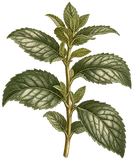
Ingredient reference illustration: Peppermint essential oil. Studied form: Topical essential-oil preparation in a mouse study; not a validated human formulation. This does not verify the trial product or formulation, or show that it works. Decorative illustration; not an identification reference.
Mentha × piperita · Distilled flowering aerial parts including leaves
Form
Topical essential-oil preparation in a mouse study; not a validated human formulation
How it is used
topical
Evidence
Preclinical animal evidence only for the cited hair experiment
Hair-growth and follicular changes in mice are a research signal, not demonstrated human AGA treatment or proof of superiority to minoxidil in people. Do not convert the animal concentration into a human scalp recipe.
Condition and setting
animal_model_not_human_alopecia
Cautions
NCCIH reports skin rash/irritation with topical peppermint oil. The phrase “without toxic signs” in the animal paper’s title does not establish human safety.
These records explain what to avoid or why a proposed benefit is not established.
Safety reference
Selenium: excess-intake safety
Ingredient reference illustration: Selenium. Studied form: Dietary/supplemental selenium; not selenium-sulfide shampoo. This does not verify the trial product or formulation, or show that it works. Decorative illustration; not an identification reference.
Essential trace mineral
Form
Dietary/supplemental selenium; not selenium-sulfide shampoo
How it is used
oral
Evidence
Established excess-intake safety concern
Chronic excess selenium can itself cause hair loss and brittle/lost nails. A selenium-containing “hair vitamin” is not automatically beneficial.
Condition and setting
supplement_excess_associated_hair_loss
Cautions
Supplement stacking and regularly large Brazil-nut intakes can produce excess. US and European upper limits differ, so do not present either as a target dose. No blanket avoidance of ordinary selenium-containing foods is implied.
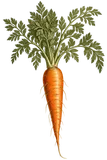
Ingredient reference illustration: Vitamin A. Studied form: Oral preformed-vitamin-A excess; distinguish food carotenoids. This does not verify the trial product or formulation, or show that it works. Decorative illustration; not an identification reference.
AAD links excessive vitamin A intake with worsening hair loss. This is a reason to review supplement labels, not evidence that eliminating vitamin-A foods treats alopecia.
Condition and setting
supplement_excess_associated_hair_loss
Cautions
High preformed vitamin A can cause systemic toxicity and birth defects. High-dose beta-carotene supplements carry separate risks for smokers/former smokers; food carotenoids and retinol supplements are not interchangeable.
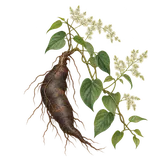
Ingredient reference illustration: Fo-ti / He Shou Wu: safety. Studied form: Oral root preparations, extracts and teas; products and processing differ. This does not verify the trial product or formulation, or show that it works. Decorative illustration; not an identification reference.
Oral root preparations, extracts and teas; products and processing differ
How it is used
oral
Evidence
Traditional hair claims; clinically documented liver-injury risk
NIH LiverTox describes traditional use and unproven controlled-trial efficacy, alongside numerous reports of clinically apparent liver injury, occasionally severe or fatal.
Condition and setting
traditional_hair_claims_with_liver_injury_risk
Cautions
Do not present “processed,” “natural,” or “traditional” as assurance against liver injury. A liver-injury warning must remain prominent; do not supply a preparation recipe or position this as a safe alternative to standard care.
Evidence, limits and sources for Fo-ti / He Shou Wu: safety reference
What was found
Root extracts in oral products/teas have traditional hair-graying uses; commercial hair products vary. No established effective hair-loss preparation or dose can be supplied.
What this does not show
Traditional use is not evidence of effective hair-loss treatment; processing or a natural label does not establish liver safety.
Exact ingredient
This refers to Fo-ti root preparations and their liver-safety concerns. Other roots are not equivalent.
Why we included it
Traditional hair marketing requires a prominent serious liver-injury warning.
Ingredient reference illustration: Creatine monohydrate. Studied form: Oral creatine monohydrate; the hair study used 5 g/day for 12 weeks. This does not verify the trial product or formulation, or show that it works. Decorative illustration; not an identification reference.
Manufactured creatine monohydrate; not a plant part
Form
Oral creatine monohydrate; the hair study used 5 g/day for 12 weeks
How it is used
oral
Evidence
Limited short-term randomized safety evidence
A small 12-week trial found no creatine-related difference in measured hair outcomes or DHT compared with placebo.
Evidence, limits and sources for Creatine monohydrate: hair-loss concern
What was found
The study recruited 45 resistance-trained men aged 18–40; participants received creatine monohydrate or maltodextrin. Thirty-eight completed; 37 had hair assessments. No significant group-by-time differences appeared in hair metrics or androgen outcomes.
What this does not show
Short follow-up, small sample and one dose; family history of hair loss was not determined. This neither establishes hair regrowth nor excludes every long-term or individual risk.
Exact ingredient
The trial used oral creatine monohydrate, the same specific form described in the muscle-nutrition reference.
Why we included it
Answers a common concern spanning the muscle-mass and hair-loss topics without turning a short study into a universal safety promise.