


Key cautions
- Excess preformed vitamin A can injure the liver and harm fetal development. Check retinol, liver and fish-liver-oil intake in pregnancy or when pregnancy is possible.
- Avoid high-dose beta-carotene supplements with current/former smoking or asbestos exposure; this warning does not call for avoiding vegetables.
- Check multivitamins, stand-alone retinol and fish-liver-oil products together rather than judging each bottle separately. Adult intake limits are not targets and do not apply unchanged to children.
- NHS pregnancy advice specifically excludes retinol-containing supplements, cod liver oil and liver foods. Review products with a clinician if pregnancy is possible; prescribed deficiency treatment is a separate situation.
- Do not add vitamin A supplements to prescription retinoids without prescriber review: the combination can increase toxicity risk. Orlistat can reduce absorption of vitamin A and other fat-soluble vitamins; follow the medicine’s instructions and discuss supplementation with a pharmacist or clinician.
- Skin-applied retinoids can cause redness, scaling, dryness and itching. Avoid topical retinoid medicines during pregnancy or when planning pregnancy as a precaution, even though absorption through skin is low. Use formulations intended for skin, rather than applying oral supplements or foods. Oral isotretinoin has major pregnancy risks and requires specialist prescribing safeguards.
What’s inside
Vitamin A is not a complete food: it is a group of related compounds supplied by many foods and manufactured preparations. Their names tell you whether conversion is needed and which safety limits apply.
NIH Office of Dietary Supplements: Vitamin A and Carotenoids (Health Professional Fact Sheet)
Preformed vitamin A
Retinol and retinyl esters are preformed vitamin A. Animal foods supply these forms, and supplements commonly use retinyl acetate or retinyl palmitate. The body stores much of its vitamin A as retinyl esters in the liver.
NIH Office of Dietary Supplements: Vitamin A and Carotenoids (Health Professional Fact Sheet)
Convertible plant pigments
Beta-carotene, alpha-carotene and beta-cryptoxanthin are provitamin A carotenoids: the body can convert them into retinol. Their conversion is less efficient than using preformed retinol and varies between people. Lutein, zeaxanthin and lycopene are also carotenoids, but cannot supply vitamin A.
NIH Office of Dietary Supplements: Vitamin A and Carotenoids (Health Professional Fact Sheet)
Active forms in the body
Retinal and retinoic acid are metabolites made as vitamin A is processed. Retinal participates in the eye’s light-sensing system; retinoic acid helps regulate how cells develop and function. These roles do not make food, supplements and prescription retinoids interchangeable.
NIH Office of Dietary Supplements: Vitamin A and Carotenoids (Health Professional Fact Sheet)
Understanding amounts
Labels use micrograms of retinol activity equivalents, abbreviated mcg RAE, to account for differences between retinol and carotenoid sources. A microgram of food beta-carotene is not a microgram RAE. The reference-amount panel below gives the conversion factors and adult total-intake recommendations; old IU figures require knowing the form.
NIH Office of Dietary Supplements: Vitamin A and Carotenoids (Health Professional Fact Sheet)
Reading a supplement label
Check the amount per serving and how much comes from retinol or retinyl esters versus beta-carotene. The upper limit for preformed vitamin A counts the retinol/ester portion across foods and supplements, not the whole RAE total when some comes from carotenoids. No upper limit has been set for beta-carotene, but that does not make high-dose supplements harmless.
NIH Office of Dietary Supplements: Vitamin A and Carotenoids (Health Professional Fact Sheet)
Uses in brief

- Meeting vitamin A needs through varied foods; treating diagnosed deficiency under clinical care.
- Food carotenoids contribute vitamin A after conversion; ordinary greens and orange vegetables remain useful sources.
History, folklore and reported uses
Food and preparation
Animal foods and fortified products provide preformed vitamin A, while orange vegetables and leafy greens provide convertible pigments. The food and absorption panels below distinguish weighed portions, cooking effects and a small human salad study; their results do not establish one ideal oil or a supplement dose.
NIH Office of Dietary Supplements: Vitamin A and Carotenoids (Health Professional Fact Sheet) · White et al. 2017: Soybean oil in salad dressing and carotenoid/fat-soluble vitamin bioavailability
Deficiency and its signs
Vitamin A deficiency can first affect vision in dim light and can progress to xerophthalmia, eye damage involving drying and injury to the eye’s surface. Severe deficiency can permanently impair sight. Fat-malabsorption conditions, including cystic fibrosis and some intestinal disorders, can raise deficiency risk even when foods are available. New night-vision problems need assessment rather than self-treatment with high-dose supplements.
NIH Office of Dietary Supplements: Vitamin A and Carotenoids (Health Professional Fact Sheet)
Measles: a supervised clinical use
CDC guidance allows vitamin A as supportive treatment for infants and children with measles under a healthcare professional’s supervision, and recommends it for severe childhood measles, such as cases requiring hospital care. This is a diagnosis-specific treatment, not routine infection prevention. Vitamin A does not prevent measles or replace vaccination.
Macular degeneration is a different question
The AREDS2 formula can help slow progression in certain people with age-related macular degeneration, particularly intermediate disease. It is a studied combination of nutrients, not a vitamin A-only treatment. Its lutein and zeaxanthin replace the beta-carotene used in the older AREDS formula, and neither is converted into vitamin A. An eye-care professional should determine whether this formulation is appropriate.
National Eye Institute: AREDS 2 supplements for age-related macular degeneration · NIH Office of Dietary Supplements: Vitamin A and Carotenoids (Health Professional Fact Sheet)
Liver remedies for the eyes
The Ebers Papyrus, an ancient Egyptian medical text, records a liver preparation applied for an eye disorder cautiously translated as possible night blindness. The diagnosis cannot be equated confidently with modern vitamin A deficiency. Liver contains preformed vitamin A, but this does not establish why the remedy was chosen or whether its external application helped.
Science in Ancient Egypt: Papyrus Ebers, scholarly English translation by Andrea Sinclair and Lutz Popko · NIH Office of Dietary Supplements: Vitamin A and Carotenoids (Health Professional Fact Sheet)
The “anti-infective vitamin”
In the 1920s and 1930s, Edward Mellanby and Harry Green investigated vitamin A as an “anti-infective” agent. A later historical review describes at least 30 trials, often using cod liver oil, against respiratory illness, measles and puerperal sepsis, a serious infection associated with childbirth. The theory attracted much broader confidence than the evidence justified; interest waned with the arrival of sulfa antibiotics.
Green and Mellanby, BMJ 1928: Vitamin A as an anti-infective agent · Semba, Journal of Nutrition 1999: Vitamin A as anti-infective therapy, 1920–1940 · Semba 1999: Vitamin A as anti-infective therapy, 1920–1940 (indexed abstract)
Acne and skin disorders
Topical tretinoin and oral isotretinoin have established roles in acne care, with oral isotretinoin used for severe cases resistant to topical treatment. These vitamin-A-derived medicines act differently from simply adding retinol capsules to the diet. Benefits from a prescribed retinoid cannot be assumed for an oral nutritional supplement.
Oregon State University Linus Pauling Institute: Vitamin A and Skin Health
Cosmetic skin renewal
Formulated topical retinoids have been studied for fine wrinkles, roughness and uneven pigmentation from sun damage. Retinol generally acts more slowly and is less irritating than tretinoin. Benefits require ongoing use, and the evidence concerns particular skin preparations rather than eating more vitamin A.
Oregon State University Linus Pauling Institute: Vitamin A and Skin Health
Cancer-prevention hopes
Late-twentieth-century interest in antioxidant nutrition encouraged trials of beta-carotene and retinol for cancer prevention. That is an important part of supplement history, but trials in smokers and asbestos-exposed people found harm rather than the hoped-for protection.
NIH Office of Dietary Supplements: Vitamin A and Carotenoids (Health Professional Fact Sheet)
From feeding experiments to chemical structures
At the University of Wisconsin in the United States, Elmer McCollum and Marguerite Davis reported a growth-promoting factor in certain fats in 1913. Their feeding experiments helped show that calories and protein alone did not account for everything food supplied. Paul Karrer’s work in the early 1930s connected the structures of vitamin A and carotene, linking liver, butterfat and orange plant pigments through chemistry rather than assuming earlier healers understood the vitamin.
University of Wisconsin: The Birth of Vitamin A · Nobel Prize: Paul Karrer, facts and vitamin A structural work · Nobel Prize: The ABC of vitamins, structures of vitamin A/carotene and manufacture of vitamin C · University of Zurich: Paul Karrer, Nobel Prize in Chemistry 1937
Health topics: evidence and cautions
These notes describe a specific research context and preparation. A topic link is not a treatment recommendation.
Skin cancer · No benefit or possible harm
Form and route: Oral supplement · oral
Beta-carotene pills have not prevented nonmelanoma skin cancer.
Evidence: Randomized prevention trials
NCI summarizes randomized trials without a prevention benefit.
Limits
This result concerns supplements, not vegetables.
Cautions
- High-dose beta-carotene also raises lung-cancer risk in smokers.
Cancer by type · No benefit or possible harm
Form and route: Oral supplement · oral
Beta-carotene pills can increase lung-cancer risk in smokers.
Evidence: Large randomized prevention trials
Prevention trials in high-risk groups found harm, including with beta-carotene plus retinol.
Limits
Ordinary carotenoid-rich vegetables are a different exposure.
Cautions
- Do not use beta-carotene pills for lung-cancer prevention.
Hair loss · Safety reference
Form and route: Oral preformed-vitamin-A excess; distinguish food carotenoids · oral
Condition and setting: supplement_excess_associated_hair_loss
AAD links excessive vitamin A intake with worsening hair loss. This is a reason to review supplement labels, not evidence that eliminating vitamin-A foods treats alopecia.
Evidence: Established excess-intake safety concern
Excess oral preformed vitamin A, especially supplements; distinguish from ordinary provitamin-A carotenoids in vegetables.
Limits
Safety entry only; do not equate ordinary carotenoid-containing foods with high-dose preformed supplements.
Cautions
- High preformed vitamin A can cause systemic toxicity and birth defects. High-dose beta-carotene supplements carry separate risks for smokers/former smokers; food carotenoids and retinol supplements are not interchangeable.
Identity & detailed reference
Identity
Fat-soluble nutrient needed for vision, immune function, growth, and healthy tissues. Retinol and retinyl esters are preformed vitamin A; beta-carotene is a plant precursor. Foods include eggs, dairy, fish, liver, carrots, sweet potatoes, and leafy greens.
Ingredient details, preparation and research
Source plant or material
No single botanical source: animal foods supply retinol/retinyl esters; many plants provide provitamin A carotenoids. Isolated supplement ingredients may be manufactured or extracted; identify the actual ingredient and label rather than assigning a plant family.
Plant family / material: Not applicable: isolated vitamin, not a botanical.
Forms and route
Retinyl palmitate, retinyl acetate, beta-carotene, or mixtures in capsules, liquids, and multivitamins. Check which form supplies the labeled amount.
Food sources
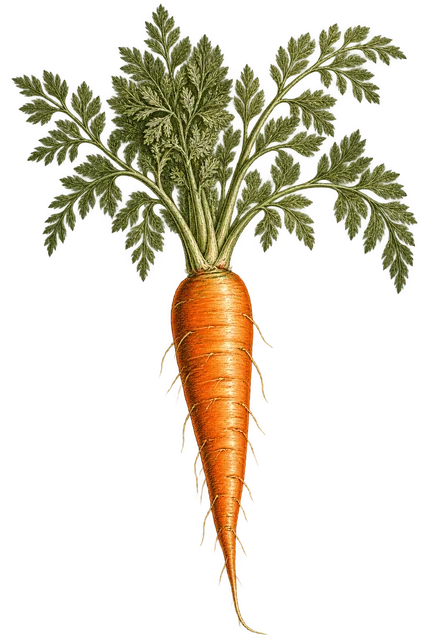
Food-sized USDA estimates: ½ cup chopped raw carrots (64 g), 534 mcg RAE; ½ cup baked sweet-potato flesh (100 g), 961 mcg RAE; 1 large hard-boiled egg (50 g), 75 mcg RAE. The plant values mainly reflect carotenoids; the egg mainly preformed vitamin A. Preparation and portion identity matter.
Absorption and preparation
Vitamin A and carotenoids are fat-soluble. A regular meal containing some fat is a practical setting: carrots or greens with an oil-based dressing, or sweet potato alongside a meal containing nuts, seeds or other fat. Cooking can release carotenoids from plant tissue. These are culinary applications, not proof of a best oil, exact fat dose or universally optimal supplement. Uptake and carotenoid-to-retinol conversion vary.
Nutritional role and uses
- Supports normal vision, epithelial tissues, reproduction and immune function when intake is adequate.
- Clinical correction of deficiency and its eye complications is established; extra vitamin A is not a general skin, immunity or cancer-prevention upgrade.
Contraindications and cautions
- Excess preformed vitamin A can damage the liver and cause birth defects. Pregnancy or possible pregnancy requires particular care with retinol supplements and very high-retinol foods such as liver. Do not combine with prescription retinoids without prescriber review. High-dose beta-carotene supplements increase lung-cancer risk in current or former smokers and people exposed to asbestos; this warning does not mean avoiding carotenoid-rich vegetables. Orlistat can reduce absorption. Avoid overlapping vitamin A products.
- Check multivitamins, stand-alone retinol and fish-liver-oil products together rather than judging each bottle separately. Adult intake limits are not targets and do not apply unchanged to children.
- NHS pregnancy advice specifically excludes retinol-containing supplements, cod liver oil and liver foods. Review products with a clinician if pregnancy is possible; prescribed deficiency treatment is a separate situation.
- Do not add vitamin A supplements to prescription retinoids without prescriber review: the combination can increase toxicity risk. Orlistat can reduce absorption of vitamin A and other fat-soluble vitamins; follow the medicine’s instructions and discuss supplementation with a pharmacist or clinician.
- Skin-applied retinoids can cause redness, scaling, dryness and itching. Avoid topical retinoid medicines during pregnancy or when planning pregnancy as a precaution, even though absorption through skin is low. Use formulations intended for skin, rather than applying oral supplements or foods. Oral isotretinoin has major pregnancy risks and requires specialist prescribing safeguards.
Similar items and how they compare
- Retinol / retinyl esters
These are the preformed vitamin A forms in this entry, supplying material for visual pigments and cell regulation.
They supply preformed vitamin A rather than requiring conversion from plant carotenoid precursors.
- Beta-carotene
This orange plant pigment belongs here because the body can convert it into vitamin A for shared nutritional functions.
Conversion varies; beta-carotene and preformed retinol have different activity measures and safety considerations.
Identity and constituent forms
Preformed retinol and retinyl esters; provitamin A beta-carotene, alpha-carotene and beta-cryptoxanthin. Retinal and retinoic acid are metabolites. Lutein, zeaxanthin and lycopene are carotenoids but do not count as vitamin A precursors. Animal foods and botanical pigments are food sources; capsules are isolated ingredients, without a botanical family.
US adult reference amounts and label units
US RDAs for ages 19+: men 900 mcg RAE/day; women 700; pregnancy 770; lactation 1,300. These describe total dietary needs, not additional supplement doses. One mcg RAE equals 1 mcg retinol, 2 mcg supplemental beta-carotene, 12 mcg food beta-carotene, or 24 mcg food alpha-carotene/beta-cryptoxanthin. Old IU values cannot be compared without knowing the source.
Food portions and practical meals
Food-sized USDA estimates: ½ cup chopped raw carrots (64 g), 534 mcg RAE; ½ cup baked sweet-potato flesh (100 g), 961 mcg RAE; 1 large hard-boiled egg (50 g), 75 mcg RAE. The plant values mainly reflect carotenoids; the egg mainly preformed vitamin A. Preparation and portion identity matter. Pair carrots with a little oil dressing or serve sweet potato within a mixed meal; no medicinal serving is implied.
What absorption research establishes
In a crossover study of 12 women, adding soybean oil to a salad increased the measured appearance of several carotenoids and fat-soluble vitamins in circulating chylomicrons. Responses varied. This supports including meal fat, not a need to copy the highest-oil test meal or buy a particular product. Processing and carotenoid conversion also change the amount available to the body.
Upper limit, liver and pregnancy
The US adult UL is 3,000 mcg RAE/day of preformed vitamin A from all sources, including pregnancy and lactation; it does not apply to food carotenoids. Count the retinol/retinyl-ester share of mixed products. A UL is not a target. NHS pregnancy guidance specifically advises avoiding retinol supplements, cod-liver oil and liver products. Clinician-prescribed deficiency treatment is a separate situation.
Human benefit versus high-dose risk
CARET studied more than 18,000 smokers, former smokers and asbestos-exposed workers. Its beta-carotene/retinol combination failed as cancer prevention and increased important harms. Food carotenoids were not the intervention. Normal physiological functions and correction of deficiency do not establish benefits from taking more when already sufficient.
Medicine checks
Review supplements with prescription retinoids and with medicines that reduce fat absorption, including orlistat. Avoid overlapping multivitamins, stand-alone retinol and fish-liver-oil products without checking totals.
Food reference portions
- Carrots, raw
½ cup chopped raw carrots (64 g): about 534 µg Vitamin A, RAE. Calculated from the named USDA record per 100 g and its food-specific household weight; rounded estimate. Data: SR Legacy; FDC 170393.
- Sweet potato, cooked, baked in skin, flesh, without salt
½ cup baked sweet-potato flesh (100 g): about 961 µg Vitamin A, RAE. Calculated from the named USDA record per 100 g and its food-specific household weight; rounded estimate. Data: SR Legacy; FDC 168483.
- Egg, whole, cooked, hard-boiled
1 large hard-boiled egg (50 g): about 75 µg Vitamin A, RAE. Calculated from the named USDA record per 100 g and its food-specific household weight; rounded estimate. Data: SR Legacy; FDC 173424.
Evidence limits
- General adult nutrition reference; no personal health condition, supplement prescription or individualized dose is inferred.
- RDA/AI values describe usual total intake; ULs are safety boundaries, not targets. Medical treatment can require a separate supervised plan.
- Food examples are rounded composition estimates for the specified food and household measure; brand, preparation and actual serving can change values.
Entry sources
- NIH Office of Dietary Supplements: Vitamin A and Carotenoids (Health Professional Fact Sheet)
- White et al.: Dietary oil and carotenoid/fat-soluble vitamin absorption in humans
- USDA FoodData Central SR Legacy: nutrient data and household portions; FDC 170393, 168483, 173424
- NHS: Pregnancy vitamins and supplements, retinol and liver precautions
- Omenn et al. CARET randomized trial of beta-carotene plus retinol in smokers and asbestos-exposed workers, 1996
Reference entry 40 · Recorded content review: 2026-10-05 · Review scope and dates