
Key cautions
- High intake can cause copper deficiency and neurological harm. Count all sources against the adult 40 mg/day UL.
- Avoid intranasal zinc. Check antibiotic and penicillamine timing; do not self-balance excess zinc with copper.
- Some denture adhesives contain zinc. Excessive, prolonged use can contribute to copper deficiency, anemia and neurological injury. Include adhesive use when reviewing exposure, follow its instructions and seek dental advice if large amounts are needed for a poor fit. Zinc-free products exist; do not assume every adhesive has the same composition.
- Thiazide diuretics can increase urinary zinc losses. This is a reason to review nutritional status with the prescriber, not to stop the medicine or automatically add zinc. Pregnancy, breastfeeding, childhood and kidney disease also call for a plan matched to the person; the retained research below gives adult intake limits and medicine-specific timing.
- Avoid intranasal zinc because smell loss can be lasting. Oral supplements, cold lozenges, external skin preparations and historical eye medicines are not interchangeable; follow the intended route of the actual product.
What’s inside
The nutrient is zinc itself, present in foods within a mixture of proteins, carbohydrates and other constituents. In supplements it is delivered in chemical compounds. The named zinc compound, declared elemental amount, serving frequency and route each matter; the mass of a tablet or cream is not its nutritional zinc dose.
NIH ODS: Zinc, health-professional fact sheet
Nutrient identity, forms and labels
Zinc is a trace mineral element, not a plant family. It functions in many enzymes and supports DNA/protein production, tissue repair and taste. Oral products contain salts such as gluconate, acetate, sulfate, citrate or oxide. The Supplement Facts value is elemental zinc per serving. Check lozenges separately because frequency and ingredients differ from nutritional tablets. Skin products containing zinc oxide serve a different purpose and should not be swallowed.
Uses in brief
- Meet nutritional needs and correct confirmed deficiency when appropriate.
- Some oral cold preparations may shorten illness; eye-health combinations have specific clinical indications.
History, folklore and reported uses
Ancient eye and skin preparations
A tin container recovered from the Pozzino shipwreck in the Gulf of Baratti, off Tuscany in Italy, preserved zinc-rich medicinal tablets dating to the second century BCE. Giachi and colleagues identified hydrozincite and smithsonite, two zinc-containing minerals, with starch, wax, fats and pine resin. Their 2013 analysis compared the tablets with ancient descriptions of mineral remedies by Pliny and Dioscorides. Shape and composition suggest an external eye medicine; related texts also describe skin uses. This is an archaeological interpretation, not a surviving prescription. Mineral ingredients could occur with other metals, and the preparation was not made to modern standards.
Giachi et al. (2013): Ingredients of a 2,000-year-old medicine
Zinc before modern nutrition
Brass-making and zinc refining form a separate material history. The Royal Society of Chemistry describes substantial zinc production at Zawar in Rajasthan, India, between roughly 1100 and 1500, followed by large-scale Chinese refining by the sixteenth century. European accounts often emphasize Andreas Marggraf’s eighteenth-century work, but zinc production in Asia was much older. Such use of ores and metal does not show that people understood or treated dietary zinc deficiency.
Royal Society of Chemistry: Zinc, properties and history · NIH ODS: Zinc, health-professional fact sheet
Cold lozenges as a modern home remedy
George Eby and colleagues published a placebo-controlled zinc-gluconate lozenge study in 1984, an early landmark in the modern cold-remedy literature. The tested preparation dissolved in the mouth; it was not an ordinary swallowed multivitamin or a nasal medicine. Later trials varied in salts, formulation and timing. The research section below explains why this history does not establish a universal immunity benefit or a single effective product.
Eby, Davis and Halcomb (1984): Zinc gluconate lozenges and common colds · NIH ODS: Zinc, health-professional fact sheet
Acne supplementation
In 1977, Gerd Michaëlsson and colleagues at Uppsala University Hospital in Sweden published a double-blind study comparing zinc and oxytetracycline, an antibiotic, in acne vulgaris. It documents clinical interest in oral zinc for acne during the 1970s and the background to its later complementary skin-care use. It is distinct from the ancient external mineral remedies. The available publisher record here establishes that history, not a treatment ranking or a recommended dose.
Gerd Michaëlsson, Juhlin and Ljunghall (1977): Zinc and oxytetracycline in acne vulgaris
Nutritional eye formulas
The Age-Related Eye Disease Studies, known as AREDS and AREDS2, brought zinc into multi-ingredient eye formulas. Their intended users have particular stages of age-related macular degeneration, a disease affecting central vision. Current NEI guidance identifies intermediate AMD, or late AMD in one eye with risk in the other, as settings for discussion with an eye-care professional. These formulas do not prevent early AMD from becoming intermediate disease and are not general eyesight enhancers.
Childhood diarrhea programs
Short courses of oral zinc became part of child-health programs alongside oral rehydration and appropriate feeding, especially in settings with substantial malnutrition and zinc inadequacy. This is clinical public health, not folklore. WHO’s December 2024 guideline introduced a lower zinc dose, but implementation depends on available products. UNICEF’s July 2026 update describes continued use of the established regimen while lower-strength tablets are unavailable. Follow the current local pediatric protocol rather than copying a dose from a summary or dividing an adult supplement.
NIH ODS: Zinc, health-professional fact sheet · WHO (2024): Guideline on management of pneumonia and diarrhoea in children up to 10 years · WHO (23 January 2025): Invitation to manufacturers of zinc products · UNICEF Supply Division (6 July 2026): Oral rehydration salts and zinc market update · WHO: Diarrhoea, treatment and warning signs
Recognizing possible inadequacy
Low intake, poor absorption and increased losses can all contribute to zinc inadequacy. Digestive disease, some bariatric operations, alcohol use disorder, pregnancy and lactation warrant particular attention to nutrition. Hair loss, impaired taste, slow wound healing or frequent infections can occur with deficiency but are not specific diagnoses. Blood zinc measurements also vary with illness, age and sampling time, so a clinician interprets them alongside diet, symptoms and medical history rather than as a stand-alone supplement instruction.
Growing children and complementary foods
An infant’s zinc needs change with growth. After about six months, breast milk alone no longer supplies enough zinc; age-appropriate complementary foods or formula contribute alongside the feeding plan. Adult supplement amounts and adult upper limits do not apply to children. For older children, the dietary pattern and any fortified foods or supplements should be assessed together.
Health topics: evidence and cautions
These notes describe a specific research context and preparation. A topic link is not a treatment recommendation.
Injury and recovery · Support during care
Form and route: dietary zinc or an indicated oral supplement · oral
Adequate zinc supports normal tissue repair.
Evidence: established nutrient function
Zinc deficiency can delay wound healing.
Limits
Routine extra zinc is not proven to heal every injury faster.
Cautions
- Long-term high intake can lower copper; check antibiotic interactions.
Viruses: prevention, symptoms and research · Symptom support
Form and route: oral acetate or gluconate lozenge · oral
Zinc lozenges may shorten a cold, with uncertain size of benefit.
Evidence: low to very low certainty clinical evidence
The 2024 review summarized by NIH found about two fewer symptom days on average.
Limits
Not reliable prevention; not proof of activity against influenza or SARS-CoV-2. Many trials did not identify a specific virus.
Cautions
- Never use zinc inside the nose; lasting smell loss can occur.
- Lozenges may cause nausea and bad taste; prolonged high intake can deplete copper.
Read the full Viruses: prevention, symptoms and research topic record
Cancer by type · No benefit or possible harm
Form and route: Oral zinc supplementation studied for mucositis · oral
Zinc has no current MASCC/ISOO recommendation for preventing these mouth sores.
Evidence: Guideline: insufficient evidence
The 2020 panel withdrew its older suggestion for head-and-neck radiotherapy settings.
Limits
No guideline was possible; this is not proof of benefit or proof every zinc form fails.
Cautions
- Do not self-prescribe high-dose zinc during treatment.
Hair loss · Support during care
Form and route: Food intake or clinician-directed oral zinc replacement · oral
Condition and setting: documented_zinc_deficiency
NIH states that zinc deficiency can cause hair loss and correction may help; extra zinc does not thereby make hair longer or thicker in zinc-replete people.
Evidence: Deficiency context; no general growth-boosting claim
Adequate food intake or clinician-directed oral replacement; no single studied formulation warrants a general hair-growth dose.
Limits
Correcting deficiency does not show that extra zinc improves hair in zinc-replete people.
Cautions
- High intakes can cause nausea and other gastrointestinal symptoms; 50 mg/day or more for weeks can impair copper absorption. The US adult upper limit is 40 mg/day from all sources outside medically supervised treatment. Zinc can interact with some antibiotics and penicillamine.
Identity & detailed reference
Identity
Zinc is an essential trace mineral involved in enzyme activity, protein and DNA synthesis, taste, immune function and wound repair. Adequate zinc nutrition differs from routinely taking additional zinc to boost immunity.
Ingredient details, preparation and research
Source plant or material
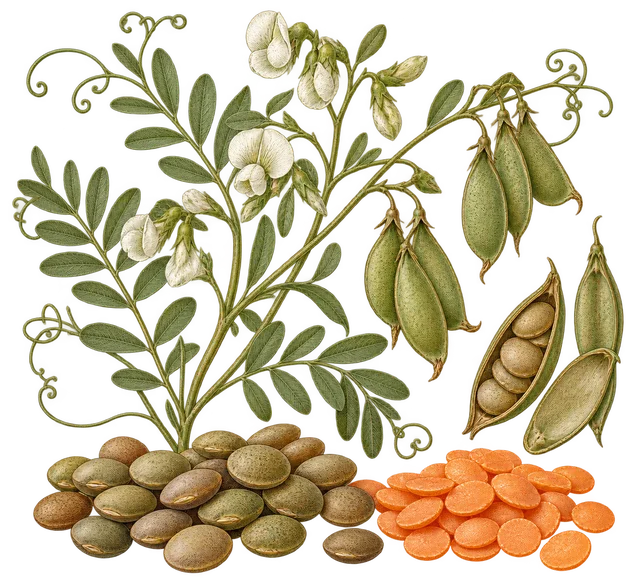
No single plant source. Shellfish, meat, dairy, beans, lentils, seeds and whole grains supply zinc; fortified cereals and isolated mineral compounds provide additional options.
Plant family / material: Not applicable to the nutrient: zinc is a mineral element. Plant foods providing it belong to several families.
Forms and route
Oral gluconate, acetate, sulfate, citrate, oxide and other zinc compounds in tablets, capsules, syrups and lozenges. Compare elemental zinc on Supplement Facts, not salt weight. Zinc oxide can also be a skin-protectant ingredient; a topical product is not an oral nutrient source.
Food sources
Oysters and other seafood, meat, dairy, pumpkin seeds, lentils, beans, whole grains and zinc-fortified cereals. Animal foods are generally more bioavailable, but plant foods still make useful contributions; assess the whole dietary pattern.
Vitamins and minerals
USDA examples: 3 oz cooked pan-broiled 90%-lean ground beef (85 g) supplies about 5.4 mg zinc; 1 oz roasted pumpkin-seed kernels (28.35 g), 2.2 mg; 1/2 cup cooked lentils (99 g), 1.3 mg; and a 6 oz plain low-fat yogurt container (170 g), 1.5 mg. These are nutrient contents rather than absorbed amounts. Oysters vary greatly by species and preparation; no single oyster value is assumed.
Absorption and preparation
Phytate in some grains, legumes and seeds reduces zinc absorption, but the amount of zinc supplied and the full meal also matter. Fermentation and appropriate soaking/cooking can help in some foods; neither removes all phytate or guarantees a known absorption gain. A small fasted study found similar absorption for citrate and gluconate and lower absorption for oxide; this is not a universal ranking for every product or meal. Large iron supplement amounts taken with zinc can interfere.
Combination context
Lentils, whole grains, seeds and fortified foods can complement each other across a varied diet. Fermented/leavened bread is a practical option, but adding a spoonful of fermented food is not proven to unlock all minerals in a meal. Do not assume vitamin C has the same established zinc-absorption effect as it has for nonheme iron, or add copper automatically to permit more zinc.
Nutritional role and uses
Nutritional use: meeting zinc needs or correcting clinically assessed deficiency. Some oral cold preparations may modestly shorten illness, but findings depend on the product and evidence does not establish routine prevention. AREDS2 eye-health formulas are for particular stages of macular degeneration under eye-care guidance; they do not establish a need for zinc alone in everyone.
Contraindications and cautions
- Excess zinc can cause nausea, vomiting and stomach upset. Prolonged high intake can inhibit copper absorption and cause anemia or neurological problems; do not automatically add copper to compensate.
- The U.S. adult UL is 40 mg/day from all sources, including food, supplements and medicines. Count multivitamins, mineral blends and cold products; the limit is not a target.
- Zinc interacts with some antibiotics and penicillamine. Follow the exact prescription label or pharmacist’s timing instructions.
- Avoid intranasal zinc because of potentially lasting loss of smell. Kidney disease or a complex supplement/medicine regimen merits review before adding zinc.
- Some denture adhesives contain zinc. Excessive, prolonged use can contribute to copper deficiency, anemia and neurological injury. Include adhesive use when reviewing exposure, follow its instructions and seek dental advice if large amounts are needed for a poor fit. Zinc-free products exist; do not assume every adhesive has the same composition.
- Thiazide diuretics can increase urinary zinc losses. This is a reason to review nutritional status with the prescriber, not to stop the medicine or automatically add zinc. Pregnancy, breastfeeding, childhood and kidney disease also call for a plan matched to the person; the retained research below gives adult intake limits and medicine-specific timing.
- Avoid intranasal zinc because smell loss can be lasting. Oral supplements, cold lozenges, external skin preparations and historical eye medicines are not interchangeable; follow the intended route of the actual product.
Similar items and how they compare
- Copper
Both are essential trace minerals involved in enzymes, and high zinc exposure can impair copper absorption.
They have distinct nutritional roles; copper is not an automatic add-on or antidote that makes excess zinc safe.
- Vitamin C
Both support normal tissue repair and immune function and are often paired in cold products.
Vitamin C is a vitamin involved in collagen production and nonheme-iron absorption; those facts do not prove that it boosts zinc absorption.
U.S. adult RDAs and upper limit
For healthy adults age 19 and older, U.S. zinc RDAs are 11 mg/day for men and 8 mg/day for women; pregnancy uses 11 mg and lactation 12 mg. These are total dietary-intake RDAs, not AIs or supplement prescriptions. The adult UL is 40 mg/day from all sources, including pregnancy and lactation. It reflects adverse effects on copper status and is not a target. Medical treatment above the UL requires clinical supervision; adult values do not apply to children.
Useful food portions
USDA reference foods provide about 5.4 mg zinc in 3 oz pan-broiled 90%-lean ground beef (85 g), 2.2 mg in 1 oz roasted pumpkin-seed kernels (28.35 g), 1.3 mg in 1/2 cup cooked lentils (99 g), and 1.5 mg in a 6 oz plain low-fat yogurt container (170 g). These are approximately 49%, 20%, 11% and 14% of the 11 mg Daily Value, with rounding. They measure content, not absorption. Shellfish species, cereal fortification and serving sizes vary, so use the relevant food record or current package.
Phytate does not erase plant-food value
Phytate can bind zinc, reducing the fraction absorbed from a meal. Nevertheless, total zinc content and the rest of the diet matter. In a small controlled crossover study, adding oat bran to an animal-protein-based diet increased zinc intake and the absolute amount absorbed, despite a somewhat lower absorption fraction. That finding cannot be generalized to every diet, but it illustrates why describing all plant minerals as unavailable is misleading. Plant-based dietary patterns call for attention to sources and preparation, not an automatic deficiency diagnosis.
Soaking, fermentation and cooking
A human single-meal study found that longer leavening reduced bran-bread phytate and increased zinc absorption under its test conditions. NIH also lists soaking beans, grains and seeds before cooking, and canned or pre-cooked options, as potentially useful. Effects depend on the actual food and process. A separate laboratory study found no improved phytate-to-mineral ratio after soaking several nuts, so activation is not a universal upgrade. None of this establishes a fixed home recipe or proves that a fermented side dish unlocks an entire meal.
What supplement comparisons can show
In a randomized crossover study of 15 healthy adults tested without food, zinc citrate and gluconate had similar absorption, while oxide was lower and some participants absorbed little from oxide. This supports a difference under those conditions, not a universal percentage for all products, fed states or people. Absorption measurements alone do not establish superior clinical benefit. Amount, tolerability, formulation and the reason for use matter alongside the salt name.
Other minerals, copper depletion and kidneys
Large iron supplement amounts taken alongside zinc can reduce zinc absorption; the same warning should not be applied wholesale to ordinary iron-containing or fortified foods. Prolonged excess zinc can suppress copper absorption, sometimes causing anemia and neurological injury. Review excess zinc exposure rather than adding copper automatically. Kidney disease can complicate mineral and medicine decisions, so supplements should fit the renal-care plan. A combination product can create duplication even when each ingredient is advertised as essential.
Medicine-specific absorption precautions
Quinolone and tetracycline antibiotics can bind zinc in the gut. CIPRO’s label gives one example: ciprofloxacin at least two hours before or six hours after the listed mineral products. Penicillamine has its own instructions, and MedlinePlus advises keeping zinc-containing products at least one hour apart. These are label examples rather than a personalized schedule. Ask a pharmacist to reconcile the actual prescriptions, cold products and supplements; do not apply one interval to every medicine.
Cold products, eye formulas and similar nutrients
NCCIH reports that oral zinc may shorten a cold, with side effects and formulation uncertainty; routine prevention is not established. Intranasal zinc can cause lasting loss of smell and should be avoided. AREDS2 is a studied multi-ingredient formula for selected macular-degeneration stages, not a reason for everyone to take zinc or copy its mineral combination. Copper has distinct enzyme roles and excess-zinc interactions. Vitamin C supports collagen and nonheme-iron absorption; that does not demonstrate an equivalent zinc-absorption booster.
Evidence limits
- General U.S. adult reference information, not personal dosing, deficiency diagnosis or a treatment plan; pediatric values are outside this review.
- FoodData Central examples are food-specific reference measurements. Brands, fortification, coagulants, cooking and portions vary; content is not the amount absorbed.
- Short-term absorption studies and food-composition studies are distinguished from clinical treatment outcomes. No miracle blend, mandatory ratio or universal drug-spacing rule is inferred.
Entry sources
- NIH ODS: Zinc, health-professional fact sheet
- NIH ODS: Zinc, consumer fact sheet
- National Academies: Dietary Reference Intakes, zinc chapter, 2001
- NCCIH: Natural products for flu and colds, oral zinc and intranasal precautions
- National Eye Institute: AREDS 2 supplements for age-related macular degeneration
- DailyMed: CIPRO prescribing information, administration with minerals and dairy, sections 2.4 and 7
- MedlinePlus: Penicillamine, interactions and administration
- Wegmüller et al.: zinc citrate, gluconate and oxide absorption in 15 healthy adults, 2014
- Nävert et al.: bread leavening, phytate and human zinc absorption, 1985
- Sandström et al.: zinc absorption during low-fiber and oat-bran diets in 12 adults, 2000
- Kumari et al.: Does activating nuts affect nutrient bioavailability?, food-analysis study, 2020
- NIH ODS: Vitamin C, consumer fact sheet
- NIH ODS: Copper, health-professional fact sheet
- USDA FoodData Central SR Legacy records 171793, 170557, 172421, 170886; downloadable data
- FDA: Daily Values on Nutrition and Supplement Facts labels
Reference entry 58 · Recorded content review: 2026-10-05 · Review scope and dates