


Key cautions
- Excess can damage hair, nails and nerves. Count foods and all supplements together.
- Brazil nuts vary widely. Avoid fixed nut-count dosing and unreviewed thyroid-support combinations.
- NIH reports that the American Thyroid Association recommends against selenium supplementation for pregnant women with thyroid autoimmunity. Discuss proposed selenium products with the pregnancy and thyroid care team rather than self-treating antibody results.
What’s inside
Selenium in food is bound into different compounds. The mineral amount, its chemical form and the food or yeast carrying it are separate details. Selenoproteins are proteins that incorporate selenium; their redox roles help regulate oxidation and reduction reactions in cells.
NIH ODS: Selenium, Health Professional Fact Sheet
Identity, food forms and source material
Selenium is a mineral element, so botanical family does not apply. Plants incorporate environmental selenium into compounds such as selenomethionine; animal foods also contain selenium. Common supplement labels list selenomethionine, selenium-enriched yeast, sodium selenite or sodium selenate. Yeast is a source material containing selenium compounds, not one pure chemical form. “Organic” selenium refers to carbon-containing chemistry, not a guarantee of safety or organic certification.
NIH ODS: Selenium, Health Professional Fact Sheet · EFSA: Scientific opinion on the tolerable upper intake level for selenium (2023)
Nutrient purpose versus supplement promises
Selenium is required for selenoproteins used in thyroid-hormone metabolism, redox defenses, DNA synthesis and reproduction. Meeting this nutritional requirement matters. It does not follow that an already adequate person gets better thyroid function, immunity, fertility or protection from disease by adding more. EFSA’s intake review found no established extra health benefit from intake beyond that needed to reach the selenoprotein-P plateau.
NIH ODS: Selenium, Health Professional Fact Sheet · EFSA: Dietary Reference Values for selenium (2014)
Reading the intake terms
RDA means Recommended Dietary Allowance; AI means Adequate Intake, a reference used when evidence cannot establish an average requirement. UL means Tolerable Upper Intake Level. Selenoprotein P carries selenium in blood; its plateau is the point at which its measured concentration levels off as intake rises. This is a nutritional assessment marker, not a symptom score.
NIH ODS: Selenium, Health Professional Fact Sheet · EFSA: Dietary Reference Values for selenium (2014)
Adult requirements and jurisdiction-specific ceilings
U.S. RDA: adults 55 mcg/day; adult pregnancy 60 and lactation 70 mcg/day. EFSA’s Adequate Intake is 70 mcg/day for adults and pregnancy, 85 for lactation. RDA and AI are different reference frameworks, not competing supplement instructions. For total chronic intake, the U.S. adult UL is 400 mcg/day; EFSA’s 2023 UL is 255 mcg/day, including pregnancy/lactation. Neither UL is a target or an exact personal toxicity threshold. Children require age-specific values.
NIH ODS: Selenium, Health Professional Fact Sheet · EFSA: Dietary Reference Values for selenium (2014) · EFSA: Scientific opinion on the tolerable upper intake level for selenium (2023)
Familiar foods and checked portion sizes
USDA SR Legacy estimates: one large hard-boiled egg (50 g), 15.4 mcg; one reference small can of Atlantic sardines in oil (92 g drained edible solids), 48.5 mcg; cooked oatmeal, 1 cup (234 g), 12.6 mcg; cooked long-grain brown rice, 1 cup (202 g), 11.7 mcg; whole-wheat bread, 1 slice (32 g), 8.2 mcg. These are food-specific composition estimates. The sardine weight is edible drained contents, not a conversion of the nominal can’s ounces; cup weights also differ by food and preparation.
Units and the food being measured
Amounts are micrograms (mcg or µg); 1 milligram equals 1,000 micrograms. The oatmeal example is unenriched oats cooked with water without salt; the sardines are drained solids with bone; the bread is commercially prepared whole-wheat bread. These reference foods do not describe every recipe or brand.
Uses in brief

- Essential nutrition for selenoproteins involved in thyroid metabolism and antioxidant defense.
- Correcting inadequate intake or deficiency when clinically indicated.
History, folklore and reported uses
From industrial discovery to nutrition
Selenium's name evokes the Moon, but its discovery was industrial rather than mystical. In 1817, Jöns Jacob Berzelius investigated an unusual reddish deposit at a sulfuric-acid works and recognized a new element. That chemical discovery did not immediately make selenium a health food. A decisive nutritional turn came in 1957, when Klaus Schwarz and Calvin Foltz identified selenium in a factor that protected experimental animals against a diet-related liver disorder.
Royal Society of Chemistry: Selenium, name and Berzelius discovery · Schwarz and Foltz, JACS 1957: Selenium as an integral part of Factor 3 · Schwarz, Roginski and Foltz, Nature 1959: Ineffectiveness of Molybdenum, Osmium and Cobalt in Dietary Necrotic Liver Degeneration (original follow-on account of selenium identification)
From essential nutrient to supplement culture
The element later became part of the story of antioxidant enzymes and thyroid-hormone metabolism, helping explain its place in modern natural-health products. Food sources such as Brazil nuts can seem an especially appealing bridge between a mineral and something familiar to eat. Yet a nut's selenium content reflects its growing environment and can vary greatly; it is not a traditional measured prescription. Selenium's heritage is therefore a striking reversal in scientific understanding, from an unfamiliar industrial substance to an essential trace nutrient with a narrow margin for excess.
Keshan-disease prevention
Chinese intervention programs from the 1970s–1990s used selenium compounds against Keshan disease in severely selenium-poor regions. This is a specific nutritional public-health history, not a general heart tonic.
The setting of Keshan disease
Keshan disease is a disorder of heart muscle identified in parts of China with very low environmental selenium. Its causes are not fully understood; the prevention programs concerned populations with severe nutritional inadequacy.
Cancer-prevention hopes
The Nutritional Prevention of Cancer Trial, begun in 1983, helped popularize selenium for cancer prevention. Later large trials did not establish the hoped-for protection, so the claim remains a significant but unsuccessful supplement narrative.
Thyroid support
Modern complementary thyroid care has explored selenium for autoimmune thyroiditis and thyroid-related immune markers. This interest does not make selenium a substitute for thyroid treatment or routine supplementation appropriate in pregnancy.
Male-fertility supplementation
Modern fertility practice has investigated selenium for sperm quality, alone or in antioxidant mixtures. This is a modern reproductive-nutrition investigation involving measured supplement preparations.
Sperm measurements and fertility outcomes
Trials have produced conflicting findings. Changes in a sperm measurement do not establish that a selenium supplement improves the chance of having a child; NIH considers the fertility evidence insufficient.
Immune support in HIV
Contemporary clinical nutrition has explored selenium in people living with HIV because low status accompanies worse outcomes. Supplement studies document this interest without establishing selenium as an alternative to antiretroviral treatment.
Why Brazil nuts are not a measured supplement
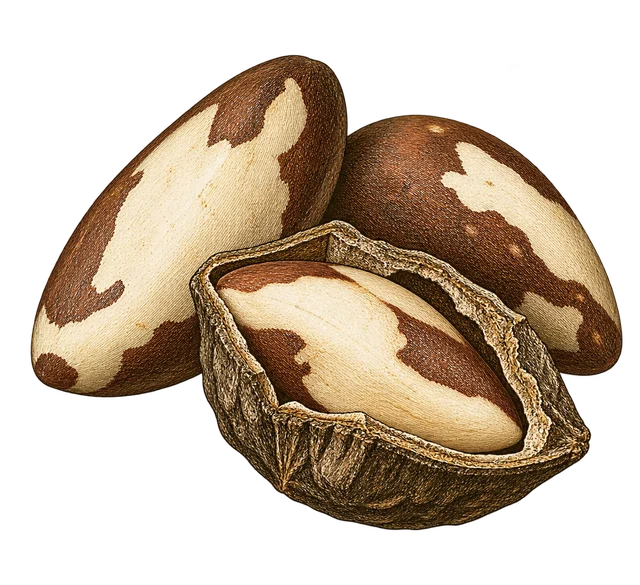
Brazil nuts can be extremely rich in selenium, with major differences between nuts, batches and growing regions. USDA’s reference average is about 544 mcg per 1 oz (28.35 g), above both listed adult ULs; that is a warning illustration, not a serving recommendation or prediction for every batch. A small primary analytical study found substantial within-batch as well as between-batch variation. Neither a fixed daily nut count nor weighing the nuts gives a reliable selenium dose without composition testing.
USDA FoodData Central, SR Legacy: egg 173424; sardines 175139; oatmeal 173905; brown rice 169704; whole-wheat bread 172688; Brazil nuts 170569 · Lima et al.: Selenium accumulation, speciation and localization in Brazil nuts, analytical study (2019)
Absorption and realistic food pairings
Dietary selenium and common supplement forms are readily absorbed, although absorption and retention differ across compounds and foods. No specific food pairing is established as necessary to make ordinary selenium useful. More efficient uptake is not automatically beneficial when intake is already adequate. Eggs with whole-wheat toast, or sardines with rice and vegetables, are practical meals; their value is supplying food and varied nutrients, not a demonstrated selenium-absorption synergy. Herbs, lemon or olive oil can be chosen for flavor.
EFSA: Scientific opinion on the tolerable upper intake level for selenium (2023) · USDA FoodData Central, SR Legacy: egg 173424; sardines 175139; oatmeal 173905; brown rice 169704; whole-wheat bread 172688; Brazil nuts 170569
Health topics: evidence and cautions
These notes describe a specific research context and preparation. A topic link is not a treatment recommendation.
Prostate health · No benefit or possible harm
Form and route: Oral isolated supplement studied in SELECT · oral
Selenium supplements did not prevent prostate cancer in SELECT.
Evidence: High certainty for the studied regimen
The large randomized trial found no prevention benefit. Further analysis raised concern about high-grade cancer in men with high baseline selenium.
Limits
Correcting a true deficiency is a separate issue. This does not show benefit from selenium-rich foods as cancer treatment.
Cautions
- Do not stack selenium-containing products for prostate protection.
- Excess is not better.
Diabetes and prediabetes · No benefit or possible harm
Form and route: Oral selenium-enriched yeast tablets used in the NPC trial · oral
Selenium-enriched yeast did not prevent type 2 diabetes and raised a harm signal.
Evidence: randomized_trial_harm_signal
A trial’s secondary analysis found more new diabetes among selenium recipients than placebo recipients.
Limits
Participants were mostly older White adults; diabetes was a secondary outcome. This does not imply avoiding normal food selenium.
Cautions
- Excess selenium is toxic; do not self-supplement for glucose control.
Skin cancer · No benefit or possible harm
Form and route: Oral selenium-enriched yeast tablets · oral
Selenium is not a skin-cancer prevention supplement.
Evidence: Randomized trial evidence of no benefit and harm
In people with prior basal- or squamous-cell cancers, a trial found no clear basal-cell benefit and increased squamous-cell and total keratinocyte cancers.
Limits
Does not show ordinary selenium-containing foods are harmful.
Cautions
- Do not take selenium to prevent skin cancer.
Cancer by type · No benefit or possible harm
Form and route: Oral L-selenomethionine · oral
Selenium supplements did not prevent prostate cancer.
Evidence: Large randomized trial
SELECT found no prevention benefit, alone or with vitamin E.
Limits
Results concern the tested supplements, not avoiding nutrient-containing foods.
Cautions
- Do not take this supplement to prevent prostate cancer.
Hair loss · Safety reference
Form and route: Dietary/supplemental selenium; not selenium-sulfide shampoo · oral
Condition and setting: supplement_excess_associated_hair_loss
Chronic excess selenium can itself cause hair loss and brittle/lost nails. A selenium-containing “hair vitamin” is not automatically beneficial.
Evidence: Established excess-intake safety concern
Dietary/supplemental selenium exposure; not selenium-sulfide medicated shampoo, which is a different preparation and indication.
Limits
Safety entry only; selenium-sulfide shampoos are different products, and upper intake limits are not dosing targets.
Cautions
- Supplement stacking and regularly large Brazil-nut intakes can produce excess. US and European upper limits differ, so do not present either as a target dose. No blanket avoidance of ordinary selenium-containing foods is implied.
Male fertility & sperm health · No benefit or possible harm
Form and route: High-selenium yeast in the 2009 trial; selenomethionine in the older low-selenium study · oral
Condition and setting: Semen quality in healthy men and subfertile men with low selenium status
Routine selenium supplementation is not supported for improving sperm quality. A small low-selenium study suggested benefit, but a longer trial in healthy men found none.
Evidence: Mixed and population-dependent trial evidence
2009: 54 randomized, 42 completed; selenium yeast 300 micrograms/day for 48 weeks, with no sperm benefit. 1998: 69 men with low selenium status; three-month trial.
Limits
The older motility result became significant only after pooling two selenium arms; five paternity events are too few for a firm fertility conclusion. A separate widely cited selenium/NAC trial has an Expression of Concern.
Cautions
- Excess selenium can cause hair and nail loss, digestive symptoms and neurological problems. Correcting a diagnosed deficiency differs from routinely taking a high-dose fertility supplement.
Identity & detailed reference
Identity
Selenium (Se) is an essential trace mineral used to make selenoproteins involved in thyroid-hormone metabolism, antioxidant defenses, DNA synthesis and reproduction. It is required in small amounts; it is not a botanical remedy.
Ingredient details, preparation and research
Source plant or material
No single source plant. Selenium moves from soil and the wider environment into plant and animal foods. Seafood, eggs, meat, grains and nuts are food sources. Selenium-enriched yeast is grown in selenium-rich medium. Confirm a supplement manufacturer’s actual source rather than assuming it from the chemical name.
Plant family / material: Not applicable: selenium is a mineral element, not a botanical species. A food or yeast carrying it has a separate biological identity.
Forms and route
Food-bound selenium and single-ingredient or multivitamin supplements. Common forms are selenomethionine, selenium-enriched yeast, sodium selenite and sodium selenate. The chemical form and source material are different label details. A mineral supplement is not a tincture.
Food sources
USDA food examples: one large hard-boiled egg (50 g), about 15.4 mcg; one small can of Atlantic sardines in oil (92 g drained edible solids in the reference can), 48.5 mcg; cooked oatmeal, 1 cup (234 g), 12.6 mcg; cooked long-grain brown rice, 1 cup (202 g), 11.7 mcg; whole-wheat bread, 1 slice (32 g), 8.2 mcg. Food values vary, especially with soil and growing region for plant foods. Brazil nuts are unusually concentrated and unsuitable as a precise dosing tool.
Vitamins and minerals
U.S. adult RDA: 55 mcg/day; adult pregnancy 60 mcg, lactation 70 mcg. EFSA instead uses an adult Adequate Intake of 70 mcg/day, including pregnancy, and 85 mcg during lactation. U.S. adult UL: 400 mcg/day; EFSA adult UL: 255 mcg/day, including pregnancy/lactation. These are jurisdiction-specific total-intake reference values, not supplement prescriptions. Amounts are in micrograms (mcg), not milligrams.
Absorption and preparation
Common dietary and supplement selenium forms are generally readily absorbed. No special fat, vitamin D, vitamin C or herbal pairing is established as necessary for ordinary intake. Different absorption or retention between forms does not establish better clinical benefit. Build varied meals rather than trying to maximize selenium uptake: eggs with whole-wheat toast, or sardines with rice and vegetables. There is no automatic reason to pair selenium supplements with vitamin D, iodine or vitamin E.
Nutritional role and uses
- Nutritional role: supplies selenium for normal selenoprotein functions, including thyroid-hormone metabolism and antioxidant defense.
- Clinical use: correcting inadequate intake or deficiency when indicated. Extra selenium is not established as a general thyroid, fertility, immunity or antioxidant treatment in adequately nourished people.
- Human research: SELECT did not show prostate-cancer prevention from selenium. In the 2024 CATALYST trial, adding selenium to levothyroxine did not improve thyroid-related quality of life beyond placebo.
Contraindications and cautions
- Too much can cause hair loss, brittle or lost nails, metallic taste, garlic-like breath, stomach upset and neurological symptoms. Combine the selenium from foods, multivitamins and separate supplements when assessing intake.
- Brazil nuts can contain very large, highly variable amounts. A fixed number of nuts is not a reliable dose; even a weighed amount does not establish its selenium content.
- The U.S. adult upper limit is 400 mcg/day; EFSA uses 255 mcg/day, both for total chronic intake. These are safety ceilings, not daily goals or guarantees of individual safety. Children have lower limits.
- Review supplements with the treating team during chemotherapy, especially cisplatin, or when managing thyroid disease. Selenium should not replace thyroid medication or be added solely because a product advertises thyroid support.
- NIH reports that the American Thyroid Association recommends against selenium supplementation for pregnant women with thyroid autoimmunity. Discuss proposed selenium products with the pregnancy and thyroid care team rather than self-treating antibody results.
Similar items and how they compare
- Iodine
Both are involved in normal thyroid function.
Iodine forms part of thyroid hormones; selenium supports their metabolism. This relationship is not evidence that a combined thyroid supplement is needed.
- Vitamin E
Both contribute to antioxidant systems through different mechanisms.
Vitamin E is a fat-soluble vitamin, while selenium is part of specific enzymes. Combining supplements is not established cancer prevention.
Thyroid research: antibodies are not symptoms
CATALYST randomized 412 adults with autoimmune hypothyroidism receiving levothyroxine to selenium-enriched yeast or placebo for 12 months. The trial used 200 mcg/day as a research intervention, not a general recommendation. Selenium lowered thyroid-peroxidase antibodies but did not improve thyroid-related quality of life, levothyroxine requirements or the free-T3 index/free-T4 ratio compared with placebo. This distinction prevents a laboratory-marker change from becoming a claim that everyone with thyroid symptoms needs selenium.
Cancer prevention and companion supplements
The large SELECT trial did not show that selenium, alone or with vitamin E, prevented prostate cancer. Normal antioxidant biology does not prove a cancer-prevention supplement benefit. Iodine, vitamin E and vitamin D have their own roles and risks; this review does not justify adding any of them as a routine selenium partner. A meal can contain several nutrients without establishing a treatment synergy.
Excess, medicines and clinical review
Chronic excess can produce hair/nail damage, garlic-like breath, metallic taste, gastrointestinal upset and nervous-system symptoms. Natural food sources and organic chemical forms are not exempt. Check totals across high-selenium foods, multivitamins and single-mineral products. Cisplatin can alter selenium measures, but the value of selenium supplementation during treatment is uncertain; involve the oncology team. For thyroid disease, review supplementation within the treatment plan rather than replacing prescribed medicine or chasing antibody numbers.
Entry sources
- NIH ODS: Selenium, Health Professional Fact Sheet
- EFSA: Scientific opinion on the tolerable upper intake level for selenium (2023)
- EFSA: Dietary Reference Values for selenium (2014)
- National Cancer Institute: SELECT selenium/vitamin E cancer-prevention trial results
- Larsen et al.: CATALYST randomized selenium trial in autoimmune hypothyroidism (2024)
- Lima et al.: Selenium accumulation, speciation and localization in Brazil nuts, analytical study (2019)
- NIH ODS: Iodine, Health Professional Fact Sheet
- NIH ODS: Vitamin E, Health Professional Fact Sheet
- USDA FoodData Central, SR Legacy: egg 173424; sardines 175139; oatmeal 173905; brown rice 169704; whole-wheat bread 172688; Brazil nuts 170569
Reference entry 86 · Recorded content review: 2026-10-05 · Review scope and dates