Cancer is many diseases. Every entry names the site and the kind of evidence. Reported traditional use, a laboratory finding, prevention and relief of treatment side effects are different claims.
Named cancer sites, prevention, supportive care, failed treatments and source-attributed tradition.
Decorative topic illustration.
Care basics come first
Use the exact cancer site, stage and treatment plan when asking about a supplement.
Tell the care team about herbs, vitamins and minerals.
Oral cavity, throat, esophagus and rectum are not interchangeable labels.
Plant-derived chemotherapy does not make the original plant a safe or effective remedy.
How we chose these entries
A curated set of useful materials and cautionary examples, not a worldwide ranking. Negative and safety entries are not benefit recommendations.
Fourteen entries were retained, spanning food, botanical, vitamin and mineral materials. Historical reports are preserved without borrowing efficacy from lab studies. No claim is made for every cancer type, and no unverified oral-cancer treatment is added merely to fill a slot.
No records match. Try another name or clear the filters.
Care and risk-reduction research
Read the outcome, preparation and limits. A studied benefit does not make every product effective.
Support during care
Honey for mouth-care support
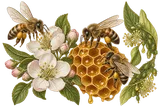
Ingredient reference illustration: Honey. Studied form: Protocol-selected honey applied in the mouth and swallowed. This does not verify the trial product or formulation, or show that it works. Decorative illustration; not an identification reference.
Bee-processed nectar or honeydew
Form
Protocol-selected honey applied in the mouth and swallowed
How it is used
oral mucosal and oral
Evidence
Clinical guideline suggestion
Honey may help prevent mouth sores during head-and-neck radiation treatment.
Cancer type and setting
Head-and-neck cancers during radiotherapy; oral mucositis outcome
Cautions
Use only with the oncology/dental team’s approval, considering swallowing and blood-sugar needs.
Ingredient reference illustration: Coffee beans and beverage. Studied form: Coffee beverage. This does not verify the trial product or formulation, or show that it works. Decorative illustration; not an identification reference.
Coffea arabica / Coffea canephora · Roasted seeds
Form
Coffee beverage
How it is used
oral
Evidence
Expert assessment of observational evidence
Coffee drinking is linked with lower liver and endometrial cancer risk.
Cancer type and setting
Liver cancer; endometrial (womb) cancer
Cautions
Avoid scalding-hot drinks and consider caffeine tolerance.
European mistletoe: clinical and historical context
Ingredient reference illustration: European mistletoe: Iscador M special. Studied form: Iscador M special: manufactured fermented aqueous fresh-herb extract from apple-host mistletoe. This does not verify the trial product or formulation, or show that it works. Decorative illustration; not an identification reference.
Viscum album · Fresh mistletoe herb grown on apple host trees; not isolated berries
Form
Iscador M special: manufactured fermented aqueous fresh-herb extract from apple-host mistletoe
How it is used
subcutaneous injection by clinical protocol
Evidence
Small clinical study; uncertain benefit
A small breast-cancer study reported better quality of life with a specific mistletoe extract.
Cancer type and setting
Early-stage breast cancer after surgery; quality-of-life support
Cautions
Do not eat raw mistletoe or make injections. Severe allergy is possible; any use needs specialist oversight.
Mistletoe extracts are not FDA-approved cancer treatments.
Evidence, limits and sources for European mistletoe: clinical and historical context
What was found
A 95-person, three-arm trial published a comparison of 30 Iscador M special recipients and 31 controls during post-operative breast-cancer chemotherapy; quality-of-life scores favored the extract.
What this does not show
Open-label, small exploratory comparison of subjective scores: expectations and added injection attention could contribute. No established survival benefit or transfer to other products.
Reported history
NCI dates modern anticancer interest to the 1920s; older general medicinal use does not establish cancer-specific efficacy.
Exact ingredient
No exact existing card. Fresh apple-host herb and the manufactured Iscador M special extract are identified by the primary trial; raw plant and other products are not interchangeable.
Why we included it
Separates a documented European tradition and manufactured extract from raw plant use.
These historical reports or laboratory findings do not establish a clinical benefit.
Traditional reports
Costus root: reported breast-cancer use
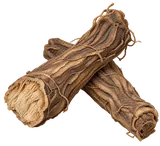
Ingredient reference illustration: Costus root traditional reference. Studied form: Traditional oral water preparation. This does not verify the trial product or formulation, or show that it works. Decorative illustration; not an identification reference.
Saussurea costus (name used in the survey) · Root
Form
Traditional oral water preparation
How it is used
oral
Evidence
Ethnobotanical survey only
Qatar herbalists reported costus for breast cancer.
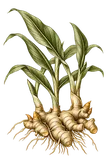
Ingredient reference illustration: Ginger. Studied form: Traditional water infusion. This does not verify the trial product or formulation, or show that it works. Decorative illustration; not an identification reference.
Zingiber officinale · Rhizome
Form
Traditional water infusion
How it is used
oral
Evidence
Ethnobotanical survey only
Qatar herbalists reported ginger use among breast-cancer patients.
Cancer type and setting
Breast cancer; subtype unspecified
Cautions
Keep cancer treatment and discuss medicinal use with the care team.
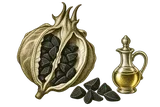
Ingredient reference illustration: Black cumin seed (KJV fitches candidate). Studied form: Seeds within a traditional multi-ingredient food mixture. This does not verify the trial product or formulation, or show that it works. Decorative illustration; not an identification reference.
Nigella sativa · Seeds
Form
Seeds within a traditional multi-ingredient food mixture
How it is used
oral
Evidence
Ethnobotanical survey only
Qatar herbalists reported black seeds among remedies used by breast-cancer patients.
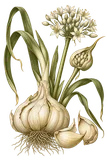
Ingredient reference illustration: Garlic. Studied form: Raw culinary cloves. This does not verify the trial product or formulation, or show that it works. Decorative illustration; not an identification reference.
Allium sativum · Bulb cloves
Form
Raw culinary cloves
How it is used
oral
Evidence
Ethnobotanical survey only
A West Bank survey recorded garlic use for lung, esophageal and breast cancers.
Cancer type and setting
Lung, esophageal and breast cancers; reported labels
Cautions
Discuss medicinal amounts during cancer treatment.
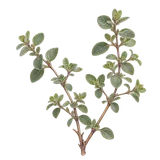
Ingredient reference illustration: Origanum jordanicum leaf reference. Studied form: Historical vapor preparation; not a recommendation. This does not verify the trial product or formulation, or show that it works. Decorative illustration; not an identification reference.
Origanum jordanicum · Leaves
Form
Historical vapor preparation; not a recommendation
How it is used
inhalation; historical record only
Evidence
Ethnobotanical survey only
A West Bank survey recorded use for lung and throat cancers.
These records explain what to avoid or why a proposed benefit is not established.
No benefit or possible harm
Curcumin: rectal-cancer trial
Ingredient reference illustration: Curcumin oral formulations. Studied form: Trial-specific oral curcumin capsules. This does not verify the trial product or formulation, or show that it works. Decorative illustration; not an identification reference.
Isolated constituent from turmeric rhizome
Form
Trial-specific oral curcumin capsules
How it is used
oral
Evidence
Small randomized phase II trial
Adding curcumin did not improve complete tumor response in a small rectal-cancer trial.
Cancer type and setting
Locally advanced rectal cancer; add-on to pre-operative chemoradiation
Cautions
Discuss concentrated supplements with the oncology team.
Ingredient reference illustration: Vitamin A. Studied form: Oral supplement. This does not verify the trial product or formulation, or show that it works. Decorative illustration; not an identification reference.
Isolated provitamin A carotenoid
Form
Oral supplement
How it is used
oral
Evidence
Large randomized prevention trials
Beta-carotene pills can increase lung-cancer risk in smokers.
Cancer type and setting
Lung cancer; smokers and high-risk populations
Cautions
Do not use beta-carotene pills for lung-cancer prevention.
Ingredient reference illustration: Vitamin E. Studied form: Oral synthetic alpha-tocopheryl acetate. This does not verify the trial product or formulation, or show that it works. Decorative illustration; not an identification reference.
Isolated alpha-tocopherol ester
Form
Oral synthetic alpha-tocopheryl acetate
How it is used
oral
Evidence
Large randomized trial
Vitamin E supplements increased prostate-cancer risk in SELECT.
Cancer type and setting
Prostate cancer prevention
Cautions
Do not take this supplement to prevent prostate cancer.
Ingredient reference illustration: Selenium. Studied form: Oral L-selenomethionine. This does not verify the trial product or formulation, or show that it works. Decorative illustration; not an identification reference.
Isolated selenomethionine
Form
Oral L-selenomethionine
How it is used
oral
Evidence
Large randomized trial
Selenium supplements did not prevent prostate cancer.
Cancer type and setting
Prostate cancer prevention
Cautions
Do not take this supplement to prevent prostate cancer.
Ingredient reference illustration: Zinc. Studied form: Oral zinc supplementation studied for mucositis. This does not verify the trial product or formulation, or show that it works. Decorative illustration; not an identification reference.
Mineral salts; formulations varied
Form
Oral zinc supplementation studied for mucositis
How it is used
oral
Evidence
Guideline: insufficient evidence
Zinc has no current MASCC/ISOO recommendation for preventing these mouth sores.
Cancer type and setting
Head-and-neck cancer during radiotherapy or chemoradiotherapy; mouth sores
Cautions
Do not self-prescribe high-dose zinc during treatment.
Safety reference. The specific research preparation or product is not pictured. This symbol marks an evidence or safety record, not a recommended remedy.
Cyanogenic compound; apricot kernels are a separate source material
Form
Variable products sold as amygdalin or laetrile
How it is used
oral and injection; unsafe-treatment reference only
Evidence
Agency safety review and failed uncontrolled trial
These products have no established cancer benefit and can cause cyanide poisoning.
Cancer type and setting
Breast, colon and lung cancers predominated in the failed trial
Cautions
Do not eat apricot kernels or use laetrile as cancer treatment.
Evidence, limits and sources for Amygdalin / laetrile: avoid
What was found
An NCI-reviewed trial, mostly in breast, colon and lung cancers, found progression in all patients by seven months after the IV course.
What this does not show
Names cover chemically different products. Apricot flesh is not the kernel or isolated compound.
Exact ingredient
Apricot fruit card 356 is not an exact match. Keep this as a warning reference; no treatment recipe or dose.
Why we included it
Clarifies a commonly confused claim.
Related material only
These are different ingredients or forms. Do not assume the same findings apply to them.