Progressive resistance training, enough food energy and adequate protein come first. A protein food, a concentrated supplement, short-term protein synthesis, lean mass and functional strength are different kinds of evidence.
Resistance-training nutrition, short-term immobilization, and nutrient-deficiency support are separate settings. These notes do not diagnose or treat unexplained muscle wasting.
Decorative topic illustration.
Care basics come first
Build a progressive resistance-training routine suited to your ability and health.
Eat enough total food and protein; powders can help fill a practical gap but are not required for everyone.
Spread protein-containing meals through a varied diet. Tofu and lentils below are food examples, not individually proven muscle-growth treatments.
Evaluate persistent weight loss or weakness instead of adding testosterone boosters or a growing supplement stack.
How we chose these entries
Nine references were selected: preparation-specific training evidence, important negative or limited findings, one deficiency-related nutrient, and two clearly labeled food-first examples. A place on this page is not an endorsement or a proven muscle-building effect.
The evidence does not justify twenty independent muscle-building materials. Acute potato/wheat/blend experiments, a small defatted-peanut study, and mycoprotein diet research remain reserve context rather than padding this list. No herb or hormone-booster claim has been added. Tofu and lentils support dietary protein intake only; leucine has a negative longer-term result, HMB evidence is setting-specific, and vitamin D is not an anabolic treatment.
No records match. Try another name or clear the filters.
Care and risk-reduction research
Read the outcome, preparation and limits. A studied benefit does not make every product effective.
Support during care
Creatine monohydrate
Ingredient reference illustration: Creatine monohydrate. Studied form: Oral creatine monohydrate. ODS describes maintenance amounts of 3–5 g/day, sometimes after a loading phase. These are research/practice context, not an individualized prescription.. This does not verify the trial product or formulation, or show that it works. Decorative illustration; not an identification reference.
Manufactured creatine monohydrate
Form
Oral creatine monohydrate. ODS describes maintenance amounts of 3–5 g/day, sometimes after a loading phase. These are research/practice context, not an individualized prescription.
How it is used
oral
Evidence
Training adjunct; established performance evidence, mixed muscle-mass evidence
Oral creatine monohydrate can support resistance-training performance and may add to lean-mass gains. Some weight gain is water; it is not guaranteed new muscle.
Condition and setting
Resistance-training performance and lean-mass outcomes in adults; not unexplained muscle wasting
Cautions
Water-related weight gain is common. Discuss use with a clinician when managing kidney disease or other medical conditions; avoid extrapolating healthy-adult safety to everyone.
Evidence, limits and sources for Creatine monohydrate
What was found
A double-blind trial randomized 30 men around age 70 to creatine or placebo during 36 resistance-training sessions over 12 weeks; creatine was 0.3 g/kg/day for five days, then 0.07 g/kg/day. The trial reported lean-tissue gains of 3.3 kg with creatine versus 1.3 kg with placebo, alongside larger gains on several leg-performance measures.
What this does not show
DXA lean mass includes water. A 2026 synthesis of 11 older-adult trials found a small added strength effect but no clear muscle-mass benefit, with low certainty for mass. Do not promise a specific gain or extrapolate to creatine without training.
Exact ingredient
This refers to oral creatine monohydrate; other creatine compounds and mixtures need their own evidence.
Why we included it
Supports a common training decision while separating lean mass, water, muscle size and strength.
Ingredient reference illustration: Soy protein isolate. Studied form: Oral daily isolate supplying 26 g soy protein and 2 g leucine; comparison supplied 19 g whey protein and the same leucine.. This does not verify the trial product or formulation, or show that it works. Decorative illustration; not an identification reference.
Glycine max · Protein fraction isolated from soybean seed
Form
Oral daily isolate supplying 26 g soy protein and 2 g leucine; comparison supplied 19 g whey protein and the same leucine.
How it is used
oral
Evidence
Direct resistance-training comparison
Soy protein isolate can help meet protein needs during resistance training. A leucine-matched trial found no significant difference from whey in lean-mass and strength gains.
Condition and setting
Protein provision during resistance training in healthy adults
Cautions
Avoid with soy allergy; read blended-product labels.
Evidence, limits and sources for Soy protein isolate
What was found
Lynch et al. 2020: 61 untrained adults aged 18–35 enrolled; 48 completed, including 17 men. Supervised resistance training three times weekly for 12 weeks. Lean mass and leg torque increased in both groups; between-group differences were not significant. The increase in thigh-muscle thickness was not statistically significant.
What this does not show
No non-protein placebo arm; this does not isolate a supplement effect above training, prove universal equivalence, or establish that every soy food delivers the tested dose.
Exact ingredient
Soy protein isolate is a concentrated protein preparation. Tofu and broader soy-food mixtures are different materials.
Why we included it
A direct plant-protein training comparison with a preparation-specific evidence boundary.
Related material only
These are different ingredients or forms. Do not assume the same findings apply to them.
Ingredient reference illustration: Pea protein isolate. Studied form: Oral yellow-pea protein isolate (NUTRALYS), 25 g twice daily, in drinks; 12 weeks.. This does not verify the trial product or formulation, or show that it works. Decorative illustration; not an identification reference.
Pisum sativum · Protein fraction isolated from yellow-pea seed
Form
Oral yellow-pea protein isolate (NUTRALYS), 25 g twice daily, in drinks; 12 weeks.
How it is used
oral
Evidence
Limited resistance-training evidence; subgroup result
Pea protein isolate is a practical protein source. One training trial suggested a muscle-thickness benefit in initially weaker men, but the overall between-group result was not significant.
Condition and setting
Protein provision during resistance training in young men
Cautions
Avoid with known pea allergy; assess the entire formulation and other allergens.
Evidence, limits and sources for Pea protein isolate
What was found
Babault et al. 2015: 161 healthy men aged 18–35, without recent strength-building training, randomized to pea, whey, or maltodextrin placebo with upper-body training three times weekly. Overall thickness comparisons only trended toward a group difference (p=0.09). In the initially weaker subgroup, biceps thickness rose 20.2% with pea versus 8.6% with placebo. Strength improvements did not differ by group.
What this does not show
Subgroup evidence should not become a blanket hypertrophy claim. Pea powder is not nutritionally interchangeable with a serving of green peas.
Exact ingredient
This is yellow-pea protein isolate, not sugar-snap pea pods or a serving of whole peas.
Why we included it
Includes a widely used plant protein without overstating its subgroup result.
Related material only
These are different ingredients or forms. Do not assume the same findings apply to them.
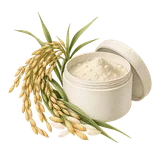
Ingredient reference illustration: Rice protein concentrate. Studied form: Oral rice protein concentrate supplying 24 g protein daily, studied for eight weeks.. This does not verify the trial product or formulation, or show that it works. Decorative illustration; not an identification reference.
Concentrated rice-grain protein
Form
Oral rice protein concentrate supplying 24 g protein daily, studied for eight weeks.
How it is used
oral
Evidence
Small direct resistance-training comparison
Rice protein concentrate can contribute to training protein intake. A small trial found similar changes to whey, without proving an advantage over adequate food protein.
Condition and setting
Protein provision during resistance training in trained adult men
Cautions
Avoid the product with a known allergy to rice or any added ingredient; check the complete label.
Discuss extra protein with a clinician or dietitian if you have kidney disease or a prescribed protein restriction.
Evidence, limits and sources for Rice protein concentrate
What was found
Moon et al. 2020: 24 resistance-trained men, mean age about 33, randomized to rice or whey concentrate while following a standardized eight-week training program. Total protein averaged about 1.87 g/kg/day. Lean mass and several strength measures improved over time without significant differences between protein sources.
What this does not show
Small active-comparator trial, no unsupplemented control, and already substantial total protein intake. A rice meal is not the tested concentrate.
Exact ingredient
This is a rice protein concentrate, not a serving of rice. Check the source crop and exact preparation on the product specification.
Why we included it
A small training comparison adds a distinct plant-protein option with explicit uncertainty.
Related material only
These are different ingredients or forms. Do not assume the same findings apply to them.
Ingredient reference illustration: Calcium HMB. Studied form: Oral calcium salt of beta-hydroxy-beta-methylbutyrate: 1.5 g twice daily, totaling 3 g/day, begun five days before bed rest.. This does not verify the trial product or formulation, or show that it works. Decorative illustration; not an identification reference.
Calcium salt of beta-hydroxy-beta-methylbutyrate
Form
Oral calcium salt of beta-hydroxy-beta-methylbutyrate: 1.5 g twice daily, totaling 3 g/day, begun five days before bed rest.
Calcium HMB has limited evidence for reducing lean-mass loss during short bed rest in older adults. Its value for routine muscle building is uncertain.
Condition and setting
Short-term lean-mass preservation during bed rest in older adults
Cautions
Use as clinician-guided context when dealing with frailty, illness, or immobilization, rather than a self-treatment for unexplained muscle loss. ODS notes uncertainty about prolonged use.
Deutz et al. 2013: 24 older adults enrolled, only four men; 19 evaluable after ten days of complete bed rest, followed by rehabilitation. The trial reported less lean-mass loss with HMB than placebo; the reported HMB estimate excluded one participant. Functional outcomes did not show a difference.
What this does not show
Small, mostly female bed-rest study, not a healthy male bodybuilding trial. A separate pilot found resistance training improved lean mass and function without an added HMB effect in the exercise arm.
Exact ingredient
This is the calcium salt of HMB. Free-acid HMB and multi-ingredient mixtures are different preparations.
Why we included it
A narrow immobilization setting is materially different from recreational bodybuilding.
Ingredient reference illustration: Vitamin D. Studied form: Oral vitamin D2 or D3 for nutritional adequacy or clinician-directed deficiency treatment; trial below used D3 tablets, 800 IU/day with conditional increase to 1,600 IU/day.. This does not verify the trial product or formulation, or show that it works. Decorative illustration; not an identification reference.
Vitamin D2 or D3 nutrient
Form
Oral vitamin D2 or D3 for nutritional adequacy or clinician-directed deficiency treatment; trial below used D3 tablets, 800 IU/day with conditional increase to 1,600 IU/day.
How it is used
oral
Evidence
Deficiency correction and normal muscle function; not an anabolic supplement
Vitamin D deficiency can contribute to muscle weakness. Correcting inadequate intake or deficiency supports health, but extra vitamin D is not a proven way to gain muscle.
Condition and setting
Vitamin D adequacy and deficiency-related muscle weakness; not hypertrophy treatment
Cautions
Excess supplemental vitamin D can cause high calcium and kidney injury. The general adult upper limit is 4,000 IU/day unless medically supervised.
Shea et al. 2019: 100 men and women aged at least 60, screened for low vitamin D, in a twelve-month randomized placebo-controlled trial. Supplementation raised vitamin D blood levels but did not improve leg strength, power, or lean mass compared with placebo.
What this does not show
Do not claim that every low reading explains weakness or that supplementation produces hypertrophy. New or progressive weakness needs clinical assessment.
Exact ingredient
This refers to vitamin D in a defined study setting; correcting deficiency is different from assuming extra vitamin D builds muscle.
Why we included it
Corrects a common inference that vitamin D automatically increases muscle mass.
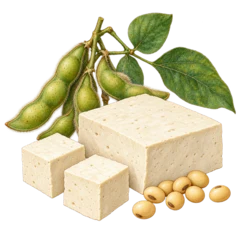
Ingredient reference illustration: Tofu / soy food. Studied form: Ordinary tofu eaten as food; its protein content depends on firmness and product. No therapeutic muscle-gain serving is established.. This does not verify the trial product or formulation, or show that it works. Decorative illustration; not an identification reference.
Glycine max · Coagulated soybean-milk food
Form
Ordinary tofu eaten as food; its protein content depends on firmness and product. No therapeutic muscle-gain serving is established.
How it is used
oral
Evidence
Food-first protein support only
Tofu supplies protein and can help build meals that meet daily protein needs during resistance training.
Condition and setting
Food-first protein adequacy during resistance training
Cautions
Avoid with soy allergy; read prepared-food labels.
Evidence, limits and sources for Tofu (protein-food context)
What was found
USDA identifies tofu and tempeh as vegetarian protein foods. The cited evidence is food guidance, not an individual-food hypertrophy trial. Supports their role as protein sources only; no isolated tofu- or tempeh-specific muscle-gain effect is claimed.
What this does not show
Soy-isolate study amounts and results do not transfer to tofu. Tempeh is a separate fermented soy food; neither has an isolated hypertrophy effect established here.
Exact ingredient
This is tofu as a protein-containing food, not soy protein isolate or a muscle-building medicine.
Why we included it
One familiar soy-food example keeps the foundation practical without claiming independent hypertrophy.
Related material only
These are different ingredients or forms. Do not assume the same findings apply to them.
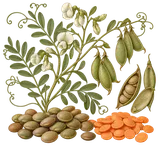
Ingredient reference illustration: Lentils (KJV lentiles). Studied form: Oral cooked lentils in meals; no clinical hypertrophy dose established.. This does not verify the trial product or formulation, or show that it works. Decorative illustration; not an identification reference.
Mature lentil seed
Form
Oral cooked lentils in meals; no clinical hypertrophy dose established.
How it is used
oral
Evidence
Food-first protein support only
Cooked lentils contribute protein to a varied diet that supports resistance training. They are a food option, not a proven standalone muscle-growth treatment.
Condition and setting
Food-first protein adequacy during resistance training
Cautions
Respect any known legume allergy and individual digestive tolerance.
USDA lists lentils among vegetarian protein foods. This is dietary guidance rather than an isolated-food intervention. Supports a protein-source role only.
What this does not show
Do not imply an individual lentil trial demonstrated hypertrophy or convert food-group ounce equivalents into grams of protein.
Exact ingredient
This is lentils as a protein-containing food, not an isolated protein supplement.
Why we included it
A distinct everyday pulse example is dietary support only, not an efficacy filler.
These records explain what to avoid or why a proposed benefit is not established.
No benefit or possible harm
Leucine
Ingredient reference illustration: Leucine. Studied form: Oral crystalline leucine: one acute study added 2.5 g to 20 g casein. A separate three-month trial provided 2.5 g with each main meal, totaling 7.5 g/day.. This does not verify the trial product or formulation, or show that it works. Decorative illustration; not an identification reference.
Isolated amino acid
Form
Oral crystalline leucine: one acute study added 2.5 g to 20 g casein. A separate three-month trial provided 2.5 g with each main meal, totaling 7.5 g/day.
Leucine helps signal muscle protein synthesis, but leucine alone has not reliably increased muscle mass. Adequate complete protein remains the priority.
Condition and setting
Supplement marketing versus measured muscle mass and strength in older men
Cautions
Research amounts are not personal dosing advice. Do not present leucine or BCAA supplements as replacements for sufficient dietary protein.
Acute study: 24 men around age 74. Longer trial: 30 healthy older men around age 71, randomized to leucine or placebo. Adding leucine to casein increased the six-hour protein-synthesis response by about 22%. Three months of leucine alone did not increase muscle mass or strength.
What this does not show
A short-term signaling/synthesis effect cannot be described as proven long-term hypertrophy. Leucine does not provide all essential amino acids.
Exact ingredient
This refers to isolated oral leucine, not a complete protein food or all essential amino acids together.
Why we included it
Balances an acute mechanism with a negative longer-term clinical result.