


Key cautions
- Avoid the product with a known allergy to rice or any added ingredient; check the complete label.
- Discuss extra protein with a clinician or dietitian if you have kidney disease or a prescribed protein restriction.
What’s inside
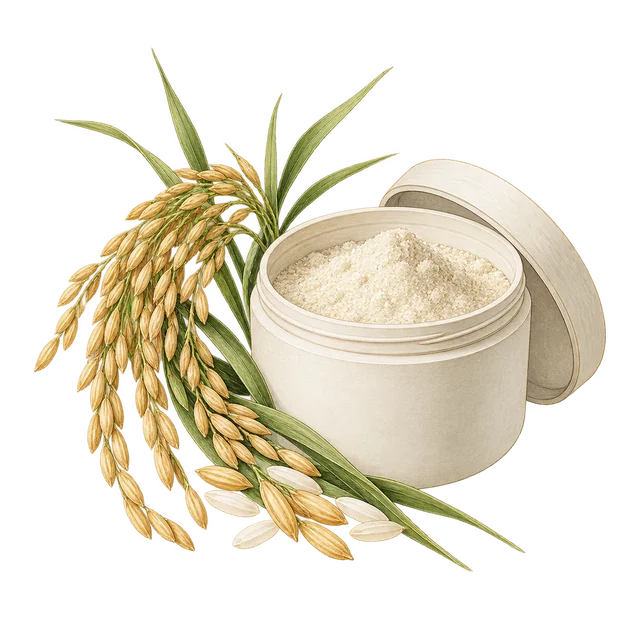
Concentrated rice protein and its amino acids; starch-rich rice food and bran oil are different materials.
Uses in brief

- Rice protein concentrate can contribute to training protein intake. A small trial found similar changes to whey, without proving an advantage over adequate food protein.
History, folklore and reported uses
History, folklore and traditional uses
A 2015 manufacturer submission preserved in FDA’s records describes a rice-protein ingredient made from whole-grain brown rice. Amylase helps separate syrup solids from the protein-containing fraction, which is concentrated, washed and dried. This is a modern manufactured ingredient with a composition distinct from cooked rice.
The dossier proposed the concentrate for beverages, baked foods, cereals, dairy-style alternatives and other formulations, as well as supplemental protein drinks. This record documents intended food applications; it is not evidence that FDA approved a muscle-building claim.
Traditional, historical and reported uses
- Food formulation beyond protein shakes
Historical recordWhy this label?
Identifies the source-supported production, formulation or dated research context; no additional therapeutic effect is inferred.
The 2015 notice proposed rice protein as a food ingredient and texturizer across several food categories. These are the manufacturer’s recorded intended uses, not independent proof of health benefit.
Source-backed material history, manufacturing or food-use context is separated from efficacy evidence; no additional uses are invented.
Health topics: evidence and cautions
These notes describe a specific research context and preparation. A topic link is not a treatment recommendation.
Muscle mass · Support during care
Form and route: Oral rice protein concentrate supplying 24 g protein daily, studied for eight weeks. · oral
Condition and setting: Protein provision during resistance training in trained adult men
Rice protein concentrate can contribute to training protein intake. A small trial found similar changes to whey, without proving an advantage over adequate food protein.
Evidence: Small direct resistance-training comparison
Moon et al. 2020: 24 resistance-trained men, mean age about 33, randomized to rice or whey concentrate while following a standardized eight-week training program. Total protein averaged about 1.87 g/kg/day. Lean mass and several strength measures improved over time without significant differences between protein sources.
Limits
Small active-comparator trial, no unsupplemented control, and already substantial total protein intake. A rice meal is not the tested concentrate.
Cautions
- Avoid the product with a known allergy to rice or any added ingredient; check the complete label.
- Discuss extra protein with a clinician or dietitian if you have kidney disease or a prescribed protein restriction.
Identity & detailed reference
Identity
Concentrated protein from rice grain; the named product specification defines the source crop.
Ingredient details, preparation and research
Source plant or material
Concentrated protein from rice grain; the named product specification defines the source crop.
Plant family / material: Poaceae (rice source grain).
Forms and route
Studied oral preparation: Oral rice protein concentrate supplying 24 g protein daily, studied for eight weeks. Research exposure only; this is not a recommended dose or personal regimen.
Vitamins and minerals
This is a preparation-specific supplement reference. No generic food serving, Daily Value badge, or nutrient quantity is assigned; the label and study preparation must be checked.
Absorption and preparation
No special food pairing or absorption-enhancement recipe is established here. Trial findings apply to the specified oral material and cannot be transferred to a tea, whole food or different supplement blend.
Traditional and reported uses
- Rice protein concentrate can contribute to training protein intake. A small trial found similar changes to whey, without proving an advantage over adequate food protein.
Contraindications and cautions
- Avoid the product with a known allergy to rice or any added ingredient; check the complete label.
- Discuss extra protein with a clinician or dietitian if you have kidney disease or a prescribed protein restriction.
Population, preparation and outcome
Moon et al. 2020: 24 resistance-trained men, mean age about 33, randomized to rice or whey concentrate while following a standardized eight-week training program. Total protein averaged about 1.87 g/kg/day. Lean mass and several strength measures improved over time without significant differences between protein sources.
What the result does not establish
Small active-comparator trial, no unsupplemented control, and already substantial total protein intake. A rice meal is not the tested concentrate.
Preparation and safety boundaries
Avoid the product with a known allergy to rice or any added ingredient; check the complete label. Discuss extra protein with a clinician or dietitian if you have kidney disease or a prescribed protein restriction.
Evidence limits
- Small active-comparator trial, no unsupplemented control, and already substantial total protein intake. A rice meal is not the tested concentrate.
- Focused educational review, not a systematic review or a personal supplement plan.
Entry sources
- Moon et al. 2020: Daily 24-g rice or whey protein
- NIDDK: Healthy Eating for Adults with Chronic Kidney Disease
- FDA: Food Allergies
- Axiom 2015 GRAS notice 609: Rice protein, FDA-hosted dossier
Reference entry 602 · Recorded content review: 2026-10-11 · Review scope and dates