


Key cautions
- Soy allergy matters. During pregnancy, amounts beyond ordinary food use may be unsafe; concentrated-use lactation safety is poorly known.
- Avoid the relevant product with soy allergy.
- Do not convert a supplement trial into a recommended serving of tofu.
What’s inside
Soy foods provide protein and other food components. Concentrated isoflavone supplements and protein isolates have different compositions; isoflavone content varies by product.
Uses in brief

- Soy foods, protein preparations and isolated isoflavones require separate evidence.
- Menopause trial findings are mixed; no tofu treatment claim follows.
History, folklore and reported uses
History, folklore and traditional uses
Soybeans have a long Asian food history, including tofu, miso, tempeh and edamame. Their food heritage should not be rewritten as a universal traditional menopause prescription. Modern reproductive research often uses concentrated protein or isoflavones.
Traditional, historical and reported uses
- menopause
Human researchWhy this label?
Soy protein or isoflavones may modestly reduce hot flashes, with inconsistent results. This does not show that any serving of tofu has the same effect.
Traditional food use; modern menopause investigation. Soy protein or isoflavones may modestly reduce hot flashes, with inconsistent results. This does not show that any serving of tofu has the same effect.
- Food heritage
Food or household practiceWhy this label?
NCCIH describes tofu, soy milk and other soy foods within a long food history. These everyday foods should keep food-specific cards rather than be relabelled as a hormone treatment.
NCCIH describes tofu, soy milk and other soy foods within a long food history. This culinary history does not establish a menopause treatment.
Coverage reflects verified sources, without a minimum use quota.
Women’s Health: traditions, evidence and cautions
Historical use does not establish benefit or safety. Pregnancy, breastfeeding and fertility care require particular caution: food, tea, essential oil and concentrated extract are not interchangeable. These records are not treatment, dosing or pregnancy-management instructions. Discuss supplements with a qualified clinician or pharmacist; do not delay evaluation of persistent symptoms.
Soy foods and separately studied isoflavones
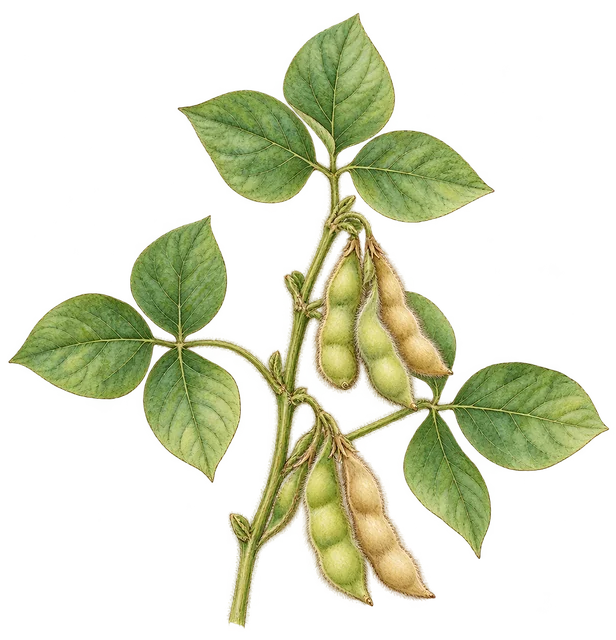
Glycine max
- Plant part / material
- soybean
- Preparation studied or reported
- Qualified comparison of soybean foods, isolated soy protein and concentrated isoflavone supplements. Each preparation has distinct composition and trial evidence; no supplement result establishes a therapeutic serving of tofu.
Qualified comparison of soybean foods, isolated soy protein and concentrated isoflavone supplements. Each preparation has distinct composition and trial evidence; no supplement result establishes a therapeutic serving of tofu.
Soybeans have a long Asian food history, including tofu, miso, tempeh and edamame. Their food heritage should not be rewritten as a universal traditional menopause prescription. Modern reproductive research often uses concentrated protein or isoflavones.
menopause
Human research
Reported or traditional useTraditional food use; modern menopause investigation. Soy protein or isoflavones may modestly reduce hot flashes, with inconsistent results. This does not show that any serving of tofu has the same effect.
What the evidence supportsSoy protein or isoflavones may modestly reduce hot flashes, with inconsistent results. This does not show that any serving of tofu has the same effect.
Soy allergy matters. During pregnancy, amounts beyond ordinary food use may be unsafe; concentrated-use lactation safety is poorly known. Avoid the relevant product with soy allergy. Do not convert a supplement trial into a recommended serving of tofu.
Food heritage
Food or household practice
Reported or traditional useNCCIH describes tofu, soy milk and other soy foods within a long food history. This culinary history does not establish a menopause treatment.
What the evidence supportsNCCIH describes tofu, soy milk and other soy foods within a long food history. These everyday foods should keep food-specific cards rather than be relabelled as a hormone treatment.
Soy allergy matters. During pregnancy, amounts beyond ordinary food use may be unsafe; concentrated-use lactation safety is poorly known. Avoid the relevant product with soy allergy. Do not convert a supplement trial into a recommended serving of tofu.
Qualified comparison of soybean foods, isolated soy protein and concentrated isoflavone supplements. Each preparation has distinct composition and trial evidence; no supplement result establishes a therapeutic serving of tofu.
- Soy allergy matters. During pregnancy, amounts beyond ordinary food use may be unsafe; concentrated-use lactation safety is poorly known.
- Avoid the relevant product with soy allergy.
- Do not convert a supplement trial into a recommended serving of tofu.
- NCCIH: soy
- Levis et al. 2011: Soy isoflavone tablets randomized trial
- Iowa State primary trial: Isoflavone-rich or isoflavone-poor soy protein
Read the complete historical reference and its material distinctions
Identity & detailed reference
Identity
Glycine max; soybean. Tofu is a related-material comparison, not an extract match. Studies of isolated isoflavones do not establish effects of tofu.
Ingredient details, preparation and research
Also known as: Glycine max; soybean isoflavones; soy protein isolate
Source plant or material
Glycine max — soybean
Plant family / material: Fabaceae (pea family)
Forms and route
Qualified comparison of soybean foods, isolated soy protein and concentrated isoflavone supplements. Each preparation has distinct composition and trial evidence; no supplement result establishes a therapeutic serving of tofu.
Vitamins and minerals
No nutrient quantities or daily-value claims are assigned to this medicinal material. Do not borrow the food nutrient profile of another plant part or use an extract as a dietary substitute.
Absorption and preparation
Preparation and route matter. A tea, whole powder, alcohol extract and isolated constituent can give different exposures. No food pairing or absorption-enhancement technique is established by the sources reviewed.
Traditional and reported uses
- Traditional food use; modern menopause investigation. Soy protein or isoflavones may modestly reduce hot flashes, with inconsistent results. This does not show that any serving of tofu has the same effect.
- NCCIH describes tofu, soy milk and other soy foods within a long food history. This culinary history does not establish a menopause treatment.
Contraindications and cautions
- Soy allergy matters. During pregnancy, amounts beyond ordinary food use may be unsafe; concentrated-use lactation safety is poorly known.
- Avoid the relevant product with soy allergy.
- Do not convert a supplement trial into a recommended serving of tofu.
Similar items and how they compare
- Tofu
Existing soy food card 242
Food-specific; cannot inherit isolated-isoflavone results.
- Red clover
Also contains isoflavones
Different botanical source and product evidence.
Identity and composition
Glycine max; soybean. Food card242 is a related-material comparison, not an extract match. Studies of isolated isoflavones do not establish effects of tofu. Soy foods provide protein and other food components. Concentrated isoflavone supplements and protein isolates have different compositions; isoflavone content varies by product.
menopause: what evidence can say
Soy protein or isoflavones may modestly reduce hot flashes, with inconsistent results. This does not show that any serving of tofu has the same effect. Soy allergy matters. During pregnancy, amounts beyond ordinary food use may be unsafe; concentrated-use lactation safety is poorly known.
Exact material and preparation boundaries
Qualified comparison of soybean foods, isolated soy protein and concentrated isoflavone supplements. Each preparation has distinct composition and trial evidence; no supplement result establishes a therapeutic serving of tofu.
Medicines, pregnancy and breastfeeding
NCCIH flags potentially dangerous interactions between MAOI antidepressants and certain high-tyramine soy products; this is product-dependent, not a blanket statement that every fresh soy food has the same tyramine content. Pregnancy use beyond ordinary food amounts may be unsafe; concentrated-use breastfeeding evidence is limited.
Isolated-isoflavone research
A two-year randomized study in 248 women found no prevention of bone loss or menopause symptoms from the tested isoflavone tablets. This specific negative result sits within mixed wider evidence, not a conclusion about every soy food.
Protein-isolate research
A 69-woman study comparing isoflavone-rich soy protein, isoflavone-poor soy protein and whey found no menopause-symptom relief over 24 weeks. Protein and isolated-isoflavone trials must remain distinct.
Source-supported safety summary
Soy allergy matters. During pregnancy, amounts beyond ordinary food use may be unsafe; concentrated-use lactation safety is poorly known. Avoid the relevant product with soy allergy. Do not convert a supplement trial into a recommended serving of tofu.
Evidence limits
- This is a focused educational source review, not a systematic review or a treatment plan.
- Traditional use documents a practice; it does not establish clinical benefit. Laboratory findings and multi-ingredient trials cannot establish a single ingredient’s effects.
- This composite is not ready to be treated as a single exact-material ingredient. Source-specific results are supplied for separately scoped profiles; retain qualified overview if the directory cannot bind subclaims.
Entry sources
- NCCIH: soy
- Levis et al. 2011: Soy isoflavone tablets randomized trial
- Iowa State primary trial: Isoflavone-rich or isoflavone-poor soy protein
Reference entry 561 · Recorded content review: 2026-10-11 · Review scope and dates