


Key cautions
- Cooked rice can support bacterial growth if held warm improperly. Cool promptly, refrigerate and follow local safe-storage and reheating advice; reheating cannot rescue poor storage.
- Rice can contain inorganic arsenic. Eat a varied diet rather than relying on rice as the only grain, especially in children’s diets.
What’s inside
Primarily starch, with some protein; bran-containing forms retain more fiber and other grain components. Enrichment, milling and cooking alter the final food.
Uses in brief

- Cooked staple grain
- Rice flour and formed foods
History, folklore and reported uses
History, folklore and traditional uses
IRRI documents rice cultivation and varietal improvement across Asia. FAO records a wide range of regional rice foods, illustrating why a single grain name cannot describe every rice-based meal.
Traditional, historical and reported uses
- Cooked staple grain
Food or household practiceWhy this label?
The cited source documents this material, preparation or cultural practice; it does not establish treatment efficacy.
Rice varieties are cooked for different textures, from separate grains to cohesive preparations. Use the variety and water method called for in the dish rather than assuming all rice behaves alike.
- Rice flour and formed foods
Food or household practiceWhy this label?
The cited source documents this material, preparation or cultural practice; it does not establish treatment efficacy.
Milled rice becomes flour for breads, cakes and noodles. Blends may contain wheat or other ingredients; a rice-based product is not necessarily gluten-free.
2 supported featured food or cultural uses; no treatment claim.
Historical-use additions reviewed 2026-10-09
Health topics: evidence and cautions
These notes describe a specific research context and preparation. A topic link is not a treatment recommendation.
Diabetes and prediabetes · Support during care
Form and route: Cooked brown rice · oral
A whole-grain choice when planning carbohydrate portions.
Evidence: agency_dietary_guidance
NIDDK includes whole grains in healthy eating with diabetes.
Limits
It is not glucose-lowering medicine.
Cautions
- Large portions can raise glucose.
Regional reading paths
These sourced notes describe cultivation, trade, food traditions or material history. A regional connection does not claim exclusive origin.
Asia
Cultivated: South, Southeast and East Asia; staple examples include India, Vietnam and Indonesia.
Cooked grain and rice flour in staple foods.
Identity & detailed reference
Identity
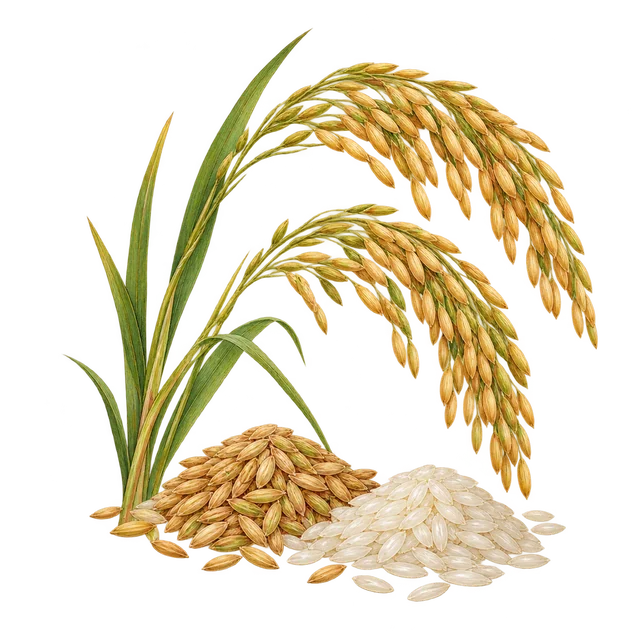
Oryza sativa edible grain; includes many indica- and japonica-related varieties. African rice, wild rice, rice-bran oil and purified rice starch are distinct materials.
Ingredient details, preparation and research
Also known as: Oryza sativa; Asian cultivated rice; Brown rice; White rice
Source plant or material
Oryza sativa
Plant family / material: Poaceae
Forms and route
Brown or milled white rice, parboiled grain, glutinous rice, flour and cooked rice products. Glutinous refers to stickiness, not the presence of wheat gluten.
Vitamins and minerals
Dry grain and cooked grain cannot be compared by equal weight without accounting for water. Milling and enrichment affect micronutrients; no single value describes every variety.
Absorption and preparation
FDA notes that excess-water cooking can reduce arsenic but also remove enriched nutrients. Rinsing or cooking is not a universal guarantee of an arsenic-free food.
Practical preparation
Cook using safe drinking water and a suitable grain recipe. UK FSA advice is to keep cooked rice refrigerated no more than one day and reheat only once until steaming hot throughout.
Combination notes
Combine with other foods for dietary variety; the composition of a mixed rice dish depends on its full ingredients.
Traditional and reported uses
- Cooked staple grain
- Rice flour and formed foods
Contraindications and cautions
- Cooked rice can support bacterial growth if held warm improperly. Cool promptly, refrigerate and follow local safe-storage and reheating advice; reheating cannot rescue poor storage.
- Rice can contain inorganic arsenic. Eat a varied diet rather than relying on rice as the only grain, especially in children’s diets.
Variety, milling and preparation are separate variables
Rice breeding affects crop traits, while processing affects the food in the bowl. Production research does not prove a health outcome, and white-rice values should not be assigned to bran oil or whole brown grain.
Evidence limits
Staple-food overview; no disease-specific portion plan, glycaemic guarantee or detoxification claim.
Entry sources
- IRRI: Released improved rice varieties
- FAO: Rice in human nutrition, processed products
- FDA: Limiting exposure to arsenic
- UK Food Standards Agency: Food safety at university, rice and leftovers
Reference entry 352 · Recorded content review: 2026-10-09 · Review scope and dates