


Key cautions
- Excess can raise calcium and harm kidneys. Add together every product containing vitamin D.
- Check kidney/calcium disorders and interacting medicines before supplementing. K2 does not neutralize an excessive dose.
- Add together the labeled amounts in multivitamins, calcium-D combinations and separate vitamin D products. Thirst, frequent urination, nausea or weakness during high intake need medical attention; severe toxicity can disturb heart rhythm. The adult upper limit below is a safety ceiling, not a target.
- Tell your clinician about kidney stones, high calcium, sarcoidosis or hyperparathyroidism. Ask a pharmacist to check digoxin and thiazide diuretics in particular, and review orlistat, corticosteroids and antiseizure medicines that can affect absorption or metabolism. Do not adjust prescribed treatment yourself.
- Check inactive ingredients if you have an allergy, including peanut or soya allergy. For liquid products, follow the exact product instructions: concentrations and the amount per drop or serving vary. Children require age-appropriate guidance rather than an adult supplement regimen.
What’s inside
Vitamin D is a family of fat-soluble, steroid-related molecules. Its nutritional forms, activated metabolites and amounts in particular foods need to be distinguished.
NIH ODS: Vitamin D, Health Professional Fact Sheet
D2 and D3
Ergocalciferol is D2; cholecalciferol is D3. Their chemical side chains differ. The research section compares their effects on blood vitamin D status.
From nutrient to active hormone
The liver converts nutritional vitamin D to 25-hydroxyvitamin D, also called calcidiol or calcifediol. A further step, mainly in the kidneys, produces calcitriol, the active hormone. Calcitriol and calcifediol products are not interchangeable with ordinary D2 or D3 on a microgram-for-microgram basis.
NIH ODS: Vitamin D, Health Professional Fact Sheet · EFSA: Vitamin D tolerable upper intake level and calcidiol conversion factor (2023)
Source organisms and product ingredients
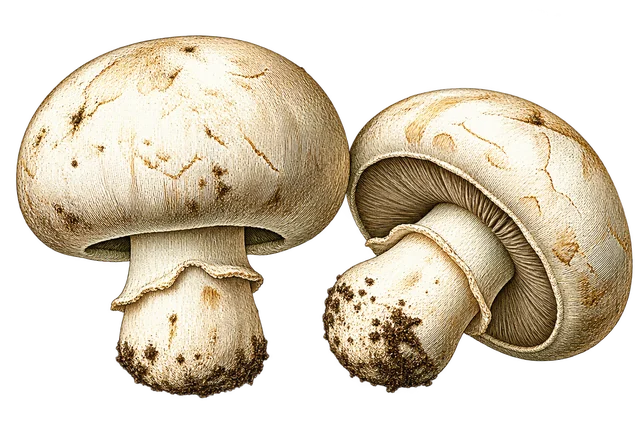
Vitamin D is a nutrient/prohormone, not an herb. D2 is ergocalciferol; D3 is cholecalciferol. Yeast irradiation commonly supplies supplemental D2, while lanolin and lichen are sources of D3. Mushrooms and yeast are fungi. Fortified milk, plant drinks and cereals may use either form, so check the label and manufacturer if source or vegan suitability matters. Capsule ingredients may include gelatin.
NIH ODS: Vitamin D, Health Professional Fact Sheet · NHS: Who can and cannot take colecalciferol
Food composition depends on the preparation
The portion values in the food section refer to cooked sockeye salmon, raw UV-exposed white mushrooms, fortified 2% milk and scrambled egg. Ordinary mushrooms are not equivalent to UV-treated ones; cheese is not necessarily fortified just because milk often is. Check the label on each plant drink or cereal.
Reading micrograms and IU
For ordinary D2 and D3, 1 microgram (mcg) equals 40 international units (IU). A food label’s Daily Value is a comparison standard, not an individualized prescription. Total-intake recommendations and upper limits are separate figures, detailed below.
Uses in brief

- Essential nutrition for calcium handling, bone mineralization and normal muscle function.
- Correcting deficiency or an intake gap; individual bone-health plans may include supplementation.
History, folklore and reported uses
Food, sunlight and supplements
Food supplies vitamin D in a meal; a supplement supplies a labeled amount in drops, tablets or capsules. Skin production depends on season, age, skin pigmentation and other factors, so minutes outdoors cannot be reliably translated into a dose. Sunlight through window glass does not produce vitamin D. Keep normal sun protection rather than using tanning beds or deliberate unprotected exposure as a nutritional treatment.
Deficiency and bone care
Deficiency can impair bone mineralization, causing rickets in growing children or osteomalacia, softening of bone, in adults. This differs from osteoporosis, in which bones become fragile through loss of bone mass and structure. Vitamin D and adequate calcium may form part of an osteoporosis care plan, but are not substitutes for indicated osteoporosis medicines. Benefits of calcium-plus-D in institutionalized older adults cannot be assumed for every independently living adult. The existing research section explains the fracture trial and its population.
Who may need closer attention
Breastfed infants, older adults, people with little sun exposure, and people with fat-malabsorption disorders are among groups at risk of inadequate vitamin D. Darker skin reduces vitamin D production from sunlight; obesity and gastric bypass can also affect vitamin D status or requirements. These factors are reasons to consider appropriate nutrition and clinical advice, not to choose a high dose without assessment. Infant and child needs must not be inferred from adult figures.
Blood tests and interpretation
The usual blood marker is 25-hydroxyvitamin D, not the active hormone calcitriol. A blood concentration is different from an oral intake: ng/mL and nmol/L describe the test result, while mcg and IU describe intake. Laboratory methods and guideline thresholds vary. Routine screening of otherwise healthy people is not generally recommended; symptoms or established medical conditions may call for a different approach.
Respiratory illness and immune claims
Vitamin D participates in normal immune function, which has encouraged interest in supplements for winter illnesses. NCCIH reports insufficient evidence that vitamin D prevents colds or relieves their symptoms, and does not identify it as an established flu treatment. Evidence about preventing an illness is also different from evidence about treating an infection already present. It should not replace vaccination or indicated treatment.
NIH ODS: Vitamin D, Health Professional Fact Sheet · NCCIH: Colds, Flu, and Complementary Health Approaches
Mood and depression
Observational studies associate low vitamin D levels with depression, but an association does not show that deficiency caused the symptoms. Clinical trials reviewed by NIH ODS have not established supplements as a way to prevent or treat depression. Correcting a nutritional deficiency and receiving appropriate mental-health care are separate needs.
Cancer-prevention research
Cell and animal research has explored effects on cell growth and tumor biology. Human trials have generally not shown that supplements reduce new cancer diagnoses. Some analyses suggest a possible effect on cancer mortality, a different outcome, but this does not establish vitamin D as cancer treatment. Supplements should not replace screening or oncology care.
Rickets remedies before the vitamin
Fish-liver oil and light were studied before the relevant nutrient was understood. Edward Mellanby used cod liver oil in dogs with experimental rickets; investigators also treated children with sunlight or ultraviolet light. McCollum’s experiments showed that oil stripped of vitamin A activity could retain its anti-rickets effect, distinguishing the factor named vitamin D.
DeLuca (2014): History of the discovery of vitamin D and its active metabolites, full text
From irradiation to fortified food
In 1920s Wisconsin, Harry Steenbock investigated how ultraviolet treatment gave foods anti-rickets activity. His patents helped support the Wisconsin Alumni Research Foundation, established in 1925, and eventually the fortification of fluid milk. Sterol chemistry, including Adolf Windaus’s work, helped connect light exposure with the formation and structure of vitamin D. This is a history of nutrition science and food production, rather than a botanical folklore tradition.
DeLuca (2014): History of the discovery of vitamin D and its active metabolites, full text · University of Wisconsin: Harry Steenbock and the history of food irradiation · Windaus: Nobel lecture, sterols and vitamin D, 1928 · Endotext: Vitamin D, Production, Metabolism, and Mechanism of Action
Health topics: evidence and cautions
These notes describe a specific research context and preparation. A topic link is not a treatment recommendation.
Injury and recovery · Support during care
Form and route: oral D2 or D3 · oral
Adequate vitamin D helps the body absorb calcium and maintain bone.
Evidence: established nutrient function
Deficiency impairs bone mineralization.
Limits
This is not evidence that high doses accelerate fracture or muscle recovery.
Cautions
- Excess vitamin D can raise calcium and damage kidneys.
Respiratory health · No benefit or possible harm
Form and route: oral vitamin D3 supplement · oral
Vitamin D3 did not reduce first treatment failure or exacerbation in the VIDA asthma trial.
Evidence: randomized clinical trial
Adults had symptomatic asthma and low vitamin D; supplementation was added to asthma care.
Limits
One study is not every population; treating deficiency remains separate from treating asthma.
Cautions
- Do not replace inhalers; excess vitamin D can be toxic.
Viruses: prevention, symptoms and research · No benefit or possible harm
Form and route: oral D2 or D3 supplements · oral
Low vitamin D levels do not prove that vitamin D supplements prevent or treat COVID-19.
Evidence: mixed research; causal benefit unestablished
The NIH fact sheet distinguishes observational links from inconsistent trials.
Limits
Older summary, not a full current trial review. Correcting deficiency remains a separate need.
Cautions
- Avoid unsupervised high-dose regimens; excess can injure kidneys.
Read the full Viruses: prevention, symptoms and research topic record
Diabetes and prediabetes · Risk reduction
Form and route: Oral vitamin D3 · oral
Selected adults with high-risk prediabetes may benefit as part of prevention care.
Evidence: conditional_guideline_recommendation
The 2,423-person D2d trial did not find a statistically significant reduction in new diabetes. The 2024 Endocrine Society guideline, drawing on combined trial evidence, conditionally suggests vitamin D alongside lifestyle changes for high-risk prediabetes.
Limits
This is a conditional recommendation, not general-population prevention, type 1 prevention, or treatment of established diabetes.
Cautions
- Discuss total intake with a clinician; high doses can cause dangerous calcium levels and kidney harm.
Colon and bowel health · No benefit or possible harm
Form and route: Oral cholecalciferol · oral
Do not start this supplement to prevent recurrent colorectal adenomas.
Evidence: Large randomized trial
A 2,259-person randomized trial found no significant reduction over three to five years, alone or combined.
Limits
Adenomas are precancerous growths, not invasive cancer. Treating a deficiency is a separate reason for use.
Cautions
- Review total supplement intake with your clinician.
Muscle mass · Support during care
Form and route: Oral vitamin D2 or D3 for nutritional adequacy or clinician-directed deficiency treatment; trial below used D3 tablets, 800 IU/day with conditional increase to 1,600 IU/day. · oral
Condition and setting: Vitamin D adequacy and deficiency-related muscle weakness; not hypertrophy treatment
Vitamin D deficiency can contribute to muscle weakness. Correcting inadequate intake or deficiency supports health, but extra vitamin D is not a proven way to gain muscle.
Evidence: Deficiency correction and normal muscle function; not an anabolic supplement
Shea et al. 2019: 100 men and women aged at least 60, screened for low vitamin D, in a twelve-month randomized placebo-controlled trial. Supplementation raised vitamin D blood levels but did not improve leg strength, power, or lean mass compared with placebo.
Limits
Do not claim that every low reading explains weakness or that supplementation produces hypertrophy. New or progressive weakness needs clinical assessment.
Cautions
- Excess supplemental vitamin D can cause high calcium and kidney injury. The general adult upper limit is 4,000 IU/day unless medically supervised.
Identity & detailed reference
Identity
Vitamin D is a fat-soluble nutrient and prohormone involved in calcium and phosphate regulation, bone mineralization, and normal muscle and immune function. Vitamin D2 and D3 are nutrients, not botanical species.
Ingredient details, preparation and research
Source plant or material
No single source plant. Fish and egg yolks supply D3; UV-exposed mushrooms supply D2. Supplement D2 is commonly made from irradiated yeast ergosterol; D3 is commonly made from sheep-wool lanolin, with lichen-derived animal-free products available. Confirm the actual product source and capsule ingredients.
Plant family / material: Not applicable: an isolated vitamin is not assigned a botanical family. Mushrooms and yeast are fungi; a source organism does not turn the vitamin into an herb.
Forms and route
D2 (ergocalciferol) and D3 (cholecalciferol) occur in foods, fortified foods and supplements such as drops, tablets and capsules. Both can improve vitamin D status; D3 generally raises blood 25-hydroxyvitamin D more effectively. Calcitriol and calcifediol are distinct metabolites and should not be treated as interchangeable D2/D3 products.
Food sources
Food examples: cooked sockeye salmon, 3 oz (85 g), about 14.2 mcg vitamin D; raw UV-exposed white mushrooms, 1/2 cup pieces/slices (35 g), about 9.2 mcg; fortified 2% milk, 1 cup (244 g), about 2.9 mcg; one large scrambled egg (61 g), about 1.1 mcg. These USDA reference foods are estimates, not guarantees for every product. Check plant-drink and cereal labels for added D, and buy specifically UV-exposed or vitamin-D-enriched mushrooms.
Vitamins and minerals
U.S./Canadian NASEM adult RDA: ages 19-70, 15 mcg (600 IU) daily; age 71 onward, 20 mcg (800 IU); adult pregnancy/lactation, 15 mcg (600 IU). These are total-intake reference values assuming minimal sun exposure, not a supplement prescription. The U.S. adult UL is 100 mcg (4,000 IU) daily from all oral sources; EFSA also sets an adult UL of 100 mcg vitamin D equivalents/day. Upper limits are safety ceilings, not goals. For ordinary D2/D3, 1 mcg = 40 IU.
Absorption and preparation
Vitamin D is absorbed in the small intestine, and some is absorbed without dietary fat. If a supplement is appropriate, taking it with a normal meal containing some fat is reasonable; no special oil, large fat serving or herbal blend is established as best. Adequate magnesium supports vitamin D metabolism, but a magnesium supplement is not automatically needed. Evidence does not establish a universal need for added K2 or selenium. Fat-malabsorption disorders and orlistat can require clinical management.
Nutritional role and uses
- Nutritional role: helps the intestine absorb calcium and supports normal bone mineralization. Preventing or treating deficiency prevents nutritional rickets and osteomalacia.
- Clinical use: supplementation can fill an intake gap or form part of individualized deficiency and bone-health care. The appropriate preparation and need depend on the clinical situation.
- Evidence boundary: an essential role in bones and immunity does not prove that taking extra vitamin D prevents fractures or general illness in people already adequately supplied.
Contraindications and cautions
- Excess vitamin D can cause high blood/urine calcium, thirst, frequent urination, nausea, weakness, kidney stones or kidney injury; severe cases can disturb heart rhythm. Count all multivitamins, calcium-D products and separate D products together.
- Get clinical advice before supplementing with kidney disease, kidney stones, high calcium, sarcoidosis or hyperparathyroidism. Some conditions need specialist forms and monitoring.
- Check supplements with thiazide diuretics or digoxin; raised calcium can increase risk. Orlistat, corticosteroids and some antiseizure medicines may alter vitamin D availability or metabolism.
- The U.S. adult upper limit is 100 mcg (4,000 IU) a day from food plus supplements, not a daily target. Children have different limits. A clinician may use a different treatment regimen with monitoring.
- Vitamin K, magnesium or selenium does not make excessive vitamin D safe. Sunlight contributes to synthesis, but deliberate unprotected UV exposure or tanning is not a dosing method.
- Add together the labeled amounts in multivitamins, calcium-D combinations and separate vitamin D products. Thirst, frequent urination, nausea or weakness during high intake need medical attention; severe toxicity can disturb heart rhythm. The adult upper limit below is a safety ceiling, not a target.
- Tell your clinician about kidney stones, high calcium, sarcoidosis or hyperparathyroidism. Ask a pharmacist to check digoxin and thiazide diuretics in particular, and review orlistat, corticosteroids and antiseizure medicines that can affect absorption or metabolism. Do not adjust prescribed treatment yourself.
- Check inactive ingredients if you have an allergy, including peanut or soya allergy. For liquid products, follow the exact product instructions: concentrations and the amount per drop or serving vary. Children require age-appropriate guidance rather than an adult supplement regimen.
Similar items and how they compare
- Calcium
Both contribute to normal bone mineralization.
Calcium supplies mineral material; vitamin D helps regulate its absorption and use. A combined supplement is not automatically necessary.
- Magnesium
Magnesium-dependent processes participate in vitamin D metabolism.
Magnesium is a mineral with many roles. This relationship supports adequate nutrition, not a requirement to add a magnesium pill whenever using vitamin D.
What the nutrient does
Vitamin D signaling helps control calcium and phosphate and supports normal bone mineralization. Severe deficiency causes rickets in children or osteomalacia in adults. Its biological roles in muscle and immune cells do not mean that higher intake improves every related health outcome. Nutritional adequacy and treatment of a diagnosed deficiency are separate questions from preventive supplement marketing.
What extra supplementation has shown
In the VITAL fracture study, 25,871 midlife/older adults received vitamin D3 or placebo; participants were not selected for deficiency, low bone density or osteoporosis. Added D3 did not reduce total, nonvertebral or hip fractures. This does not rule out treating deficiency. The 2024 Endocrine Society guideline discourages routine intake above dietary reference amounts and routine testing in generally healthy adults under 75; other groups and established medical indications need separate consideration.
D2, D3 and blood response
Both D2 and D3 can raise vitamin D status. A 12-week randomized food-fortification trial in 335 women found D3 more effective than D2 for raising wintertime total 25-hydroxyvitamin D. A better blood-level response is not itself proof of superior disease prevention, nor a reason to dismiss vitamin-D-enriched mushrooms or D2-fortified foods. Do not substitute active vitamin D medicines or calcifediol products for ordinary D2/D3 based on the same microgram number.
Adult reference intakes and upper limits
NASEM reference intakes used in the U.S. and Canada are 15 mcg (600 IU)/day for adults 19-70 and 20 mcg (800 IU)/day from age 71; adult pregnancy/lactation uses 15 mcg (600 IU). These are total-intake values under minimal-sun assumptions. The U.S. adult UL is 100 mcg (4,000 IU)/day. EFSA also sets 100 mcg vitamin D equivalents/day for adults, including pregnancy/lactation. A UL is not a recommended supplement amount; medical treatment and child limits are separate.
Food portions you can recognize
USDA SR Legacy estimates: cooked sockeye salmon, 3 oz (85 g), 14.2 mcg (about 570 IU); raw UV-exposed white mushrooms, 1/2 cup pieces/slices (35 g), 9.2 mcg (about 370 IU); fortified 2% milk, 1 cup (244 g), 2.9 mcg (about 120 IU); one large scrambled egg (61 g), 1.1 mcg (44 IU). Weights are food-specific database measures. Fortification, fish species and mushroom UV treatment matter; these values do not apply to every milk, mushroom or egg preparation.
Absorption with a meal
A small randomized single-dose study in 50 older adults found greater vitamin D3 absorption with a fat-containing breakfast than with a fat-free breakfast, with no significant advantage for the two tested fat-type ratios. It used a large experimental dose and does not establish a required fat quantity or a special oil. A normal meal with some fat is a practical option when a supplement is indicated; vitamin D can still be absorbed without fat. Fish and eggs already provide some fat.
Magnesium, vitamin K and selenium pairings
Magnesium is involved in vitamin D metabolism. A randomized trial found that magnesium supplementation changed vitamin D metabolites differently according to starting status; it did not demonstrate that everyone taking D needs magnesium supplements. Beans, leafy greens, whole grains and seeds can help provide magnesium in food. Vitamin K has separate clotting and bone-protein roles, but this review supports no automatic D-plus-K2 or D-plus-selenium regimen. K2 is not protection against vitamin D overdose; vitamin K supplements also require care with warfarin.
Safety, kidneys and medicine checks
Excess vitamin D can produce excessive blood/urine calcium and kidney injury. Seek advice before supplementation with kidney disease/stones, high calcium, sarcoidosis or hyperparathyroidism. Thiazide diuretics and digoxin deserve specific review because raised calcium can increase risk. Orlistat can reduce absorption; corticosteroids and certain antiseizure medicines can alter vitamin D handling. Count combination products and prescribed preparations, and have the pharmacist check the actual regimen rather than adding companion supplements to counteract risk.
Food-first ideas and sunlight
Try salmon with beans and greens, or eggs with labeled UV-exposed mushrooms; herbs can add flavor. Porridge made with a vitamin-D-fortified milk or soy drink is another option, with the product label determining D content. These are meal ideas, not tested nutrient-synergy treatments. Sun exposure does contribute to vitamin D production, but the amount varies and ultraviolet radiation damages skin; no sunbathing duration or tanning-bed dose is recommended here.
Entry sources
- NIH ODS: Vitamin D, Health Professional Fact Sheet
- National Academies: Dietary Reference Intakes for Calcium and Vitamin D, summary tables (2011)
- EFSA: Vitamin D tolerable upper intake level and calcidiol conversion factor (2023)
- Endocrine Society: Vitamin D for the Prevention of Disease guideline (2024)
- LeBoff et al.: Supplemental Vitamin D and Incident Fractures, VITAL randomized trial (2022)
- National Academies: Overview of Vitamin D (2011)
- Tripkovic et al.: D2 versus D3 food-fortification randomized trial (2017)
- Dawson-Hughes et al.: Dietary fat increases vitamin D3 absorption, randomized study (2015)
- Dai et al.: Magnesium and vitamin D status/metabolism, randomized trial (2018)
- NIH ODS: Magnesium, Health Professional Fact Sheet
- NIH ODS: Vitamin K, Health Professional Fact Sheet
- NHS: Who can and cannot take colecalciferol
- NHS: Colecalciferol with medicines and herbal supplements
- USDA FoodData Central, SR Legacy: sockeye salmon 173692; UV-exposed white mushroom 169376; fortified 2% milk 171267; scrambled egg 172187
Reference entry 48 · Recorded content review: 2026-10-05 · Review scope and dates