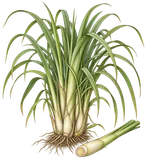
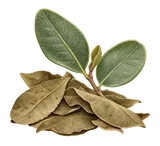
This introduced aromatic grass is established in Brazilian household tea culture. A study in Marechal Deodoro records leaf preparations in family herbal practice.
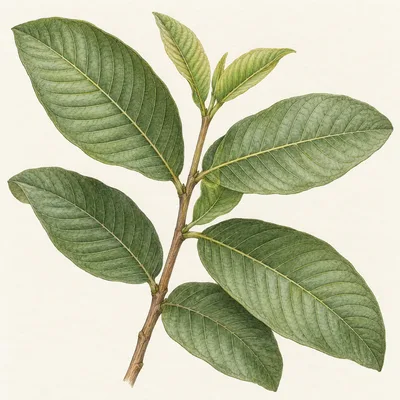
Guava is familiar as a fruit tree, but its leaves also appear in South American herbal records. Brazilian community research documents leaf tea for stomach complaints.
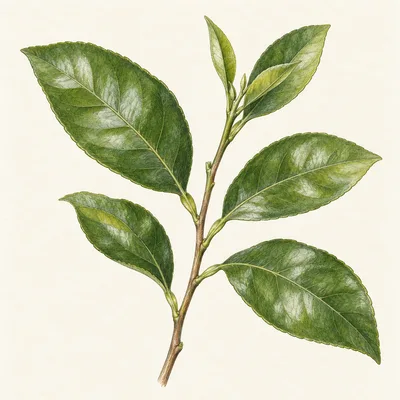
Sweet-orange leaves appear in Brazilian household herbal records as a material separate from juice and peel. A community survey in Marechal Deodoro, Alagoas, records orange-leaf tea. The account documents local practice rather than establishing a treatment or a daily-drink safety standard.
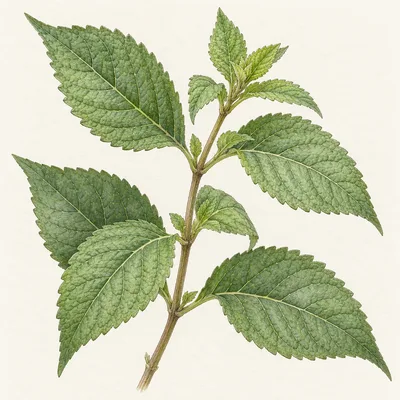
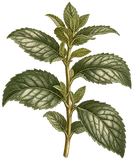
Peppermint belongs to introduced garden-tea culture in the Americas. A Brazilian community survey documents peppermint leaf tea in household herbal practice.
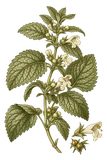
Lemon balm is an introduced herb in the Americas. Brazilian surveys record its leaf tea in family herbal practice, while US extension gardens use its lemony foliage in beverages.
Native South American tradition; introduced North American tea gardens
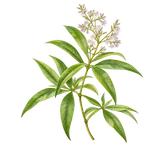
Lemon verbena is a South American aromatic plant whose culinary and herbal uses spread internationally. It is also documented in North American tea gardens.
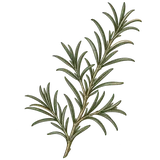
Rosemary has a documented place in Brazilian household herbal practice. The Marechal Deodoro survey lists the leaf, under the older name Rosmarinus officinalis, as a tea material. This regional association concerns an introduced culinary herb, not South American native origin.
Guayusa leaf beverages are part of Amazonian Kichwa life. Ethnobotanical research documents cultivation, morning consumption and the sharing of knowledge around the drink.
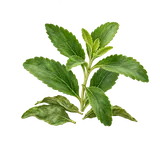
Guaraní and Mestizo communities used stevia leaves to sweeten tea and food. This leaf tradition is distinct from modern purified steviol-glycoside sweeteners.
Boldo leaf tea is recorded in Brazilian household herbal practice. European herbal monographs recognize longstanding digestive uses while noting limited clinical evidence.