

Research draft · Editorial review pending. Sources are linked below; these reports have not been approved as treatment advice.
Herbal leaf infusion
Guava leaf
Psidium guajava
Read cautions first · Check the sources
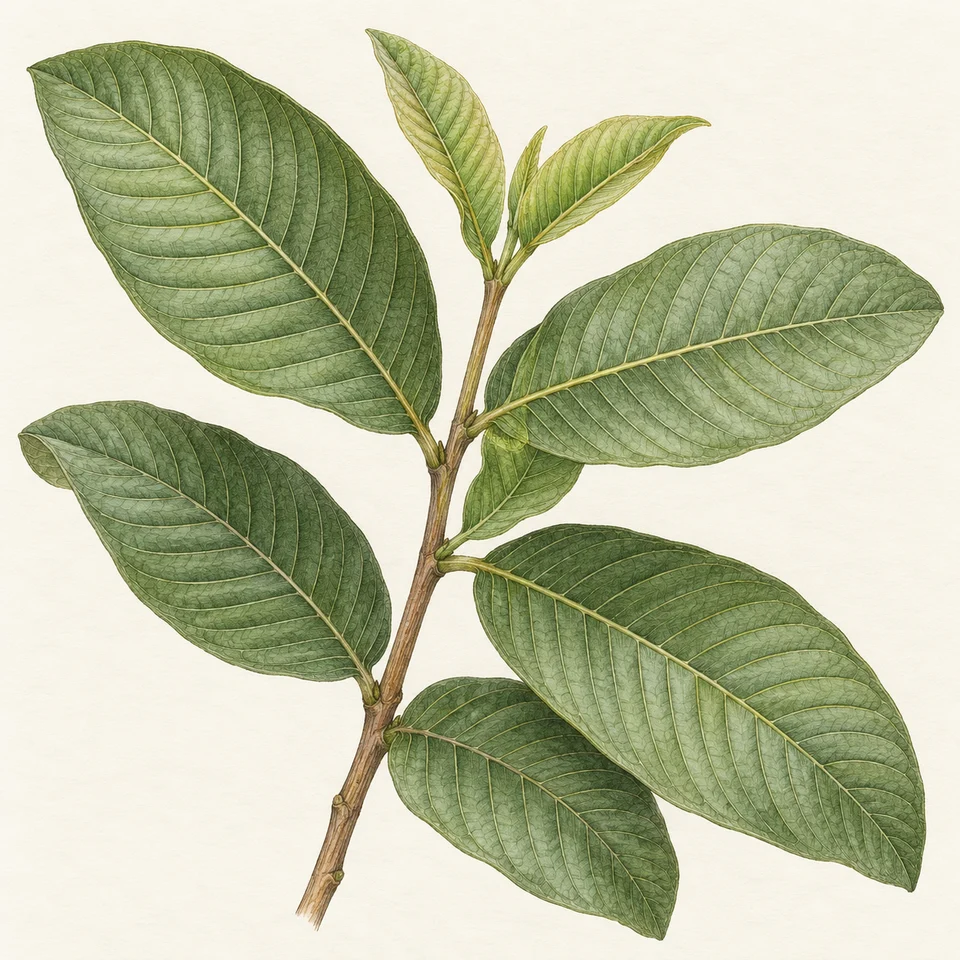
Guava leaves have a different household history from the familiar edible fruit. TRAMIL surveys document leaf preparations across the Antilles and neighboring mainland communities.
History, folklore, traditional and unusual uses
Only source-documented traditions are included; no unsourced legends have been added.
Caribbean
Dominica, Guadeloupe, Martinique, Haiti, Dominican Republic, Grenada, Trinidad and Tobago
Guava leaves have a different household history from the familiar edible fruit. TRAMIL surveys document leaf preparations across the Antilles and neighboring mainland communities.
- Leaves and young shoots were infused for diarrhoea.
- Leaf decoctions were reported for locally described nervous distress.
- Leaf washes and baths were used for skin eruptions.
Sources for this account: 1
South America
South American household herbal tradition
Guava is familiar as a fruit tree, but its leaves also appear in South American herbal records. Brazilian community research documents leaf tea for stomach complaints.
- Traditional leaf tea for stomach discomfort
Sources for this account: 1
Asia
Philippines; documented contemporary herbal-tea processing
Guava leaves are among the materials used in contemporary Philippine herbal-tea production. DOST-PCAARRD documents an Iloilo Science and Technology University drying project that specifically includes guava foliage. This is a leaf-use record, separate from guava fruit foods.
- Leaves dried as material for herbal tea.
Sources for this account: 1
Sources
Research selection updated 2026-10-15. Historical and traditional reports do not establish clinical effectiveness.