

Research draft · Editorial review pending. Sources are linked below; these reports have not been approved as treatment advice.
Herbal leaf infusion
Lemon verbena leaf
Aloysia citrodora
Read cautions first · Check the sources
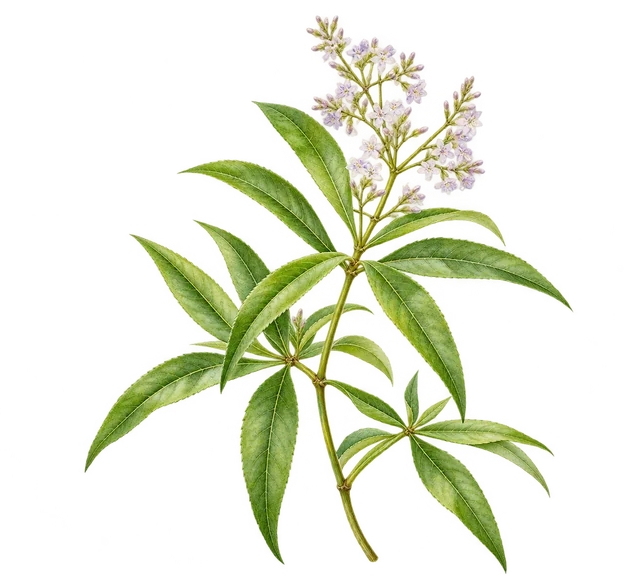
Lemon verbena is a South American aromatic plant whose leaf-infusion traditions spread internationally. Its regional stories include European herbal preparations, North African household infusions and introduced tea gardens. Regional use does not imply native origin.
History, folklore, traditional and unusual uses
Only source-documented traditions are included; no unsourced legends have been added.
Oceania
Introduced South American herb; contemporary Australian tea-garden use
Lemon verbena originated in South America. Green Adelaide documents its contemporary Australian use in hot or iced herbal drinks.
- Leaves used in herbal drinks.
- Leaves used to flavour desserts, salads and other foods.
- Fragrant leaves used in potpourri.
Europe
European herbal-monograph tradition; leaf preparations
South American lemon verbena became part of European herbal practice. EMA documents leaf infusions and decoctions in its traditional-use monograph. This European association does not imply European native origin.
- Traditional use for mild stress
- Traditional bedtime infusion
- Traditional infusion for bloating and intestinal gas
Sources for this account: 1
South America · North America
Native South American tradition; introduced North American tea gardens
Lemon verbena is a South American aromatic plant whose culinary and herbal uses spread internationally. It is also documented in North American tea gardens.
- Lemon-scented leaf beverage
- Traditional digestive herb
- Traditional calming herb
Africa
Introduced plant; documented African household leaf-infusion tradition
A survey in Morocco’s Settat Province records dried lemon-verbena leaves, called lwiza, prepared as an infusion. This is an introduced South American plant with a documented North African household tradition.
- Traditionally reported for calming and sleep.
- Traditionally reported for digestive discomfort.
Sources for this account: 1
Sources
- www.greenadelaide.sa.gov.au · source 1
- plants.ces.ncsu.edu · source 2
- powo.science.kew.org · source 3
- www.ema.europa.eu · source 4
- ri.conicet.gov.ar · source 5
- colplanta.org · source 6
- extension.illinois.edu · source 7
- pmc.ncbi.nlm.nih.gov · source 8
Research selection updated 2026-10-15. Historical and traditional reports do not establish clinical effectiveness.