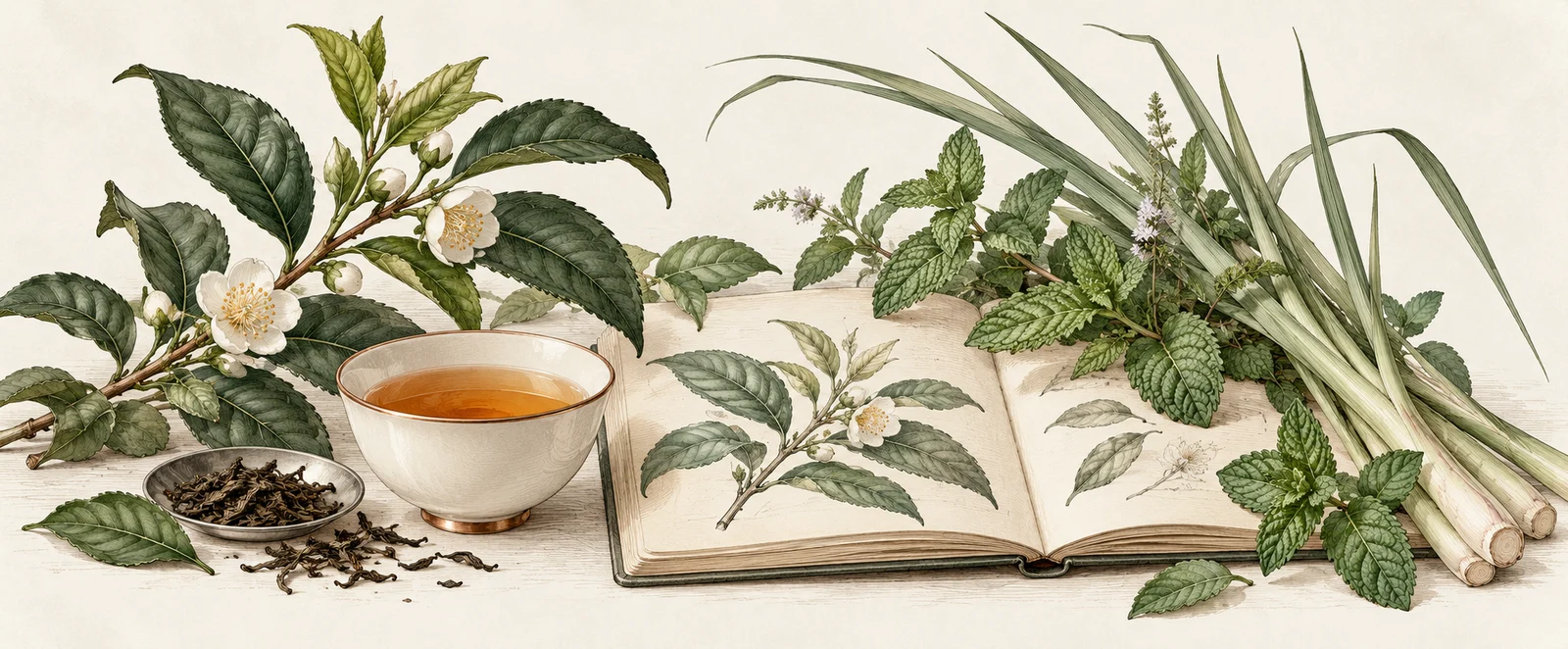
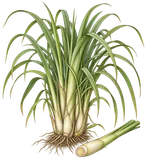
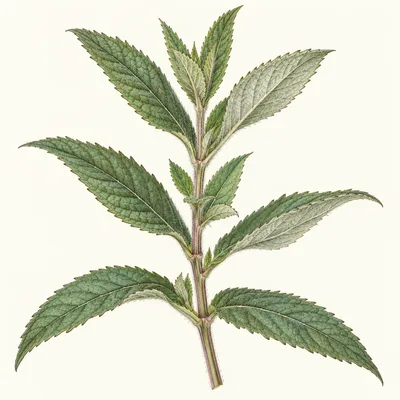
A Freetown ethnopharmacological survey records lemongrass leaves boiled and taken as tea. Respondents described sweetened or salted variants, illustrating a West African household preparation alongside traditions elsewhere.
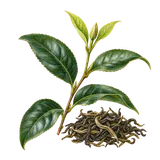
An Asian tea plant became central to British teatime and was introduced to Kenya in 1903, where cultivation developed under colonial rule. Black, green, white and oolong teas come from the same species’ leaves, processed differently.
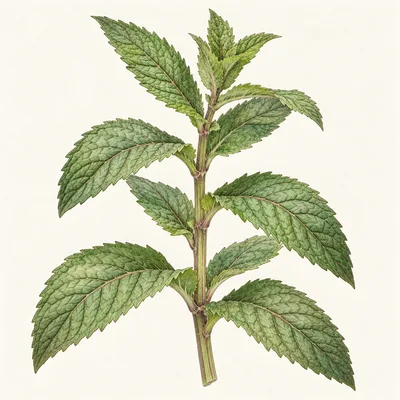
Spearmint is cultivated in many Moroccan regions and is used to flavour tea. Its aromatic leaves belong to a culinary tea tradition as well as wider mint use.
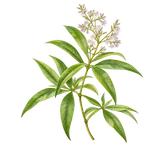
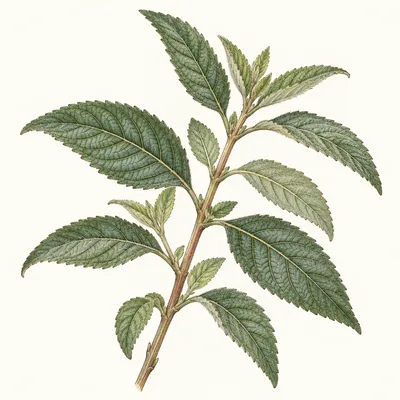
A survey in Morocco’s Settat Province records dried lemon-verbena leaves, called lwiza, prepared as an infusion. This is an introduced South American plant with a documented North African household tradition.
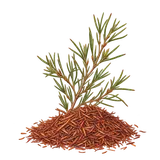
Indigenous communities of South Africa’s Cederberg used rooibos before its development as a commercial tea. The infusion uses needle-like leaves and young stems, traditionally cut and oxidised before drying.
Cyclopia genistoides, C. intermedia and C. subternata
Documented regional herbal tradition
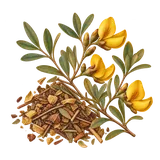
Honeybush was a household tea of South Africa’s Cape before becoming a commercial crop. Chopped leaves and stems are oxidised and dried for a sweet-smelling infusion, sometimes simmered.
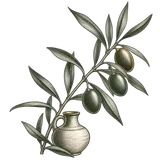
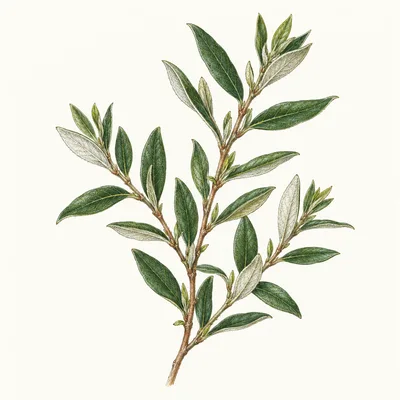
Olive-leaf preparations belong to Mediterranean herbal traditions, including European and Moroccan practice. EMA documents herbal tea from fresh or dried leaves; this is distinct from olive fruit and olive oil.
Wild mint occurs in southern Africa and beyond; SANBI records its long-standing kitchen and household use. Southern African preparations commonly use the leaves as an infusion.
SANBI records Xhosa use of a weak leaf-and-stem infusion as a tea substitute. The shrub grows across much of southern and tropical Africa and also has distinct medicinal and ritual traditions.
SANBI records San use of Athrixia leaves as tea in southern Africa. It also records Sotho and Xhosa throat-related use, which should be distinguished from drinking an everyday leaf infusion.
A survey in Settat Province, Morocco, records rosemary as yazir and describes fresh or dried leaves used in tisanes and infusions. The plant is listed under Rosmarinus officinalis, a synonym of Salvia rosmarinus. The survey is evidence of reported household use, not proof of medical benefit.
South Africa; contemporary tea production from an introduced tree
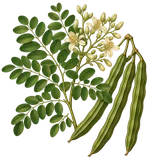
South Africa’s Agricultural Research Council documents moringa tea bags and iced tea among its developed products. This is a contemporary African use of an introduced South Asian tree. It should not be confused with other Moringa species or described as an ancient pan-African tea tradition.