

Research draft · Editorial review pending. Sources are linked below; these reports have not been approved as treatment advice.
Herbal leaf infusion
Sweet-orange leaf
Citrus × sinensis (sweet-orange group)
Read cautions first · Check the sources
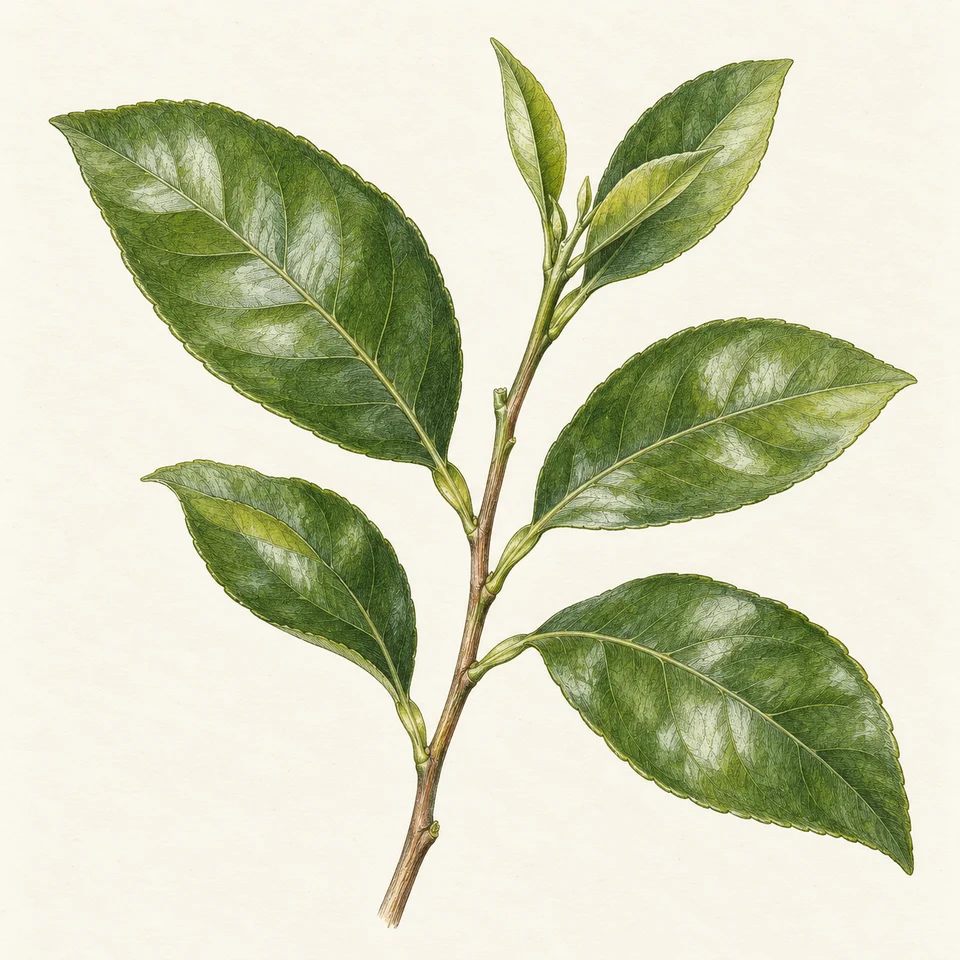
Haitian and Dominican surveys record a leaf-infusion tradition alongside ordinary use of orange fruit. The leaf belongs here as its own material, not as a claim that fruit nutrition carries over to tea. TRAMIL separately records fruit juice used for eye complaints. That is a different material and route from this leaf infusion, and the source warns that it can worsen eye irritation.
History, folklore, traditional and unusual uses
Only source-documented traditions are included; no unsourced legends have been added.
Caribbean
Haiti and Dominican Republic
Haitian and Dominican surveys record a leaf-infusion tradition alongside ordinary use of orange fruit. The leaf belongs here as its own material, not as a claim that fruit nutrition carries over to tea.
- Leaf preparations were reported for flu.
- Leaves or rind were reported for fever.
- Leaf infusions were reported for headaches.
Sources for this account: 1
South America
Brazil; documented household leaf infusion
Sweet-orange leaves appear in Brazilian household herbal records as a material separate from juice and peel. A community survey in Marechal Deodoro, Alagoas, records orange-leaf tea. The account documents local practice rather than establishing a treatment or a daily-drink safety standard.
- Orange leaves prepared as household tea in the surveyed community.
Sources for this account: 1
Sources
Research selection updated 2026-10-15. Historical and traditional reports do not establish clinical effectiveness.