

Research draft · Editorial review pending. Sources are linked below; these reports have not been approved as treatment advice.
Herbal leaf infusion
Rosemary leaf
Salvia rosmarinus (syn. Rosmarinus officinalis)
Read cautions first · Check the sources
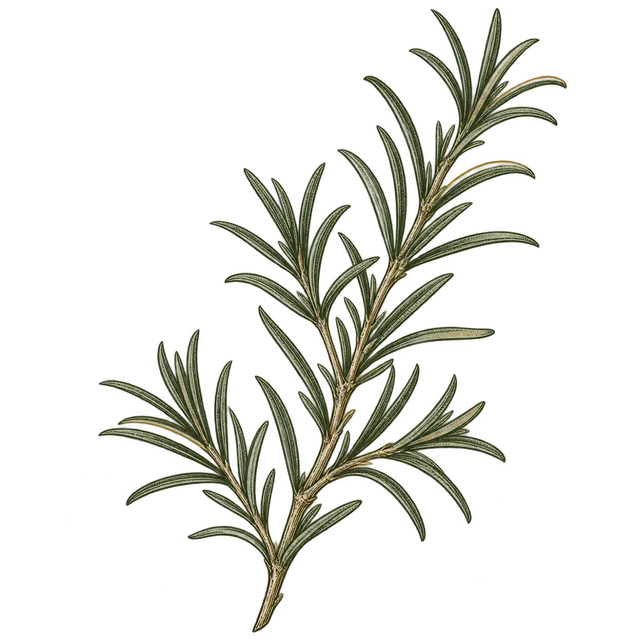
Rosemary leaf appears in the European herbal tradition under the name Rosmarinus officinalis. EMA distinguishes dried-leaf tea from external bath preparations and from rosemary essential oil.
History, folklore, traditional and unusual uses
Only source-documented traditions are included; no unsourced legends have been added.
Europe
Documented regional herbal tradition
Rosemary leaf appears in the European herbal tradition under the name Rosmarinus officinalis. EMA distinguishes dried-leaf tea from external bath preparations and from rosemary essential oil.
- Traditional leaf tea for indigestion and mild digestive spasms
South America
Brazil; introduced herb in household tea practice
Rosemary has a documented place in Brazilian household herbal practice. The Marechal Deodoro survey lists the leaf, under the older name Rosmarinus officinalis, as a tea material. This regional association concerns an introduced culinary herb, not South American native origin.
- Rosemary leaves used in household infusions.
Sources for this account: 1
North America
United States; introduced tea-garden culture
Clemson Extension includes rosemary among perennial herbs for South Carolina tea gardens. This documents contemporary North American use of its aromatic foliage, alongside its better-known role in cooking. The leaf infusion is distinct from distilled rosemary essential oil.
- Aromatic foliage included in contemporary herbal-tea gardens.
Sources for this account: 1
Africa
Morocco; documented household leaf-infusion tradition
A survey in Settat Province, Morocco, records rosemary as yazir and describes fresh or dried leaves used in tisanes and infusions. The plant is listed under Rosmarinus officinalis, a synonym of Salvia rosmarinus. The survey is evidence of reported household use, not proof of medical benefit.
- Fresh or dried rosemary leaves prepared as tisanes and infusions.
Sources for this account: 1
Sources
- www.ema.europa.eu · source 1
- www.ema.europa.eu · source 2
- www.scielo.br · source 3
- hgic.clemson.edu · source 4
- pmc.ncbi.nlm.nih.gov · source 5
Research selection updated 2026-10-15. Historical and traditional reports do not establish clinical effectiveness.