

Research draft · Editorial review pending. Sources are linked below; these reports have not been approved as treatment advice.
True tea
Tea leaf
Camellia sinensis
Read cautions first · Check the sources
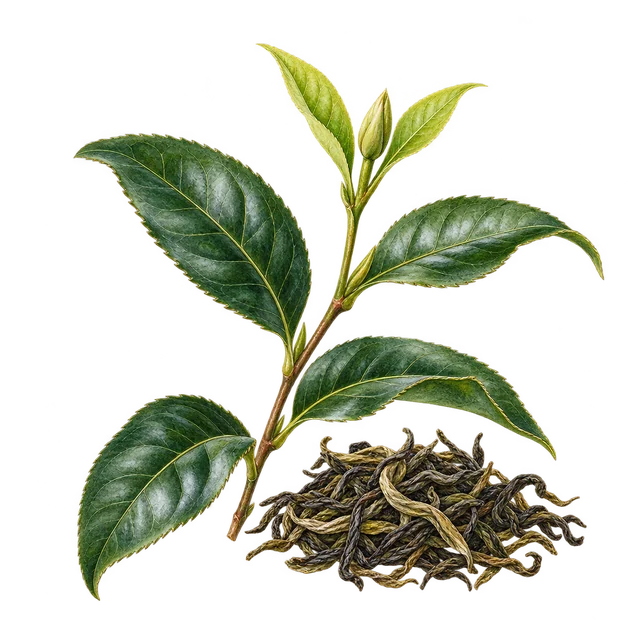
Tea cultivation developed in China thousands of years ago, and tea drinking became part of social rituals across Asia. Green, black, white and oolong teas come from the same species, with their differences largely created by processing the leaves.
History, folklore, traditional and unusual uses
Only source-documented traditions are included; no unsourced legends have been added.
Asia
Documented regional plant-use tradition
Tea cultivation developed in China thousands of years ago, and tea drinking became part of social rituals across Asia. Green, black, white and oolong teas come from the same species, with their differences largely created by processing the leaves.
- Leaf-based everyday and ceremonial beverages, including Japanese tea ceremonies and Indian chai breaks.
- Historically used as a stimulant in Chinese medicine.
- Historically used for digestive complaints in Chinese medicine.
Asia · Europe · Africa
Documented regional herbal tradition
An Asian tea plant became central to British teatime and was introduced to Kenya in 1903, where cultivation developed under colonial rule. Black, green, white and oolong teas come from the same species’ leaves, processed differently.
- Everyday brewed beverage
- Social tea rituals
- Traditionally valued as a stimulant
Oceania
New Zealand tea culture and Australian tea cultivation; introduced plant
Imported black tea became an everyday drink in New Zealand, where it is also called gumboot tea. Australia has also developed green-tea cultivation and processing research. These are introduced tea traditions built around the Asian Camellia sinensis plant, separate from local plants called tea tree.
- Black tea as an everyday social beverage in New Zealand.
- Green tea produced from leaves grown in Australia.
Sources
- www.kew.org · source 1
- www.nccih.nih.gov · source 2
- powo.science.kew.org · source 3
- www.kalro.org · source 4
- www.makeitkenya.go.ke · source 5
- teara.govt.nz · source 6
- agrifutures.com.au · source 7
Research selection updated 2026-10-15. Historical and traditional reports do not establish clinical effectiveness.