A curated, non-exhaustive selection. Explore documented plant connections across Atlantic islands, from Greenland to the Azores, Madeira and São Tomé and Príncipe. This ocean-based collection crosses continental regions; each entry names its specific island connection. Caribbean entries have their own collection.
Browse places and the sources that link plants to them. Some plants and places appear in more than one collection. These lists do not assign each island to one continent or set political borders.
Traditional useGreenland · North Atlantic / Arctic
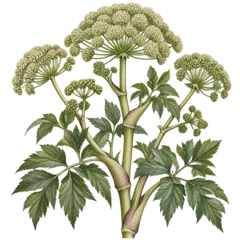
Visit Greenland identifies Angelica archangelica subsp. archangelica in southern Greenland north to Disko Island and Tasiilaq, and documents its use as a wild vegetable, seasoning and flavouring. This is a documented food-use association.
CultivatedSão Tomé and Príncipe · Gulf of Guinea, Africa
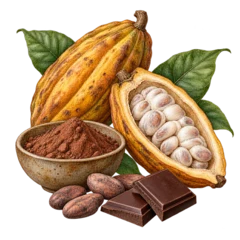
Cacao is cultivated in the islands’ agroforestry gardens, including the Amelonado variety. FAO documents this multigenerational farming system; the association is cultivation, not native origin.
CultivatedFajã dos Vimes, São Jorge · Azores, Portugal
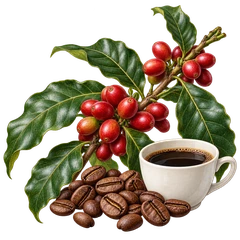
The Azores Tourism Board documents coffee planted and prepared locally at Fajã dos Vimes on São Jorge. This is local cultivation, not a native-range claim.
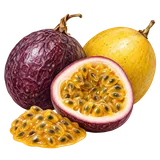
Passion fruit is a cultivated regional fruit used fresh and in Madeiran drinks and desserts. Madeira’s agricultural authority identifies the cultivated maracujá as Passiflora edulis.
Traditional useCurral das Freiras, Madeira · Madeira, Portugal
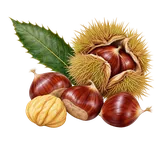
Edible chestnuts have a documented role in Madeiran dishes and in the Chestnut Festival at Curral das Freiras. This culinary association does not imply native origin.
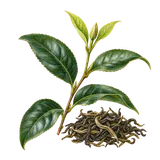
Introduced tea plants are cultivated on São Miguel and processed into black and green tea. This association concerns tea leaves and beverages, not concentrated extracts.