


Key cautions
- Wash before cutting, remove the shell and refrigerate cut fruit.
- If pineapple causes an allergic reaction, stop eating it; people with latex allergy may also react to some fruits, including pineapple.
What’s inside
Water, naturally occurring carbohydrate, fiber, vitamin C and the protein-digesting enzyme group bromelain. Heat processing changes enzyme activity.
Uses in brief

- Eat prepared fresh pieces or add pineapple to cooked dishes.
- Use juice, dried fruit or a tested mixed-fruit spread as different food forms.
History, folklore and reported uses
History, folklore and traditional uses
Pineapple cultivation in the tropical Americas and Caribbean predates European voyages. UF/IFAS describes Indigenous cultivation followed by movement of the crop to Europe, Africa and Asia, and eventually an international trade in fresh and processed fruit.
That travel history is reflected in a varied food repertoire. Pineapple is served as prepared fresh fruit, pressed for juice, dried, cooked into savory dishes and made into preserves. These distinct food forms preserve different amounts of water and fruit solids and should not be treated as one standardized supplement.
A closer look at its history
Indigenous cultivation came before European discovery
Pineapple was already spread across tropical America when Europeans encountered it in Guadeloupe in 1493. Kew places its origin in South American lowlands and records Indigenous food, beverage and medicinal uses. Calling that encounter its discovery would erase the growers who had already selected and carried nearly seedless cultivated forms.
A fruit also became a textile and status symbol
Kew’s collection holds pineapple fibre, thread, cloth and finished clothing. British hothouse cultivation became fashionable in the early eighteenth century, and pineapple-shaped architecture followed. Extracted bromelain also became a meat tenderizer; protein breakdown in food is a specific biochemical use, not proof that eating pineapple treats disease.
Additional history reviewed 2026-10-10
Traditional, historical and reported uses
- Fresh prepared fruit
Food or household practiceWhy this label?
The claim documents fresh prepared fruit as a culinary, craft, gardening, or practical material use; it reports neither a treatment outcome nor measured nutrient content.
The peeled edible flesh is served as a table fruit.
- Juice and beverages
Food or household practiceWhy this label?
The claim documents juice and beverages as a culinary, craft, gardening, or practical material use; it reports neither a treatment outcome nor measured nutrient content.
Pineapple is juiced as a separate food preparation.
- Savory cooked dishes
Food or household practiceWhy this label?
The claim documents savory cooked dishes as a culinary, craft, gardening, or practical material use; it reports neither a treatment outcome nor measured nutrient content.
Pineapple is incorporated into cooked meals as well as desserts.
- Dried fruit
Food or household practiceWhy this label?
The claim documents dried fruit as a culinary, craft, gardening, or practical material use; it reports neither a treatment outcome nor measured nutrient content.
Drying turns the fruit into a more concentrated, portable food.
- Mixed-fruit spreads
Food or household practiceWhy this label?
The claim documents mixed-fruit spreads as a culinary, craft, gardening, or practical material use; it reports neither a treatment outcome nor measured nutrient content.
A tested peach-pineapple spread is one documented preserving application.
- Piña cloth from the leaves
Food or household practiceWhy this label?
The claim documents piña cloth from the leaves as a culinary, craft, gardening, or practical material use; it reports neither a treatment outcome nor measured nutrient content.
SFO Museum documents Philippine piña textiles woven from pineapple-leaf fibers, including Red Spanish plants cultivated for their long leaves. The cloth was used for shirts, blouses, scarves and table linens, giving the plant a textile history beyond its fruit.
- Fruit displayed as a sign of wealth
Historical recordWhy this label?
The National Trust documents historical pineapple display as a status object; this is social history, not a nutrition or efficacy claim.
The National Trust records pineapples displayed in grand houses as symbols of wealth. In this social use, the whole fruit served as an object of admiration and status, beyond its ordinary role as food.
Five culinary forms are documented. Historical medicinal use and modern enzyme products are kept separate from edible-fruit nutrition.
Historical-use additions reviewed 2026-10-08
Story sources
Growing notes
Ananas comosus culinary cultivars, excluding ornamental-only selections.
- Climate and habit
- A frost-tender rosette perennial, usually 3–6 feet across when mature. Give strong sun; containers allow winter protection in colder regions. Move outside after frost risk, not during cool spring nights. [1]
- Soil, water and starting plants
- Use freely draining soil and clean crowns, slips or suckers. Let detached planting material dry briefly before planting. Water during dry periods without keeping roots saturated. [1]
- Pollination and timing
- Fruit can develop without seed-producing cross-pollination. Different cultivars flowering together may produce seedy fruit. Time to fruit depends on planting material, plant size and warmth; this is not a one-summer crop. [1]
- Harvest and renewal
- For sweetness, wait for substantial shell-color change toward yellow. Retain one strong sucker for a following crop. Inspect for mealybugs and scales; prolonged wetness encourages root rot. [1]
Growing sources and regional guidance
Growing notes reviewed 2026-10-10
Regional reading paths
These sourced notes describe cultivation, trade, food traditions or material history. A regional connection does not claim exclusive origin.
South America
native and cultivated; tropical South America, Brazil
Fresh fruit and juice.
Australia & Oceania
Introduced into Hawaiʻi; plantation cultivation and processing became an important part of the islands’ agricultural history.
Ripe fruit is eaten fresh or processed as food and juice.
Identity & detailed reference
Identity
The edible flesh of cultivated pineapple, a tropical bromeliad. Eating the fruit is distinct from taking a bromelain supplement or using a prescription enzyme preparation.
Ingredient details, preparation and research
Also known as: Ananas
Source plant or material
Ananas comosus, a rosette-forming herbaceous perennial.
Plant family / material: Bromeliaceae (bromeliad family)
Forms and route
Fresh or frozen pieces, canned slices or crushed fruit, juice and dried fruit; also cooked dishes and mixed-fruit spreads.
Vitamins and minerals
Prepared pineapple flesh supplies carbohydrate, vitamin C and fiber. Juice, dried fruit and syrup-packed canned products differ in concentration and ingredients; check the product label.
Absorption and preparation
Protein breakdown in a cooking demonstration does not prove that a pineapple serving treats digestive disease or delivers a clinical bromelain dose. Whole-food and concentrated-enzyme evidence remain separate.
Practical preparation
Use a stable board and knife to remove the crown, shell and tough center as desired. For gelatin desserts, use canned pineapple as directed; active enzymes in fresh fruit can prevent a firm set.
Food notes
Prepared edible fruit flesh; tough shell and leafy crown are removed. Commercial stem-derived enzymes are separate products.
Combination context
Pineapple adds sweetness and acidity to savory dishes. A fresh-juice marinade can soften meat excessively if left too long, while canned juice does not supply the same active tenderizing enzyme.
Traditional and reported uses
- Eat prepared fresh pieces or add pineapple to cooked dishes.
- Use juice, dried fruit or a tested mixed-fruit spread as different food forms.
- Fresh pineapple can tenderize meat; canned fruit behaves differently because of heat processing.
Contraindications and cautions
- Wash before cutting, remove the shell and refrigerate cut fruit.
- If pineapple causes an allergic reaction, stop eating it; people with latex allergy may also react to some fruits, including pineapple.
- Do not put raw pineapple on burns or use fruit in place of prescribed bromelain treatment.
Similar items and how they compare
- Bromelain supplement
Uses pineapple-associated enzymes.
A concentrated preparation with separate efficacy, dose and medication questions.
- Canned pineapple
The same fruit after processing.
Heating reduces the enzyme activity that affects meat and gelatin; syrup may add sugar.
- Pineapple juice
A common drink made from the fruit.
Has a different solid and fiber profile from eating prepared flesh.
A cultivated bromeliad
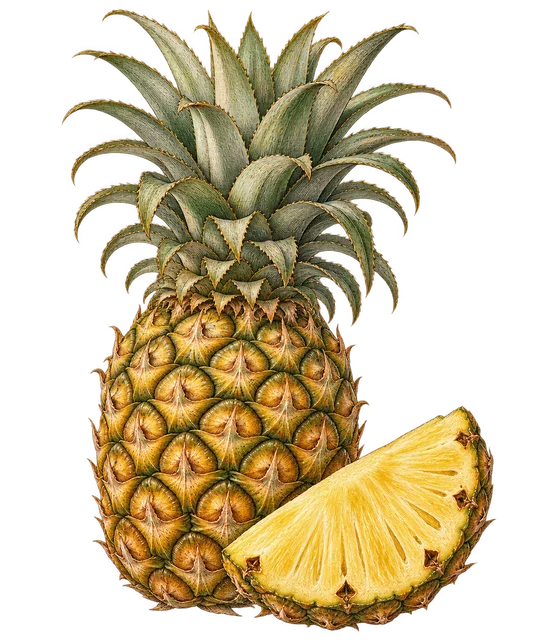
Kew identifies pineapple as Ananas comosus in Bromeliaceae. Its edible structure and spiny rosette distinguish it from apples despite its English common name.
Bromelain evidence belongs to the preparation
NCCIH identifies bromelain in pineapple stems and fruit. Research on oral extracts is limited for many promoted purposes; professionally administered topical products are not homemade fruit treatments.
Preserves need their own method
The National Center provides a tested peach-pineapple spread using unsweetened crushed pineapple and bottled lemon juice. Follow its full process rather than adapting a fresh-fruit mixture for pantry storage.
Evidence limits
- Nutrition is qualitative; no USDA serving calculation or quantitative nutrient profile is asserted.
Entry sources
- Kew Plants of the World Online: Ananas comosus (L.) Merr.
- UF/IFAS Extension: Pineapple Growing in the Florida Home Landscape
- Academy of Nutrition and Dietetics: All About Pineapple
- NCCIH: Bromelain, usefulness and safety
- National Center for Home Food Preservation: Reduced-Sugar Peach-Pineapple Spread
- FDA: Selecting and Serving Produce Safely
- SFO Museum: From Pineapple to Piña, A Philippine Textile Treasure
- National Trust: Discover the house at Dunham Massey, pineapple display history
Reference entry 172 · Recorded content review: 2026-10-07 · Review scope and dates