


Key cautions
- Tea contains caffeine, which can affect sleep and cause symptoms in sensitive people. Consider all caffeine sources, including pregnancy-specific advice.
- Green tea can interact with some medicines, including nadolol. Ask a clinician or pharmacist about substantial changes if taking medicines.
What’s inside
Caffeine, polyphenols including catechins and other compounds formed during processing, and amino acids. Amounts depend on leaf, brewing and whether the whole powder is consumed.
Uses in brief

- Brewed green or white tea
- Black and oolong tea
History, folklore and reported uses
History, folklore and traditional uses
FAO describes major Asian tea-growing traditions and heritage sites in China, Korea and Japan. Different processing methods produce distinct drinks from the same species rather than different botanical teas.
Traditional, historical and reported uses
- Brewed green or white tea
Food or household practiceWhy this label?
The cited source documents this material, preparation or cultural practice; it does not establish treatment efficacy.
Water extracts flavour and caffeine from processed leaves. Brewing strength varies, so cup size alone cannot identify a standardized catechin or caffeine amount.
- Black and oolong tea
Food or household practiceWhy this label?
The cited source documents this material, preparation or cultural practice; it does not establish treatment efficacy.
Different leaf processing produces the colour and flavour of black and oolong teas. These are ordinary beverages, not interchangeable doses of green-tea extract.
2 supported featured food or cultural uses; no treatment claim.
Historical-use additions reviewed 2026-10-09
Health topics: evidence and cautions
These notes describe a specific research context and preparation. A topic link is not a treatment recommendation.
Stress · Symptom support
Form and route: Study black-tea drink compared with a caffeine-matched placebo beverage · oral
Condition and setting: Recovery after acute laboratory stress in healthy men
Tea did not reduce the immediate subjective stress or cardiovascular response. It was associated with greater relaxation and lower cortisol during recovery.
Evidence: Limited clinical evidence; one controlled beverage trial
Seventy-five healthy nonsmoking men underwent a washout followed by six weeks of tea or matched placebo and laboratory stress testing.
Limits
This is a recovery signal in a controlled experiment, not evidence that tea treats chronic stress. Caffeine-matched comparison does not show that caffeine itself is calming.
Cautions
- Caffeine can worsen sleep or feelings of anxiety in sensitive people; avoid excess and consider timing. Concentrated green-tea supplements and tea-tree oil are different materials.
Regional reading paths
These sourced notes describe cultivation, trade, food traditions or material history. A regional connection does not claim exclusive origin.
Asia
Cultivated: China, India, Japan and Korea; longstanding tea-processing traditions.
Infused processed leaves, including green and black teas.
Identity & detailed reference
Identity
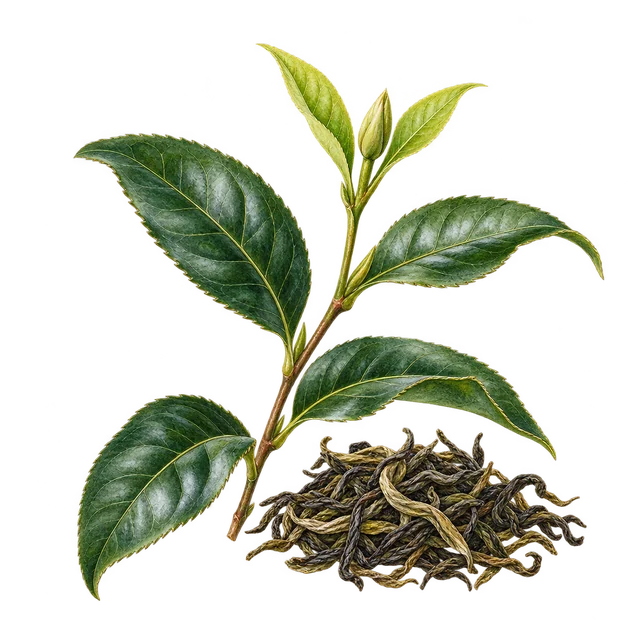
Camellia sinensis leaves processed into green, black, white or oolong tea and brewed as a beverage. Herbal tisanes from other plants and concentrated green-tea extracts are different materials.
Ingredient details, preparation and research
Also known as: Camellia sinensis; Green tea beverage; Black tea; Oolong; White tea
Source plant or material
Camellia sinensis
Plant family / material: Theaceae
Forms and route
Loose leaves, tea bags and brewed drinks; powdered whole-leaf tea such as matcha is a separate food form within the species. Sweetened bottled drinks vary by recipe.
Vitamins and minerals
Unsweetened strained tea is not the same food as a milk-and-sugar drink or whole-leaf powder. No universal nutrient, caffeine or catechin value is assigned.
Absorption and preparation
Polyphenol content in leaves does not directly predict what is absorbed. Brewing and processing affect exposure; no medicinal combination or concentration is recommended.
Practical preparation
Use clean drinking water and follow the tea product’s brewing guidance. Refrigerate prepared tea that will be stored, and check added sugar and other ingredients in bottled drinks.
Combination notes
Milk, sugar and sweetened flavourings change the drink’s composition; evaluate the actual prepared beverage.
Traditional and reported uses
- Brewed green or white tea
- Black and oolong tea
Contraindications and cautions
- Tea contains caffeine, which can affect sleep and cause symptoms in sensitive people. Consider all caffeine sources, including pregnancy-specific advice.
- Green tea can interact with some medicines, including nadolol. Ask a clinician or pharmacist about substantial changes if taking medicines.
Beverage versus supplement evidence
NCCIH notes that many green-tea studies tested extracts rather than brewed tea. Liver injury reports primarily involve extract products; they should not be used to claim either that all tea is dangerous or that concentrated products equal a familiar drink.
Evidence limits
Beverage overview; not a weight-loss, cancer-prevention or extract-dosing guide.
Entry sources
Reference entry 348 · Recorded content review: 2026-10-09 · Review scope and dates