Body odor can have several causes. This guide separates everyday skin care, deodorant research, traditional sweating remedies, and rare conditions that need medical assessment.
Underarm and everyday body odor, cosmetic formulation roles, and separate rare metabolic-odor research. Most ingredient studies are not specific to men.
Decorative topic illustration.
Care basics come first
Wash gently, dry well, and change clothes and socks regularly.
Deodorant addresses odor; an antiperspirant reduces sweat. They do different jobs.
Follow the intended body-area directions on the label. Avoid fragranced products on the groin.
Do not use an ingredient list as a homemade deodorant recipe.
Some cosmetic powders, including products labeled arrowroot, absorb moisture. A food-starch card does not identify or validate the finished deodorant.
How we chose these entries
Ten references explain specific cosmetic roles, limited studies and traditional or rare-condition uses. This is not a ranked list of proven remedies; the count is not a quota.
No objective top 20 exists. Strong male-specific trials and long-term comparisons are sparse; food powders and rare-metabolic-condition findings should not be promoted as everyday odor treatments.
No records match. Try another name or clear the filters.
Cosmetic formulation references
A formulation role does not establish a clinical benefit or treatment for a named condition.
Cosmetic formulation role
Witch hazel in deodorants
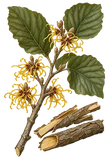
Ingredient reference illustration: Witch hazel. Formulation context: Ingredient in a labeled cosmetic deodorant. A cosmetic formulation role does not establish odor reduction or a clinical benefit. The picture does not verify a commercial formulation. Decorative illustration; not an identification reference.
Hamamelis virginiana L. · Product-specific extract or distillate
Form
Ingredient in a labeled cosmetic deodorant
How it is used
topical
Evidence
Cosmetic formulation reference
Witch hazel appears in odor-targeting deodorant formulas.
Condition and setting
Everyday deodorant formulation; not excessive-sweating treatment
Cautions
Choose a finished labeled product; discontinue if skin becomes irritated.
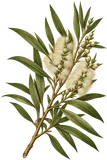
Ingredient reference illustration: Tea tree essential oil. Formulation context: Ingredient in a finished topical deodorant. A cosmetic formulation role does not establish odor reduction or a clinical benefit. The picture does not verify a commercial formulation. Decorative illustration; not an identification reference.
Melaleuca alternifolia · Distilled leaf oil
Form
Ingredient in a finished topical deodorant
How it is used
topical
Evidence
Cosmetic formulation reference
Tea tree oil appears in some odor-targeting cosmetic products.
Condition and setting
Everyday deodorant formulation; not excessive-sweating treatment
Cautions
Do not swallow tea tree oil.
Topical oil products can cause redness or irritation.
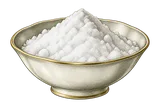
Ingredient reference illustration: Baking soda (sodium bicarbonate). Formulation context: Ingredient in a finished topical deodorant. A cosmetic formulation role does not establish odor reduction or a clinical benefit. The picture does not verify a commercial formulation. Decorative illustration; not an identification reference.
Sodium bicarbonate
Form
Ingredient in a finished topical deodorant
How it is used
topical
Evidence
Cosmetic formulation reference
Baking soda is used in some odor-targeting deodorants.
Condition and setting
Everyday deodorant formulation; not excessive-sweating treatment
Cautions
Avoid homemade alkaline pastes or abrasive underarm scrubbing, particularly on irritated skin.
Read the outcome, preparation and limits. A studied benefit does not make every product effective.
Symptom support
Zinc oxide topical preparation
Ingredient reference illustration: Zinc oxide (topical). Studied form: Topical study preparation; not oral zinc tablets or zinc-rich foods. This does not verify the trial product or formulation, or show that it works. Decorative illustration; not an identification reference.
Inorganic zinc compound
Form
Topical study preparation; not oral zinc tablets or zinc-rich foods
How it is used
topical
Evidence
Limited human evidence
A small trial found reduced self-rated underarm odor with topical zinc oxide.
Condition and setting
Underarm malodor in healthy volunteers
Cautions
Use only a finished product intended for the relevant skin area.
Do not swallow topical products or assume nutritional zinc is interchangeable.
Symptom research preparation reference. The specific research preparation or product is not pictured. This symbol marks an evidence or safety record, not a recommended remedy.
Humulus lupulus (hops component) · Supercritical hops extract plus zinc ricinoleate and cosmetic base
Form
Combined finished deodorant stick
How it is used
topical
Evidence
Limited human formulation research
A combined hops-extract deodorant reduced judged underarm odor in a product study.
Condition and setting
Underarm malodor; combined cosmetic formulation
Cautions
Use according to a finished product label; stop for irritation.
Do not recreate laboratory extracts or use a brewing ingredient as skin medicine.
Why no exact ingredient link?
No single-material ingredient entry represents this exact research preparation. The studied stick combined hops extract, zinc ricinoleate and a base. Hops strobiles alone are different.
Evidence, limits and sources for Hops extract and zinc ricinoleate deodorant
What was found
Sensory assessors recorded lower odor scores after application. The abstract does not identify a randomized comparator.
What this does not show
Hops, zinc ricinoleate, and the base were not isolated. Tea, beer, and generic extracts are not equivalents.
Exact ingredient
The studied stick combined hops extract, zinc ricinoleate and a base. Hops strobiles alone are different.
Why we included it
Useful combination finding without assigning the result to hops alone.
Related material only
These are different ingredients or forms. Do not assume the same findings apply to them.
Supportive-care research reference. The specific research preparation or product is not pictured. This symbol marks an evidence or safety record, not a recommended remedy.
Specially processed activated carbon
Form
Oral preparation used in a small metabolic-disorder study
How it is used
oral
Evidence
Very limited rare-condition evidence
A small trimethylaminuria study reported improved urinary odor-metabolite measures during activated-charcoal use.
Clinician assessment is needed before treating suspected trimethylaminuria.
Activated charcoal can bind medicines and reduce their absorption; do not self-treat poisoning.
Vomiting and aspiration are risks; do not use when drowsy or unable to swallow safely.
Why no exact ingredient link?
No single-material ingredient entry represents this exact research preparation. The study used specially processed activated carbon. Ordinary charcoal is not equivalent.
Evidence, limits and sources for Activated charcoal
What was found
The report concerned people with impaired trimethylamine metabolism, not routine sweat odor.
What this does not show
No general internal-deodorant or detox claim is supported. The study was small and not a definitive odor trial.
Exact ingredient
The study used specially processed activated carbon. Ordinary charcoal is not equivalent.
Why we included it
Keep a commonly marketed supplement claim in its actual disease context.
Supportive-care research reference. The specific research preparation or product is not pictured. This symbol marks an evidence or safety record, not a recommended remedy.
Copper-containing chlorophyll derivative
Form
Defined oral derivative used in a small study
How it is used
oral
Evidence
Very limited rare-condition evidence
A small trimethylaminuria study found lower urinary trimethylamine with copper chlorophyllin.
Discuss suspected metabolic odor and supplements with a clinician.
Do not substitute copper supplements or assume all green products have the same composition.
Why no exact ingredient link?
No single-material ingredient entry represents this exact research preparation. The study used copper chlorophyllin. Leafy greens, copper supplements and natural chlorophyll are not substitutes.
Evidence, limits and sources for Copper chlorophyllin
What was found
The study measured odor-related metabolites in a rare metabolic condition.
What this does not show
This does not establish routine body-odor benefit or effects of chlorophyll drinks and vegetables.
Exact ingredient
The study used copper chlorophyllin. Leafy greens, copper supplements and natural chlorophyll are not substitutes.
Why we included it
Correct broad internal-deodorant marketing by naming the studied derivative.
Ingredient reference illustration: Vitamin B2 Riboflavin. Studied form: Clinician-directed oral riboflavin. This does not verify the trial product or formulation, or show that it works. Decorative illustration; not an identification reference.
Vitamin B2
Form
Clinician-directed oral riboflavin
How it is used
oral
Evidence
Case evidence; not adult-men efficacy evidence
Riboflavin improved odor-related findings in two children with confirmed trimethylaminuria.
Condition and setting
Pediatric genetically supported trimethylaminuria; contextual evidence only
Cautions
Persistent unexplained odor deserves assessment rather than automatic high-dose supplements.
Symptom research preparation reference. The specific research preparation or product is not pictured. This symbol marks an evidence or safety record, not a recommended remedy.
Lotus corniculatus L. · Seed-derived laboratory extract
A small experimental cosmetic study reported reduced underarm odor after one week.
Condition and setting
Underarm malodor in women; experimental cosmetic research
Cautions
No home fermentation or raw-trefoil skin recipe is supported.
Finished-product safety and efficacy require separate assessment.
Why no exact ingredient link?
No single-material ingredient entry represents this exact research preparation. The exact bioconverted seed product differs from edible lotus (Nelumbo nucifera), raw trefoil and live probiotics.
Evidence, limits and sources for Bioconverted bird’s-foot trefoil seed extract
What was found
Eighteen Korean women were divided between the bioconverted product and placebo; odor and some microbiome measures improved.
What this does not show
Short follow-up, very small sample, and female-only population limit generalization. Research does not establish raw seeds or home fermentation.
Exact ingredient
The exact bioconverted seed product differs from edible lotus (Nelumbo nucifera), raw trefoil and live probiotics.
Why we included it
An unconventional research example with exact species and processing preserved.
These historical reports or laboratory findings do not establish a clinical benefit.
Traditional reports
Sage leaf preparations
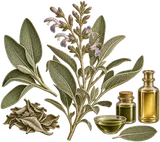
Ingredient reference illustration: Common sage. Studied form: Specified oral leaf preparations recognized by EMA for traditional use. This does not verify the trial product or formulation, or show that it works. Decorative illustration; not an identification reference.
Salvia officinalis L. · Leaf
Form
Specified oral leaf preparations recognized by EMA for traditional use
How it is used
oral
Evidence
Traditional use; not established odor treatment
Specified sage leaf preparations have a traditional European use for excessive sweating.