


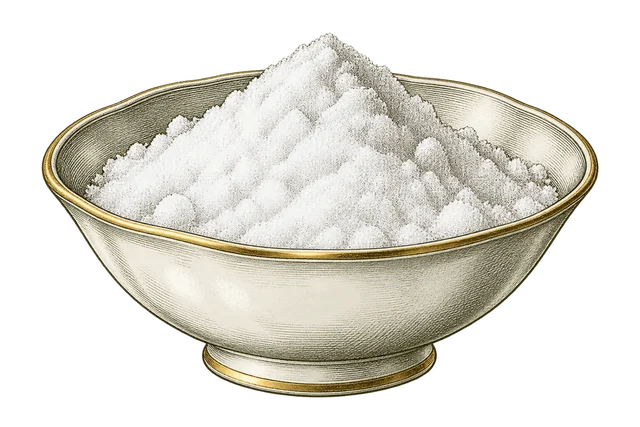
Key cautions
- Avoid homemade antacid/alkalizing drinks; excess intake can cause serious toxicity
- Count its sodium in recipes and avoid irritating skin scrubs or replacing fluoride toothpaste
- MedlinePlus advises separating oral sodium bicarbonate from other medicines by at least two hours. Ask a pharmacist to check the actual medicines and timing; do not assume spacing alone makes every combination suitable.
- For qualifying sodium-bicarbonate skin protectants, FDA labeling directs asking a doctor for children under two and stopping use for medical advice if symptoms last more than seven days or clear and soon recur. These topical limits do not authorize oral use in children.
What’s inside
Pure sodium bicarbonate contains sodium and bicarbonate ions. It forms a mildly alkaline solution in water and reacts with acid to release carbon dioxide. Approximately 27.4% of its mass is sodium; it has no inherent herbal phytochemicals or vitamin fraction.
Nutrition: calculate the portion, not a spoonful remedy
Using USDA’s 27,360 mg sodium per 100 g and 4.6 g culinary teaspoon gives 27,360 × 4.6 / 100 = 1,258.56 mg sodium. Dividing a recipe containing that amount into twelve equal portions gives 104.88 mg each; 104.88 / 2,300 × 100 = 4.56% of the FDA sodium Daily Value. These figures exclude all other recipe sodium and assume all the bicarbonate-derived sodium stays in the food. Product density, label rounding and portion size can vary.
USDA SR28: Leavening agents, baking soda, NDB 18372; sodium and culinary measures · University of Maine Cooperative Extension: Sodium content, baking soda 4.6 g teaspoon · FDA: Sodium in Your Diet, 2,300 mg Daily Value
Uses in brief

- Culinary leavening; household cleaning and odor control
- Selected labeled antacid, skin-protectant and fluoride-toothpaste uses
History, folklore and reported uses
Identity and commercial origin
The 2025 USDA technical report describes sodium bicarbonate from trona-derived sodium carbonate, solution-mined nahcolite and manufactured processes. These pathways can produce the same chemical, but end-use purity and labeling still matter. Sodium bicarbonate is not sodium carbonate (washing soda), although the compounds are chemically related. Food-ingredient status under 21 CFR 184.1736 concerns compliant food use, not unrestricted medicinal self-dosing.
USDA Agricultural Marketing Service (2025): Sodium bicarbonate technical report, manufacture and food functions · eCFR: 21 CFR 184.1736, sodium bicarbonate as a food ingredient
Culinary chemistry and preparation
In an appropriate recipe, bicarbonate reacts with acid and moisture to release carbon dioxide; heating can also contribute to its breakdown. The recipe’s balance affects rise, flavor, browning and residual alkalinity. Baking powder combines bicarbonate with acids, often with starch to help keep ingredients dry. Follow a recipe designed for the chosen leavener. The acid-base reaction changes bicarbonate, but sodium remains part of the food rather than vanishing with the bubbles.
USDA Agricultural Marketing Service (2025): Sodium bicarbonate technical report, manufacture and food functions · American Chemical Society: Development of baking powder and nineteenth-century bicarbonate use
Natron and ancient Egyptian practice
Baking soda's familiar box belongs chiefly to the history of modern household chemistry. There is an older mineral connection: ancient Egyptians used natron in purification and mummification, and the Metropolitan Museum preserves a small bag from Tutankhamun's embalming cache. Natron was a naturally occurring mixture containing carbonate, bicarbonate and other salts, chemically distinct from modern purified sodium bicarbonate.
Global Egyptian Museum: Natron, mineral composition and ritual uses · Metropolitan Museum of Art: Bag of Natron from Tutankhamun’s Embalming Cache
Sour milk and the rise of baking powder
The American Chemical Society traces an important baking change to the 1830s, when bakers paired sodium bicarbonate with sour milk to make dough rise. Because sourness varied, results could be unpredictable. More standardized acid ingredients followed, eventually leading to baking powders such as Eben Horsford's nineteenth-century preparation. This story puts baking soda among the small domestic innovations that changed the texture, speed and reliability of cakes and biscuits. Baking powder emerged as a formulated mixture, so the two names never meant quite the same thing.
American Chemical Society: Development of baking powder and nineteenth-century bicarbonate use
A medicine chest across the Atlantic
The medicine cabinet supplies another concrete link. The Science Museum's first-aid kit from Alcock and Brown's 1919 transatlantic flight contains soda-mint tablets, combining bicarbonates with peppermint oil and marketed for heartburn and indigestion. Such objects show how closely cooking, travel and everyday self-care once shared familiar chemical names.
Acid-indigestion remedies
The Science Museum’s 1919 flight first-aid kit contains soda-mint tablets promoted for heartburn and indigestion. Sodium bicarbonate remains an ingredient in labeled antacids, but historical tablets and kitchen-powder dosing are not interchangeable.
Science Museum Group: Tabloid first-aid kit used on Alcock and Brown’s first transatlantic non-stop flight · MedlinePlus: Sodium bicarbonate medicinal uses, interactions and precautions
Itchy-rash comfort
Specified sodium-bicarbonate skin-protectant products have a labeled role in temporary relief of irritation and itching from insect bites and poison-ivy-type rashes. This is the external skin-comfort branch of baking soda’s household-remedy history.
FDA: OTC Monograph M016, skin-protectant ingredients, indications and warnings
Tooth cleaning
Baking soda became a familiar dentifrice ingredient and is used in modern formulated toothpastes. Clinical trials concern particular baking-soda toothpastes; kitchen powder does not supply the cavity protection of fluoride toothpaste.
Ghassemi et al. (2020): Six-month randomized trial of baking-soda-containing fluoride toothpastes · American Dental Association: Toothpaste ingredients and fluoride cavity-protection requirements
Household cleaning and odor control
Hennepin County’s household-cleaning guide describes sodium bicarbonate as a mild cleaning and deodorizing material. This is a practical household use, with washing soda explicitly distinguished as a different substance.
Hennepin County: Green Cleaning Recipe Guide, baking soda’s cleaning and deodorizing roles
Making quick breads rise
The American Chemical Society documents nineteenth-century bakers pairing sodium bicarbonate with acidic ingredients to release gas and raise dough. That food-making innovation is one major historical use, rather than several separate cooking entries.
American Chemical Society: Development of baking powder and nineteenth-century bicarbonate use
Established medicinal roles have conditions
Sodium bicarbonate neutralizes acid and appears in labeled oral antacids; clinicians also prescribe it for certain acid-base or urinary indications. MedlinePlus highlights medicine interactions and extra caution with kidney disease, heart failure, hypertension, sodium restriction and recent gastrointestinal bleeding. The verified antacid label warns against use on an overly full stomach and directs professional advice for pregnancy or breastfeeding. A monitored medical indication is not a reason to alter body pH as a general wellness goal.
MedlinePlus: Sodium bicarbonate medicinal uses, interactions and precautions · DailyMed (2025): Sodium bicarbonate antacid powder, label and stomach warnings
Absorption, combinations and practical boundaries
After ingestion, sodium and alkali can affect systemic balance; excess bicarbonate is not simply an inert ingredient that stays in the stomach. No oil pairing, vitamin blend or vinegar combination is required for absorption. Fizzing with vinegar demonstrates acid-base chemistry, while the remaining sodium still counts. Keep cooking powder dry and labeled, use route-specific medicines only as directed, and stop skin products that irritate. Persistent symptoms deserve diagnosis rather than a stronger household mixture.
MedlinePlus: Sodium bicarbonate medicinal uses, interactions and precautions · USDA Agricultural Marketing Service (2025): Sodium bicarbonate technical report, manufacture and food functions · American Academy of Dermatology: Adult acne treatment and irritating toothpaste remedies
Health topics: evidence and cautions
These notes describe a specific research context and preparation. A topic link is not a treatment recommendation.
Body odor · Cosmetic formulation role
Form and route: Ingredient in a finished topical deodorant · topical
Condition and setting: Everyday deodorant formulation; not excessive-sweating treatment
Baking soda is used in some odor-targeting deodorants.
Evidence: Cosmetic formulation reference
AAD identifies this formulation role.
Limits
An ingredient role is not a trial proving a homemade preparation works.
Cautions
- Avoid homemade alkaline pastes or abrasive underarm scrubbing, particularly on irritated skin.
Identity & detailed reference
Identity
Sodium bicarbonate, sodium hydrogen carbonate or bicarbonate of soda (NaHCO3) is an inorganic alkaline salt. Commercial material is mineral-derived or manufactured. It is neither a botanical extract nor a vitamin, and it differs from baking powder and washing soda.
Ingredient details, preparation and research
Source plant or material
Not applicable. Commercial sources include processed trona-derived sodium carbonate, nahcolite mineral deposits and chemical manufacture such as Solvay-related processes.
Plant family / material: Not applicable: an inorganic sodium salt.
Forms and route
Food-grade powder for cooking; specifically labeled oral antacid powders/tablets; formulated topical skin protectants and toothpastes. Clinicians also use pharmaceutical bicarbonate for selected medical conditions. A kitchen product, oral medicine, cosmetic, industrial cleaner and injectable preparation must not be substituted across routes.
Food sources
An added ingredient in baked goods and baking mixes, with other food-processing uses. It is used for a technological purpose rather than eaten as a nutritional food. Include sodium from the complete recipe, including salt and any baking powder.
Vitamins and minerals
USDA lists 27,360 mg sodium per 100 g, approximately 274 mg per gram, and no meaningful energy, protein, fat, carbohydrate or vitamin contribution. A culinary teaspoon is about 4.6 g and contains about 1,259 mg sodium. If a recipe distributes that teaspoon evenly across 12 portions, baking soda contributes about 105 mg sodium per portion (4.6% of the FDA 2,300 mg Daily Value), before other ingredients. This is recipe arithmetic, not an oral dose.
Absorption and preparation
Bicarbonate neutralizes gastric acid with carbon-dioxide release, while absorbed sodium and alkali can alter fluid, electrolyte and acid-base balance. These are pharmacologic effects, not improved nutrition or detoxification. There is no need for fat pairing or an absorption booster. Topical or toothpaste use should remain local and follow the relevant label.
Practical preparation
Use food-grade powder in the amount and method of a tested recipe; measure carefully and store closed and dry. Baking powder already contains acidic ingredients, so a one-for-one swap can fail. For medical or skin use, use the exact labeled preparation and directions rather than converting a kitchen measure into a treatment dose.
Combination notes
In cooking, an appropriate acidic ingredient reacts with bicarbonate to generate the gas that leavens the mixture. Vinegar/bicarbonate fizz has no established detox benefit and does not remove the sodium. The final pH of a homemade blend depends on proportions; do not improvise a facial treatment, deodorant or antacid from the reaction. Evidence for a fluoride toothpaste applies to the complete dental product.
Traditional and reported uses
- Established culinary use: a chemical leavener in baked goods, with additional recipe-specific effects on acidity, texture and browning.
- Household practice: cleaning and odor control; historical home-remedy use includes acid indigestion. These uses need separate safety judgments.
- Medicinal use: appropriately labeled antacid products can relieve occasional heartburn/acid indigestion, and clinicians prescribe bicarbonate for selected acid-base or urinary conditions.
- External care: qualifying labeled products can temporarily relieve itching/irritation from insect bites or poison-ivy-type rashes. This does not establish acne treatment.
- Dental formulations: some baking-soda-containing fluoride toothpastes have randomized-trial evidence for plaque and gingivitis improvement; this is not evidence for replacing fluoride toothpaste with kitchen powder.
Contraindications and cautions
- Do not improvise a homemade oral antacid or alkalizing health drink. Excess intake can cause sodium overload, dehydration, electrolyte disturbances, metabolic alkalosis and dangerous carbon-dioxide pressure in the stomach.
- Medicinal use needs particular care with kidney disease, heart failure, high blood pressure, sodium restriction, recent gastrointestinal bleeding, pregnancy/breastfeeding or other medicines. Follow the product label and ask a pharmacist about interactions; do not self-treat children.
- Do not take an oral bicarbonate product on an overly full stomach or exceed its directions. Persistent indigestion requires assessment rather than escalating or repeatedly using a household remedy.
- Alkaline pastes, abrasive scrubs, toothpaste on pimples and untested deodorant blends can irritate skin. Use finished products for the intended area, keep them out of eyes, and stop if symptoms worsen.
- Do not swallow toothpaste or substitute raw baking soda for cavity-preventing fluoride toothpaste. Skin application supplies no dietary nutrition.
- Store in the original container away from children. Suspected excessive ingestion needs poison-center advice; severe abdominal pain, breathing difficulty, seizures or collapse requires emergency care.
- MedlinePlus advises separating oral sodium bicarbonate from other medicines by at least two hours. Ask a pharmacist to check the actual medicines and timing; do not assume spacing alone makes every combination suitable.
- For qualifying sodium-bicarbonate skin protectants, FDA labeling directs asking a doctor for children under two and stopping use for medical advice if symptoms last more than seven days or clear and soon recur. These topical limits do not authorize oral use in children.
Similar items and how they compare
- Baking powder
A chemical leavener that usually includes sodium bicarbonate.
It also includes dry acids and a carrier such as starch; sodium content and leavening requirements differ, and it is not an antacid substitute.
- Calcium carbonate
Another ingredient in labeled acid-neutralizing medicines.
It supplies calcium rather than sodium and has its own dosing, contraindications and interactions; the two are not dose-equivalent.
- Washing soda (sodium carbonate)
A related sodium-containing household alkali with a similar name.
It is a different, more alkaline compound. Household washing soda is not a replacement for food baking soda or a medicinal ingredient.
- Apple cider vinegar
An acidic kitchen ingredient that reacts with baking soda.
The acid-base reaction produces gas and changes the mixture; it does not establish a useful health drink or safe skin pH.
A meaningful household and baking history
The American Chemical Society describes bakers using sodium bicarbonate with sour milk in the 1830s. Acid reacted with bicarbonate to produce carbon dioxide, helping batter rise; more standardized acid ingredients later supported the development of baking powder. Modern household cleaning and odor-control uses, and historical indigestion remedies, help explain its familiar reputation. Familiarity does not eliminate the need to distinguish cooking, cleaning, dental and medicinal amounts or formulations.
Human evidence of home-remedy harm
A California Poison Control retrospective series identified 192 symptomatic misuse cases from 2000–2012. More than half warranted medical evaluation, and twelve admitted patients developed electrolyte disturbance, metabolic alkalosis or respiratory depression. This selected series cannot estimate risk for ordinary culinary use, but demonstrates that substantial ingestion can be medically serious. Separate poison-center guidance also describes rare stomach rupture from rapid gas production. Seek professional help for suspected excessive ingestion rather than attempting home neutralization.
Skin pH, protectants and irritation
FDA’s M016 monograph recognizes specific sodium-bicarbonate skin-protectant uses for temporary itching or irritation from insect bites and poison ivy, oak or sumac. It also warns that prolonged soaking may overdry skin. This is not evidence for an everyday facial scrub or leave-on deodorant recipe. The AAD discourages toothpaste as an acne remedy, including because its abrasive ingredients can irritate. A finished product’s intended use matters more than the ingredient’s household reputation.
Dental evidence belongs to formulated toothpaste
A six-month randomized study of 319 participants compared two fluoride toothpastes containing 20% or 35% baking soda with a fluoride control. All groups improved, with greater plaque and gingival-index reductions in the baking-soda product groups. Several authors were employed by the manufacturer, and the trial compared finished products, not kitchen powder. ADA cavity-protection acceptance requires fluoride; plain sodium bicarbonate supplies none. The reasonable inference is support for certain dental formulations, not abandonment of fluoride toothpaste.
Entry sources
- MedlinePlus: Sodium bicarbonate medicinal uses, interactions and precautions
- National Capital Poison Center: Baking soda toxicity and carbon-dioxide pressure risks
- FDA: OTC Monograph M016, skin-protectant ingredients, indications and warnings
- American Academy of Dermatology: Adult acne treatment and irritating toothpaste remedies
- Al-Abri and Kearney (2014): California Poison Control baking-soda misuse case series
- USDA Agricultural Marketing Service (2025): Sodium bicarbonate technical report, manufacture and food functions
- eCFR: 21 CFR 184.1736, sodium bicarbonate as a food ingredient
- American Chemical Society: Development of baking powder and nineteenth-century bicarbonate use
- DailyMed (2025): Sodium bicarbonate antacid powder, label and stomach warnings
- Ghassemi et al. (2020): Six-month randomized trial of baking-soda-containing fluoride toothpastes
- American Dental Association: Toothpaste ingredients and fluoride cavity-protection requirements
- MedlinePlus: Baking soda overdose and urgent assessment
- USDA SR28: Leavening agents, baking soda, NDB 18372; sodium and culinary measures
- University of Maine Cooperative Extension: Sodium content, baking soda 4.6 g teaspoon
- FDA: Sodium in Your Diet, 2,300 mg Daily Value
Reference entry 103 · Recorded content review: 2026-10-05 · Review scope and dates