


Key cautions
- Stop if the product causes an allergic reaction or irritation.
- Medicinal use during pregnancy, breastfeeding, childhood or alongside sedating medicines needs professional review; absence of evidence is not proof of safety.
What’s inside
Aromatic volatile compounds and nonvolatile leaf constituents; a water infusion does not reproduce the composition of distilled oil.
Uses in brief

- Aromatic leaf infusion
- Traditional herbal preparations
History, folklore and reported uses
History, folklore and traditional uses
The regional connection includes cultivation in Chile and Ecuador. Cedrón’s common name varies by place, so botanical identification is necessary before linking household practice with a study or product.
Traditional, historical and reported uses
- Aromatic leaf infusion
Food or household practiceWhy this label?
The cited material is a specified culinary ingredient or beverage, with its own preparation limits; no medical effect is inferred.
Chile’s health-ministry cultivation guidance identifies cedrón, while EMA recognizes the leaf material and botanical synonyms. The practical beverage material is leaf, not fragrance oil.
- Traditional herbal preparations
Traditional accountWhy this label?
Source documents this specific material, culinary use or attributed practice; no clinical efficacy is inferred.
EMA assesses specified leaf preparations in the context of mild stress, sleep and digestive complaints. That traditional-use framework is not proof that all teas or extracts are effective for those symptoms.
2 bounded uses; regional records do not establish treatment effects.
Historical-use additions reviewed 2026-10-09
Regional reading paths
These sourced notes describe cultivation, trade, food traditions or material history. A regional connection does not claim exclusive origin.
South America
cultivated; Chile, Ecuador
Aromatic leaf infusions; distinct from distilled oil.
Identity & detailed reference
Identity
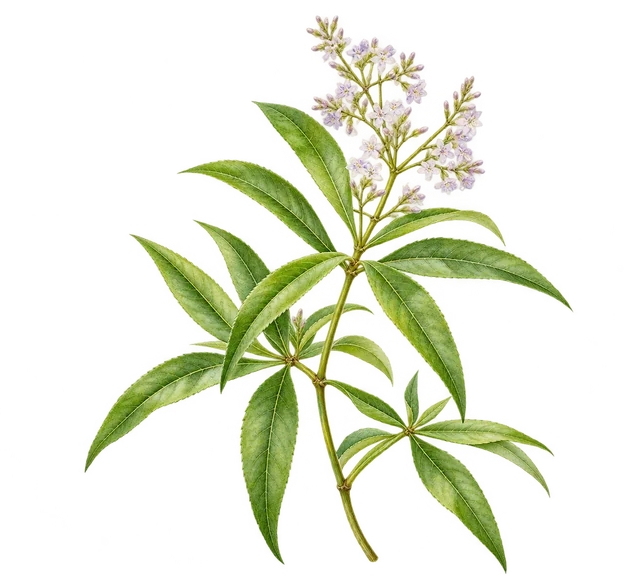
Aloysia citrodora; the aromatic leaves of Aloysia citrodora, with synonyms A. triphylla and Lippia citriodora; distinct from common vervain and lemongrass.
Ingredient details, preparation and research
Also known as: Aloysia citrodora
Source plant or material
Aloysia citrodora
Plant family / material: Verbenaceae
Forms and route
Fresh or dried leaves for infusion and labeled leaf preparations; distilled essential oil is a concentrated separate material.
Vitamins and minerals
A cup of leaf infusion is not a significant food serving by default. No vitamin, mineral or standardized active-compound amount is assigned.
Absorption and preparation
Water extraction, alcohol extraction and distillation select different compounds. Findings from one preparation cannot establish the absorbed exposure from another.
Practical preparation
Choose identified dried leaf or a labeled product and follow its directions. Do not add essential oil to tea or make a medicinal extract from this card.
Traditional and reported uses
- Aromatic leaf infusion
- Traditional herbal preparations
Contraindications and cautions
- Stop if the product causes an allergic reaction or irritation.
- Medicinal use during pregnancy, breastfeeding, childhood or alongside sedating medicines needs professional review; absence of evidence is not proof of safety.
Form determines interpretation
Research on Ecuadorian distilled oil addresses chemical and insect-related endpoints, not drinking leaf tea. Its results cannot validate a home sleep remedy or an oil ingestion practice.
Evidence limits
This card distinguishes an aromatic beverage from medicinal leaf products and from essential oil. It supplies no dose or claim of clinically established treatment effectiveness.
Entry sources
- MINSAL: Orientaciones técnicas de huertos medicinales
- EMA: Lemon verbena leaf assessment
- Chemical profiling and sensory qualities of Aloysia citrodora and Bursera graveolens essential oils from Ecuador
Reference entry 428 · Recorded content review: 2026-10-09 · Review scope and dates