


Key cautions
- Contains caffeine; check medicine interactions and pregnancy-specific advice.
- Extract capsules are different: concentrated products can harm the liver.
What’s inside
Catechins, including EGCG, and caffeine. Amounts vary with the leaves and preparation.
Uses in brief

- A simple leaf beverage for everyday refreshment.
- Explore green tea alongside black, white and oolong tea in the broader tea-leaf card.
History, folklore and reported uses
History, folklore and traditional uses
Tea has a long place in Chinese food culture and later developed into distinct traditions across Asia and beyond. FAO describes tea as both a drink and a cultural practice, with heritage cultivation sites in China, Korea and Japan.
Different processing methods turn the same plant into different teas. Green tea keeps a less-oxidized leaf profile.
Traditional, historical and reported uses
- A shared leaf beverage
Food or household practiceWhy this label?
FAO documents tea traditions and the role of cultivation in smallholder livelihoods.
Tea drinking is a food and cultural practice. FAO describes traditions that differ between cultures and tea cultivation as a livelihood for millions of smallholder growers.
Food traditions, cultivation and cultural context.
Identity & detailed reference
Identity
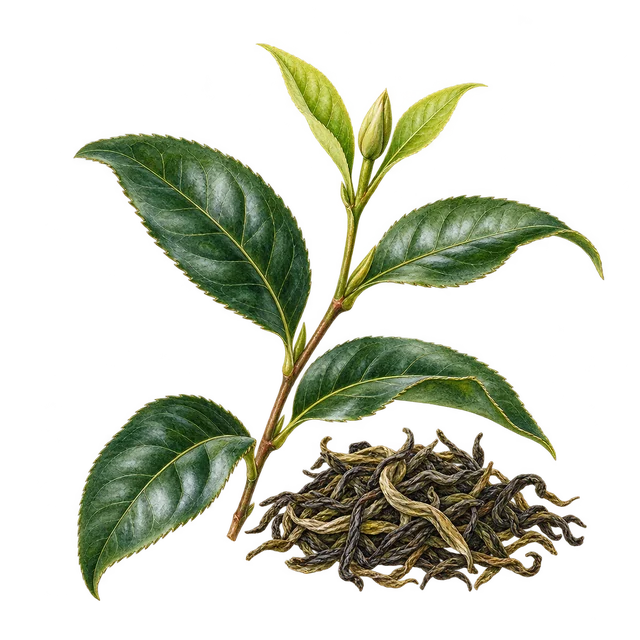
Green tea is the leaf of Camellia sinensis prepared as a drink. Heating the harvested leaves limits oxidation. This card covers the brewed beverage; concentrated oral extracts and cosmetic ingredients have their own card.
Ingredient details, preparation and research
Also known as: green tea; brewed green tea; green tea leaf; Camellia sinensis beverage
Source plant or material
Leaves of Camellia sinensis (L.) Kuntze.
Plant family / material: Theaceae (tea family).
Forms and route
Loose leaves or tea bags steeped in water, then strained. Matcha contains the whole powdered leaf; bottled drinks may include sugar or other ingredients. Neither is automatically equivalent to a cup of strained tea.
Food sources
Food-labeled green tea leaves and tea bags.
Vitamins and minerals
This is a beverage, not a vitamin or mineral replacement. Evaluate bottled drinks by their own ingredient and nutrition labels. No fixed caffeine, catechin or nutrient amount is assigned to every cup.
Absorption and preparation
Certain dietary polyphenols can reduce absorption of nonheme iron, the form found in plant foods. This does not mean every tea drinker becomes iron deficient; the overall diet and iron status matter. Ask about timing if treating low iron.
Practical preparation
Choose a food-labeled green tea with a clear ingredient list. Follow its brewing directions for water, time and leaf amount. Check sweeteners and added herbs in blends. Matcha and concentrated extracts need their own assessment.
Food preparation
Choose food-labeled leaves or tea bags and follow the package brewing directions. Do not ingest a cosmetic extract or use supplement powder as a substitute for loose-leaf tea.
Combination notes
Milk, sugar and other additions change the drink. A blend must be assessed by all of its ingredients, not just the words green tea.
Traditional and reported uses
- Everyday food use: a warm or cooled leaf infusion.
- A place in tea traditions: a shared drink with a long cultural history.
Contraindications and cautions
- Contains caffeine. Consider sleep, sensitivity and total intake; ask about pregnancy, breastfeeding or use in children.
- Green tea at high doses can reduce the effectiveness of nadolol, and an interaction with raloxifene has also been reported. Ask a pharmacist about green tea if you take these or other medicines.
- Concentrated green tea extracts have been linked to uncommon liver injury. Do not swap capsules for brewed tea or assume that decaffeinated extract removes this risk.
- If you have low iron or take iron tablets, ask your clinician or pharmacist about tea timing. Do not use tea to treat iron deficiency.
Similar items and how they compare
- Tea leaf and beverage (entry 348)
The broader Camellia sinensis family of drinks.
Includes black, white and oolong tea as well as green tea.
- Green tea extract (entry 81)
Derived from the same plant.
Concentration, route, evidence and liver risks differ from the brewed beverage.
What the evidence can tell us
NCCIH reports small reductions in total and LDL cholesterol in randomized studies of green tea products; most evaluated extracts rather than the brewed drink. Effects on HDL cholesterol and triglycerides were not found. Cancer findings remain inconsistent. These findings depend on the product and outcome studied.
A cup and a capsule are different
In its 2018 assessment, EFSA considered catechins from traditionally brewed green tea infusions generally safe. The few reported cases of liver damage with infusions were considered likely to reflect rare, unpredictable reactions. Concentrated supplements differ in composition and consumption pattern; EFSA could not establish a safe supplemental catechin dose from the available evidence.
Iron is a separate nutrition question
NIH ODS explains that some polyphenols reduce nonheme iron absorption, while a varied diet changes the overall effect. Individual advice matters when iron stores are low.
Evidence limits
Educational beverage card. No therapeutic dose, cancer-prevention promise, weight-loss prescription or personalized medical advice.
Entry sources
- NCCIH: Green tea, evidence and safety
- FAO: Tea, cultivation and cultural traditions
- EFSA: Safety of green tea catechins, infusion versus supplement
- NIH ODS: Iron absorption and dietary polyphenols
Reference entry 609 · Recorded content review: 2026-10-16 · Review scope and dates