Stress support starts with what is causing the strain and whether it is affecting daily life. A lower cortisol measurement is not the same as feeling or functioning better. Foods, nutrients and herbs have uneven evidence and do not replace effective coping support or clinical care.
Everyday perceived stress, acute laboratory stress and stress-related fatigue are distinct settings. Diagnosed anxiety, depression and insomnia require their own assessment. This topic appears in Men’s Health, but most of its basics apply to adults of all genders.
Decorative topic illustration.
Care basics come first
Protect a regular sleep routine and make time for physical activity you can sustain.
Eat regular balanced meals; review whether caffeine or alcohol is making sleep or coping worse.
Try brief breathing or relaxation exercises, identify manageable next steps and ask trusted people for practical or emotional support.
If stress persists, impairs work or relationships, or comes with significant anxiety, low mood or sleep problems, talk with a healthcare professional.
Correct a documented deficiency when appropriate; a nutrient’s biological role does not prove that extra supplements reduce stress.
How we chose these entries
Ten records cover direct stress research, food context, source-specific traditional use and important evidence or safety corrections. They are not ranked recommendations, and combination trials are not counted as separate proof for each ingredient.
No general cure or cortisol-reset regimen is established. Longer independent trials with meaningful daily-life outcomes are needed. Findings from anxiety-only, insomnia-only and animal experiments do not establish relief of everyday stress.
No records match. Try another name or clear the filters.
Care and risk-reduction research
Read the outcome, preparation and limits. A studied benefit does not make every product effective.
Symptom support
Ashwagandha root extract
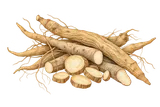
Ingredient reference illustration: Ashwagandha root. Studied form: High-concentration full-spectrum root extract in capsules; leaf and root/leaf products differ. This does not verify the trial product or formulation, or show that it works. Decorative illustration; not an identification reference.
Withania somnifera · Root only
Form
High-concentration full-spectrum root extract in capsules; leaf and root/leaf products differ
How it is used
oral
Evidence
Limited clinical evidence; short formulation-specific trial
A small placebo-controlled trial found lower self-reported stress scores with one root extract. This does not establish treatment for diagnosed anxiety disorders.
Condition and setting
Persistent perceived stress in adults
Cautions
May cause drowsiness or stomach upset; rare liver injury has been reported. Avoid with hormone-sensitive prostate cancer. Thyroid or autoimmune disease, surgery and medicines require clinician review. Avoid during pregnancy and breastfeeding.
Evidence, limits and sources for Ashwagandha root extract
What was found
Sixty-four adults with chronic stress were randomized for 60 days; the tested exposure was 300 mg root extract twice daily. Stress-scale scores and cortisol were lower than placebo.
What this does not show
Single-center, short trial; results cannot be transferred to root powder, leaf extracts or every commercial product. Cortisol is a biomarker, not a complete measure of recovery.
Exact ingredient
The evidence concerns a specified root extract; root powder, leaf extracts and root/leaf mixtures are different preparations.
Why we included it
Common stress marketing warrants preparation-specific evidence and prominent safety boundaries.
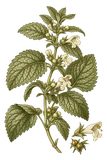
Ingredient reference illustration: Lemon balm. Studied form: Oral leaf preparations; the laboratory trial used a standardized extract, not essential oil. This does not verify the trial product or formulation, or show that it works. Decorative illustration; not an identification reference.
Melissa officinalis L. · Leaf
Form
Oral leaf preparations; the laboratory trial used a standardized extract, not essential oil
How it is used
oral
Evidence
Limited acute clinical evidence; separately documented traditional use
An 18-person experiment found greater calmness after one tested dose, alongside reduced alertness. EMA recognizes leaf preparations for mild stress on traditional-use grounds, not established clinical efficacy.
Condition and setting
Acute laboratory stress; traditional mild mental stress
Cautions
Reduced alertness matters for driving and machinery. Discuss sedating medicines and persistent symptoms with a clinician; essential oil is not an oral substitute.
A randomized crossover experiment compared 300 mg and 600 mg extract with placebo. At 600 mg, calmness increased and alertness fell during a laboratory stress task.
What this does not show
A single-dose laboratory result does not establish sustained benefit for everyday stress. EMA’s traditional-use assessment is a separate evidence category, not proof from this trial.
Exact ingredient
The evidence concerns oral lemon balm leaf preparations; the laboratory result does not validate every tea or extract.
Why we included it
Separates source-specific traditional use from a small acute stress experiment.
Symptom research preparation reference. The specific research preparation or product is not pictured. This symbol marks an evidence or safety record, not a recommended remedy.
Rhodiola rosea L. · Roots as described in the trial
Form
Standardized SHR-5 extract tablets
How it is used
oral
Evidence
Limited clinical evidence; syndrome-specific small trial
One small trial found advantages for burnout/fatigue scores and some attention measures. This is not proof of a general stress remedy or treatment for depression.
Condition and setting
Diagnosed stress-related fatigue syndrome
Cautions
Dizziness, headache, insomnia and mouth symptoms can occur. A losartan interaction has been reported. Pregnancy and breastfeeding safety is uncertain; review medicines with a clinician.
Why no exact ingredient link?
SHR-5 is a specific root extract; other rhodiola products and generic blends are not interchangeable.
Evidence, limits and sources for Rhodiola SHR-5 root extract
What was found
Sixty adults meeting Swedish fatigue-syndrome criteria received SHR-5 or placebo for 28 days; tested exposure was 576 mg extract per day. Some outcomes favored the extract; both groups improved on several measures.
What this does not show
Selected fatigue-syndrome population, short duration and multiple outcomes. Cortisol-awakening changes do not independently establish meaningful stress relief; NCCIH finds evidence insufficient for health claims.
Exact ingredient
SHR-5 is a specific root extract; other rhodiola products and generic blends are not interchangeable.
Why we included it
A popular stress claim actually rests partly on fatigue-syndrome research.
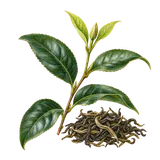
Ingredient reference illustration: Tea leaf and beverage. Studied form: Study black-tea drink compared with a caffeine-matched placebo beverage. This does not verify the trial product or formulation, or show that it works. Decorative illustration; not an identification reference.
Camellia sinensis · Processed black-tea leaves
Form
Study black-tea drink compared with a caffeine-matched placebo beverage
How it is used
oral
Evidence
Limited clinical evidence; one controlled beverage trial
Tea did not reduce the immediate subjective stress or cardiovascular response. It was associated with greater relaxation and lower cortisol during recovery.
Condition and setting
Recovery after acute laboratory stress in healthy men
Cautions
Caffeine can worsen sleep or feelings of anxiety in sensitive people; avoid excess and consider timing. Concentrated green-tea supplements and tea-tree oil are different materials.
Evidence, limits and sources for Black tea beverage
What was found
Seventy-five healthy nonsmoking men underwent a washout followed by six weeks of tea or matched placebo and laboratory stress testing.
What this does not show
This is a recovery signal in a controlled experiment, not evidence that tea treats chronic stress. Caffeine-matched comparison does not show that caffeine itself is calming.
Exact ingredient
This finding is limited to the study black-tea drink and cannot be transferred to concentrated extracts.
Why we included it
Food-level evidence with an important null immediate-stress result.
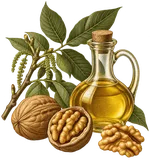
Ingredient reference illustration: Walnuts (Persian / English). Studied form: Whole walnut food consumed daily during a university semester. This does not verify the trial product or formulation, or show that it works. Decorative illustration; not an identification reference.
Juglans regia · Edible kernels
Form
Whole walnut food consumed daily during a university semester
How it is used
oral
Evidence
Limited exploratory food trial; male evidence unresolved
A small exploratory trial reported changes in some well-being measures, but it does not establish walnuts as a stress treatment; male-specific effects could not be determined.
Condition and setting
Academic stress in university students
Cautions
Avoid if allergic to walnuts or tree nuts. Edible kernels are not walnut hull, leaf extracts or walnut oil.
Evidence, limits and sources for Walnuts (Persian / English)
What was found
Students were randomized to daily walnut consumption or a control group across an examination period. Some mental-health and biomarker patterns favored walnuts; perceived-stress findings were not uniformly convincing.
What this does not show
Food intervention was not a blinded placebo comparison; multiple outcomes and too few male participants limit inference. Do not interpret lack of worsening within one group alone as proof of a between-group benefit.
Exact ingredient
The evidence concerns edible Persian/English walnut kernels; black walnut, hulls and walnut oil are different materials.
Why we included it
Includes a food while making the male-evidence gap explicit.
Symptom research preparation reference. The specific research preparation or product is not pictured. This symbol marks an evidence or safety record, not a recommended remedy.
L-theanine · Isolated amino acid; not whole tea leaf
Form
Oral isolated L-theanine in controlled laboratory experiments
How it is used
oral
Evidence
Preliminary clinical evidence; very small acute experiment
A 12-person crossover experiment found smaller heart-rate and salivary immune-marker responses during mental arithmetic. These physiological findings do not establish lasting stress relief.
Condition and setting
Acute laboratory stress
Cautions
Small short studies cannot establish uncommon harms or safety in pregnancy, breastfeeding or people using multiple medicines. Ask a pharmacist before adding supplements.
Why no exact ingredient link?
Isolated L-theanine differs from whole tea leaves and tea beverages.
Evidence, limits and sources for L-theanine research preparation
What was found
Participants completed counterbalanced L-theanine, placebo and no-treatment sessions during an acute mental-arithmetic stress task.
What this does not show
Very small sample and brief artificial stressor; biomarkers are not interchangeable with perceived stress or clinical anxiety outcomes. Findings do not establish long-term safety or efficacy.
Exact ingredient
Isolated L-theanine differs from whole tea leaves and tea beverages.
Why we included it
Distinguishes an isolated compound from tea and avoids translating biomarkers into clinical benefit.
Related material only
These are different ingredients or forms. Do not assume the same findings apply to them.
Symptom research preparation reference. The specific research preparation or product is not pictured. This symbol marks an evidence or safety record, not a recommended remedy.
Magnesium plus pyridoxine (vitamin B6) · Mineral and isolated vitamin
Form
Magne B6 combination versus Magnespasmyl magnesium alone
How it is used
oral
Evidence
Limited active-comparator clinical evidence; no placebo
Adding B6 did not outperform magnesium overall. A severe-stress subgroup favored the combination, but without placebo the trial cannot establish that either treatment caused the overall improvement.
Condition and setting
Elevated stress scores with low serum magnesium
Cautions
Magnesium can cause diarrhea and can accumulate dangerously with impaired kidney function. Excess B6 can cause nerve damage; the trial amount is not a self-care recommendation. Check total B6 across products and medicine interactions. The studied 30 mg/day B6 exceeds the European adult upper limit of 12 mg/day.
Why no exact ingredient link?
The findings concern the specified magnesium–B6 combination and magnesium comparator; neither establishes an effect of B6 alone.
Evidence, limits and sources for Magnesium with vitamin B6
What was found
In 264 evaluated adults with elevated stress and suboptimal serum magnesium, eight weeks of magnesium (300 mg/day) with or without B6 (30 mg/day) reduced stress scores in both groups. The overall between-group difference was not significant.
What this does not show
No placebo; single-blind, industry-linked study with 74% female participants. The favorable severe-stress subgroup is narrower than the full population and was added to the analysis plan after blinded database lock. Findings do not establish B6 alone or supplements for magnesium-replete adults.
Exact ingredient
The findings concern the specified magnesium–B6 combination and magnesium comparator; neither establishes an effect of B6 alone.
Why we included it
Prevents a commonly misread combination trial from becoming two independent nutrient efficacy claims.
Related material only
These are different ingredients or forms. Do not assume the same findings apply to them.
Symptom research preparation reference. The specific research preparation or product is not pictured. This symbol marks an evidence or safety record, not a recommended remedy.
B-complex vitamins, vitamin C, calcium, magnesium and zinc · Isolated vitamins and minerals
Form
Berocca formulation tested in 2010; current products may differ
One short randomized trial found lower perceived-stress scores with a multinutrient product than placebo. It cannot identify which nutrient, if any, was responsible.
Condition and setting
Perceived stress in healthy working men
Cautions
Avoid stacking multivitamin and stress products. Total B6 and other nutrient amounts, kidney disease and medicine interactions matter; more is not necessarily better.
Why no exact ingredient link?
The evidence concerns the complete tested multinutrient formulation; individual nutrient effects cannot be separated.
Evidence, limits and sources for B-vitamin, vitamin C and mineral formulation
What was found
The 33-day double-blind trial enrolled 215 working men aged 30–55 and measured stress, mood and cognitive performance. Perceived-stress scores favored the combination.
What this does not show
Manufacturer-sponsored, short trial with multiple outcomes and no biochemical confirmation of baseline deficiencies; no inference that all men need high-dose vitamins. Product name alone does not confirm today’s formulation matches.
Exact ingredient
The evidence concerns the complete tested multinutrient formulation; individual nutrient effects cannot be separated.
Why we included it
Men-specific perceived-stress research retained without splitting a blend into unsupported ingredient claims.
Related material only
These are different ingredients or forms. Do not assume the same findings apply to them.
These historical reports or laboratory findings do not establish a clinical benefit.
Traditional reports
Passionflower aerial herb
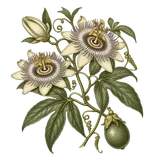
Ingredient reference illustration: Passionflower. Studied form: Oral tea, powder or specified extracts covered by EMA’s herbal assessment; no DIY recipe. This does not verify the trial product or formulation, or show that it works. Decorative illustration; not an identification reference.
Passiflora incarnata L. · Dried above-ground herb
Form
Oral tea, powder or specified extracts covered by EMA’s herbal assessment; no DIY recipe
How it is used
oral
Evidence
Documented traditional use; insufficient clinical evidence
EMA recognizes specified passionflower preparations for mild mental stress on the basis of traditional use. Clinical evidence is insufficient to establish effectiveness for stress.
Condition and setting
Traditional relief of mild mental stress
Cautions
Can cause drowsiness, dizziness or confusion and interact with anesthesia. Avoid during pregnancy; breastfeeding safety is uncertain. Do not combine sedating products without professional advice or drive if drowsy.
Evidence, limits and sources for Passionflower aerial herb
What was found
EMA’s assessment covers dried aerial herb and specified oral preparations. NCCIH distinguishes small anxiety and insomnia studies from the lack of adequate stress evidence.
What this does not show
Traditional-use registration is not proof from modern trials. Anxiety before a procedure, insomnia and everyday stress are different settings; passionfruit foods and other Passiflora species do not inherit these claims.
Exact ingredient
The traditional-use assessment concerns Passiflora incarnata aerial herb; fruit and other species are different materials.
Why we included it
Provides a clearly attributed traditional-use example without conflating anxiety or insomnia research.
These records explain what to avoid or why a proposed benefit is not established.
Safety reference
Vitamin C: high-dose stress experiment
Ingredient reference illustration: Vitamin C Ascorbic Acid. Studied form: Sustained-release oral ascorbic acid tested at a high research exposure. This does not verify the trial product or formulation, or show that it works. Decorative illustration; not an identification reference.
L-ascorbic acid · Isolated vitamin C
Form
Sustained-release oral ascorbic acid tested at a high research exposure
A short trial found less subjective stress during a laboratory task, but its 3,000 mg/day exposure exceeds the US adult upper intake level and is not a routine stress recommendation.
The US adult upper intake level is 2,000 mg/day from food and supplements. High intakes can cause diarrhea and abdominal symptoms. Renal disease or iron overload warrants clinician advice.
Evidence, limits and sources for Vitamin C: high-dose stress experiment
What was found
A 14-day placebo-controlled trial randomized 120 healthy young adults; 108 remained after exclusions. Subjective and blood-pressure responses were smaller; cortisol recovered faster, without a smaller overall cortisol response.
What this does not show
Short-term artificial stressor, high exposure and no evidence here for long-term everyday stress management. Normal food intake cannot be assigned the supplement trial’s effects.
Exact ingredient
The evidence concerns sustained-release ascorbic acid at a high research exposure, not ordinary food intake.
Why we included it
Shows why a positive high-dose experiment is not automatically useful self-care.