


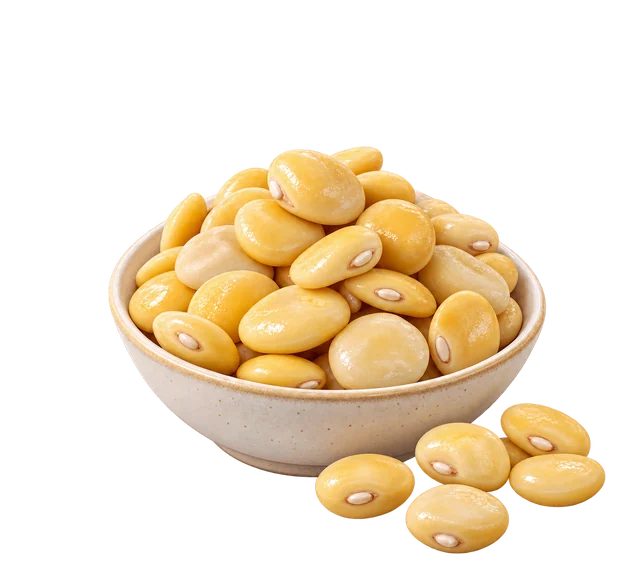
Key cautions
- Do not eat untreated bitter lupin or rely on a home soaking recipe
- Lupin can cause allergy, including in some peanut-allergic people; check labels and obtain individualized advice where relevant.
What’s inside
Protein and lipids, with variable quinolizidine alkaloids in untreated material. Residual alkaloids require control rather than guesswork.
Uses in brief

- Prepared edible pulse
- Food-grade flour
History, folklore and reported uses
History, folklore and traditional uses
Regional context: native and cultivated; Peru, Bolivia, Ecuador. These examples describe specific food or material traditions and production settings; they do not establish exclusive ownership, a single continent-wide recipe, or therapeutic effectiveness.
Traditional, historical and reported uses
- Prepared edible pulse
Food or household practiceWhy this label?
Source documents this specific material, culinary use or attributed practice; no clinical efficacy is inferred.
FAO/ANPE describes tarwi as an Andean food crop. The practical food is the appropriately processed seed, not a handful taken directly from the crop.
- Food-grade flour
Food or household practiceWhy this label?
Source documents this specific material, culinary use or attributed practice; no clinical efficacy is inferred.
Food-safety authorities discuss lupin-derived flour and meal. These products still need controlled alkaloid levels and allergen labeling; milling alone does not remove the hazard.
2 bounded uses; regional records do not establish treatment effects.
Historical-use additions reviewed 2026-10-09
Regional reading paths
These sourced notes describe cultivation, trade, food traditions or material history. A regional connection does not claim exclusive origin.
South America
native and cultivated; Peru, Bolivia, Ecuador
Legume requiring validated debittering before food use.
Identity & detailed reference
Identity
Lupinus mutabilis; edible seeds of Andean lupin, Lupinus mutabilis, after professionally controlled debittering; untreated bitter seeds are outside the ready-to-eat scope.
Ingredient details, preparation and research
Also known as: Lupinus mutabilis
Source plant or material
Lupinus mutabilis
Plant family / material: Fabaceae
Forms and route
Commercially debittered cooked seeds, labeled ready-to-eat chocho and food-grade flour made from appropriately processed seed.
Vitamins and minerals
Its composition differs from low-fat pulses. No exact protein amount is assigned, and nutrients do not cancel a toxic alkaloid exposure.
Absorption and preparation
Processing can change composition and digestibility. Bitter taste or apparent softness is not a measurement of residual alkaloids or safety.
Practical preparation
Buy properly processed, identified food-grade lupin. Follow package storage instructions. This card intentionally gives no household debittering schedule.
Traditional and reported uses
- Prepared edible pulse
- Food-grade flour
Contraindications and cautions
- Do not eat untreated bitter lupin or rely on a home soaking recipe. BfR notes the lack of validated household controls and recommends manufacturer-debittered products.
- Lupin can cause allergy, including in some peanut-allergic people; check labels and obtain individualized advice where relevant.
Processing is a safety boundary
BfR and FSANZ evaluate alkaloid exposure rather than assuming every lupin variety or traditional process is safe. Supplier quality assurance is central to using this ingredient.
Evidence limits
This is a food-form review, not a treatment recommendation. Composition and laboratory findings apply to the material actually studied; no medicinal dose, universal nutrient ranking or preservation guarantee is inferred.
Entry sources
- FAO and ANPE: Guía de campo de los cultivos andinos
- BfR: Risk assessment of alkaloids in lupin seeds
- FSANZ: Lupin alkaloids toxicological evaluation
Reference entry 435 · Recorded content review: 2026-10-09 · Review scope and dates