


Key cautions
- Banana allergy: avoid; latex-related reactions are possible.
- Follow any individualized potassium limit.
What’s inside
Banana foods supply carbohydrate, potassium, vitamin B6 and vitamin C. Ripeness changes the balance of starch and sugars; chips, flour and sweetened dishes also differ from peeled plain fruit.
University of Florida IFAS: Banana Growing in the Florida Home Landscape · Phillips et al. (2021): Dietary fiber, starch, and sugars in bananas at different stages of ripeness in the retail market · USDA FoodData Central: SR Legacy April 2018 dataset
Generic banana comparison
For context only, USDA’s general raw-banana record 173944 lists a medium peeled fruit (118 g) at about 105 kcal, 27.0 g carbohydrate, 3.1 g fiber, 1.3 g protein, 422 mg potassium, 0.43 mg vitamin B6 and 10.3 mg vitamin C. This record does not identify Burro and must not be used to label a Burro serving or a cooked green-banana dish.
What ripening research measured
Phillips and colleagues’ 2021 study analyzed Cavendish bananas at different ripeness stages. Starch and sugars changed as the fruit ripened; measured fiber also depended on the laboratory method, which differed in how it captured resistant carbohydrate. Resistant starch is starch that escapes digestion in the small intestine. These food-composition measurements do not establish a Burro-specific absorption advantage or predict an individual meal’s blood-sugar effect.
Uses in brief

- Cooked starchy side dishes
- Ripe fresh fruit
- Cuban vianda food heritage
History, folklore and reported uses
Names and ancestry
UF/IFAS groups Burro, Chato, Moko, Orinoco and Horse banana with Bluggoe in its ABB classification. A and B refer to ancestry from Musa acuminata and Musa balbisiana; ABB indicates three chromosome sets, one A and two B. ProMusa records many regional names, and Cuban crop research describes several varieties called Burro. A market name therefore leaves room for real differences between plants.
University of Florida IFAS: Banana Growing in the Florida Home Landscape · ProMusa: Bluggoe subgroup, names and cooking use · Perrier et al. (2011): Multidisciplinary perspectives on banana domestication · The Vulnerability of Cuban Banana Production to Fusarium Wilt Caused by Tropical Race 4 (2024) · Martínez-de la Parte et al. (2024): Cuban banana varieties in Fusarium research
Cooking banana or plantain?
“Cooking banana” describes how fruit is used. Plantain also names a particular cultivar subgroup: UF/IFAS separates its AAB Plantain rows from ABB Bluggoe. Fruit can be prepared like a plantain without belonging to the same subgroup.
University of Florida IFAS: Banana Growing in the Florida Home Landscape · FAO: Traditional post-harvest technology, bananas and plantains
A crop carried by people
Genetics, archaeology and language research trace banana domestication through movement and cultivation across the Asia-Pacific region, including New Guinea. Crosses between banana populations and the repeated planting of shoots helped produce today’s diversity. This broad history is not a precise birthplace for every fruit now sold as Burro.
Perrier et al. (2011): Multidisciplinary perspectives on banana domestication · Texas A&M AgriLife: Banana, including Orinoco cooking use
Green and ripe in the kitchen
Confirm the cooking type with the seller. Associated Orinoco fruit is documented boiled or fried while green; cook peeled firm fruit until tender for a savory dish. Suitably ripe Bluggoe-type fruit can be eaten fresh or cooked. Frying oil, salt and sweeteners change the finished food, so choose the recipe as well as the fruit.
Texas A&M AgriLife: Banana, including Orinoco cooking use · Missouri Botanical Garden: Musa Orinoco, ripe and green food uses · ProMusa: Bluggoe subgroup, names and cooking use
A Cuban starchy accompaniment
In 2011 fieldwork in Güira de Melena, Cuba, Juárez studied changing production and consumption of viandas: starchy foods including roots, tubers and cooking bananas. The account describes plátano burro becoming an accepted accompaniment to rice and beans as food availability changed. It records a local food practice, rather than one recipe or cultivar shared by all Cuban households.
Juárez (2013): Changes in production and consumption of viandas in Cuba, Güira de Melena study (Spanish) · Juárez (2013): Original article abstract reproduced in Mendeley · Juárez (2013): accessible author-hosted copy of the Cuban vianda study
Why the safety advice is personal
Banana and natural rubber latex share proteins that can trigger reactions in susceptible people. Potassium needs are a separate issue: kidney function, medicines and blood-test results can affect the appropriate intake.
American Academy of Allergy, Asthma & Immunology: Latex Allergy · NIH NIDDK: Healthy Eating for Adults with Chronic Kidney Disease
Growing notes
This preparation comes from Banana and plantain. The growing guide concerns the living plant, not making or extracting this product.
Read the source plant’s growing notesIdentity & detailed reference
Identity
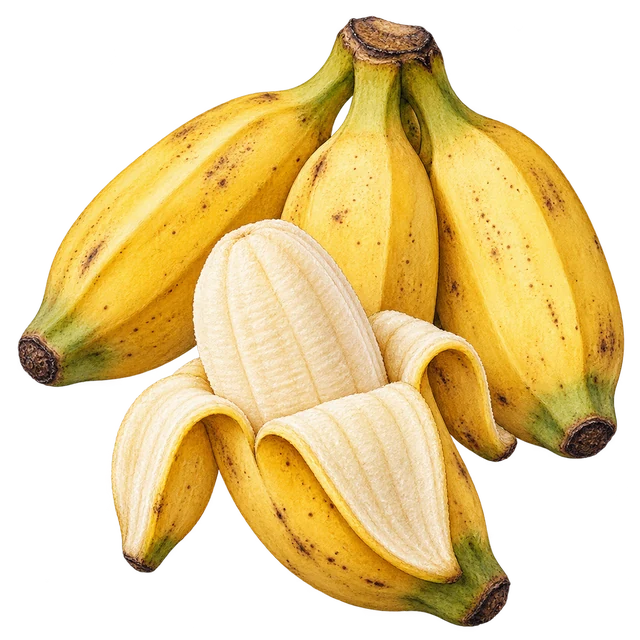
Edible banana fruit sold under the regional or trade name Burro. Horticultural references associate Burro with Bluggoe/Orinoco ABB cooking bananas, but the label alone does not authenticate one cultivar or accession.
Ingredient details, preparation and research
Also known as: Burro banana; Plátano burro; Bluggoe (related group name); Orinoco (associated cultivar name); Horse banana (regional name); Chato (regional name)
Source plant or material
Cultivated Musa hybrids with Musa acuminata and Musa balbisiana ancestry
Plant family / material: Musaceae
Practical preparation
Confirm the fruit’s cooking type with the seller. For a savory dish, peel firm green fruit and cook until tender using the recipe’s method; ripe fruit can be used fresh or cooked when its texture is suitable. Wash before peeling and keep cut fruit and finished dishes appropriately refrigerated.
Combination context
No special medicinal pairing or required nutrient-absorption combination is established.
Combination notes
Serve cooked fruit as a starchy part of a meal. The Cuban pairing with rice and beans is a documented food practice; frying oil, added salt and sweeteners affect the finished recipe.
Traditional and reported uses
- Cooked starchy side dishes
- Ripe fresh fruit
- Cuban vianda food heritage
Contraindications and cautions
- Avoid if you have a known banana allergy. Latex allergy can be associated with banana reactions; ask your allergy clinician about your individual risk rather than assuming every latex-allergic person must avoid it.
- If you have a prescribed potassium limit, fit banana portions into that plan with your clinician or dietitian. Kidney disease does not give everyone the same potassium allowance.
- The word Burro does not guarantee a particular nutrient content, glycemic response or medicinal effect. Consider the portion, ripeness and recipe; do not use it to replace treatment.
- Wash the outside before peeling or cutting, use clean tools and refrigerate prepared cut fruit. Fried chips, salted sides and sweetened desserts differ from plain fruit.
Similar items and how they compare
- Cavendish dessert banana
Both are cultivated edible Musa fruits.
Cavendish belongs to a different cultivar group. Its nutrient measurements and ripening studies are not automatically Burro-specific data.
- Plantains
Both can be used as starchy cooking bananas.
Plantain is sometimes a broad culinary term, while the botanical Plantain subgroup is distinct from ABB Bluggoe. Cooking use does not make the cultivar groups identical.
- Green-banana flour or resistant-starch products
They may be made from banana fruit.
Drying, milling, cultivar and processing change the material. Supplement or flour studies cannot establish the effects of a fresh or cooked Burro serving.
Entry sources
- University of Florida IFAS: Banana Growing in the Florida Home Landscape
- ProMusa: Bluggoe subgroup, names and cooking use
- Perrier et al. (2011): Multidisciplinary perspectives on banana domestication
- The Vulnerability of Cuban Banana Production to Fusarium Wilt Caused by Tropical Race 4 (2024)
- Texas A&M AgriLife: Banana, including Orinoco cooking use
- Missouri Botanical Garden: Musa Orinoco, ripe and green food uses
- Juárez (2013): Changes in production and consumption of viandas in Cuba, Güira de Melena study (Spanish)
- Juárez (2013): Original article abstract reproduced in Mendeley
- FAO: Traditional post-harvest technology, bananas and plantains
- Phillips et al. (2021): Dietary fiber, starch, and sugars in bananas at different stages of ripeness in the retail market
- American Academy of Allergy, Asthma & Immunology: Latex Allergy
- NIH NIDDK: Healthy Eating for Adults with Chronic Kidney Disease
- FDA: Selecting and Serving Produce Safely
Reference entry 253 · Recorded content review: 2026-10-09 · Review scope and dates