


Key cautions
- Use only authenticated food-grade Solanum centrale fruit; toxic lookalikes exist.
- Unripe fruit, leaves and unidentified bush tomatoes are outside the food scope.
What’s inside
The dried fruit contains food solids and flavour compounds; maturity, species and drying change composition. No medicinal constituent standard is asserted.
Uses in brief

- Dried fruit seasoning
- Food-industry ingredient
History, folklore and reported uses
History, folklore and traditional uses
AgriFutures describes Solanum centrale from central Australia and the reddish dried fruit used in the food trade. The regional history must retain species and maturity distinctions because the everyday name bush tomato is broader than a safe product identity.
Traditional, historical and reported uses
- Dried fruit seasoning
Food or household practiceWhy this label?
Sources document this named food or material use; no therapeutic outcome is claimed.
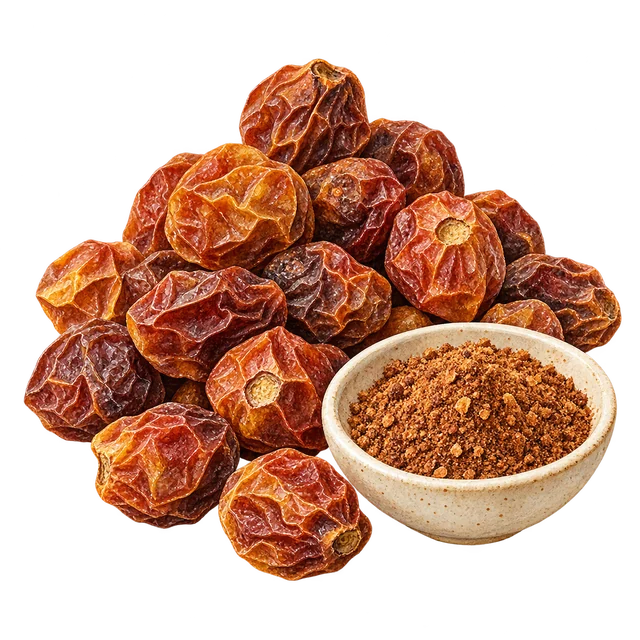
The dried edible fruit is a flavour ingredient in Australian native-food production. Whole dried fruit and powder are forms of the same food.
- Food-industry ingredient
Food or household practiceWhy this label?
Sources document this named food or material use; no therapeutic outcome is claimed.
Bush tomato is among the Australian native-food crops tracked by government and industry research, supplying manufactured culinary products. This does not imply every plant part is used.
2 narrowly supported uses; no clinical efficacy or universal preparation is inferred.
Historical-use additions reviewed 2026-10-09
Regional reading paths
These sourced notes describe cultivation, trade, food traditions or material history. A regional connection does not claim exclusive origin.
Australia & Oceania
native; central Australia
Authenticated ripe, dried fruit seasoning.
Identity & detailed reference
Identity
Solanum centrale; the authenticated ripe dried fruit known as bush tomato or kutjera, not garden tomato or every Australian Solanum.
Ingredient details, preparation and research
Source plant or material
Solanum centrale; the authenticated ripe dried fruit known as bush tomato or kutjera, not garden tomato or every Australian Solanum.
Plant family / material: Solanaceae
Forms and route
Commercial dried ripe fruit and ground food seasoning.
Vitamins and minerals
Dry fruit is more concentrated than fresh fruit. A seasoning spoonful is not nutritionally equivalent to a serving of ordinary tomato.
Absorption and preparation
No special absorption effect is established for combining this spice with fat, acid or other herbs.
Practical preparation
Use professionally sourced edible fruit or powder. Do not use this card to identify, ripen or detoxify wild Solanum; follow the supplier’s instructions for the finished ingredient.
Traditional and reported uses
- The dried edible fruit is a flavour ingredient in Australian native-food production. Whole dried fruit and powder are forms of the same food.
- Bush tomato is among the Australian native-food crops tracked by government and industry research, supplying manufactured culinary products. This does not imply every plant part is used.
Contraindications and cautions
- Use only authenticated food-grade Solanum centrale fruit; toxic lookalikes exist.
- Unripe fruit, leaves and unidentified bush tomatoes are outside the food scope.
Ripeness and common-name ambiguity
The species identity and dried-ripe fruit description are essential. Matching a photograph, a common name or a location does not establish edible maturity. The family contains plants with very different risks, so no casual substitution is appropriate.
Nutrient comparison boundary
The government’s native-food cards include bush tomato among named ingredients. A finished sauce has additional ingredients and a different water content; its nutritional profile must be assessed as the actual recipe rather than copied from dried fruit.
Evidence limits
This is a food/material reference, not evidence of disease treatment. Geographic and customary-use records do not establish a medicinal dose. Nutrient quantities are omitted unless a matching food form and serving have been verified.
Entry sources
- AgriFutures: Focus on Bush Tomato
- DAFF: Australian native foods
- DAFF: Australian fruit, nut and vegetable composition cards
Reference entry 477 · Recorded content review: 2026-10-09 · Review scope and dates