


Key cautions
- Trim the tough outer layers and rinse off sticky sap.
What’s inside
Dietary fibre and plant phenolic compounds have been measured in banana blossom preparations. Cultivar, selected tissues and processing affect composition; extract assays do not measure the nutritional value of every cooked dish.
Uses in brief

- Tender flower vegetable for soups, salads and cooked dishes.
- Also prepared as banana-flower pickle.
History, folklore and reported uses
History, folklore and traditional uses
The Pacific Food Guide records banana flower buds as a food harvested from cooking-banana bunches and prepared for salads, soups and cooked meals. Using the blossom extends the food value of the plant beyond the fruit.
Tamil Nadu Agricultural University describes food processing of the male flower bud into pickle, a different culinary preparation from simply cooking the fresh tender bud.
Malaysian researchers studied banana-flower biscuits in response to a local tradition of eating the flower to support breastfeeding. This is a documented use with cultural meaning, while the size and reliability of any milk-supply effect remain research questions.
Traditional, historical and reported uses
- Flower vegetable
Tender prepared banana buds and flowers are used in everyday meals.
- Traditional lactation food
A Malaysian food study explicitly investigated the traditional milk-supply use.
Food history and a specifically documented traditional use; no universal medical or cultivar-origin claim.
Identity & detailed reference
Identity
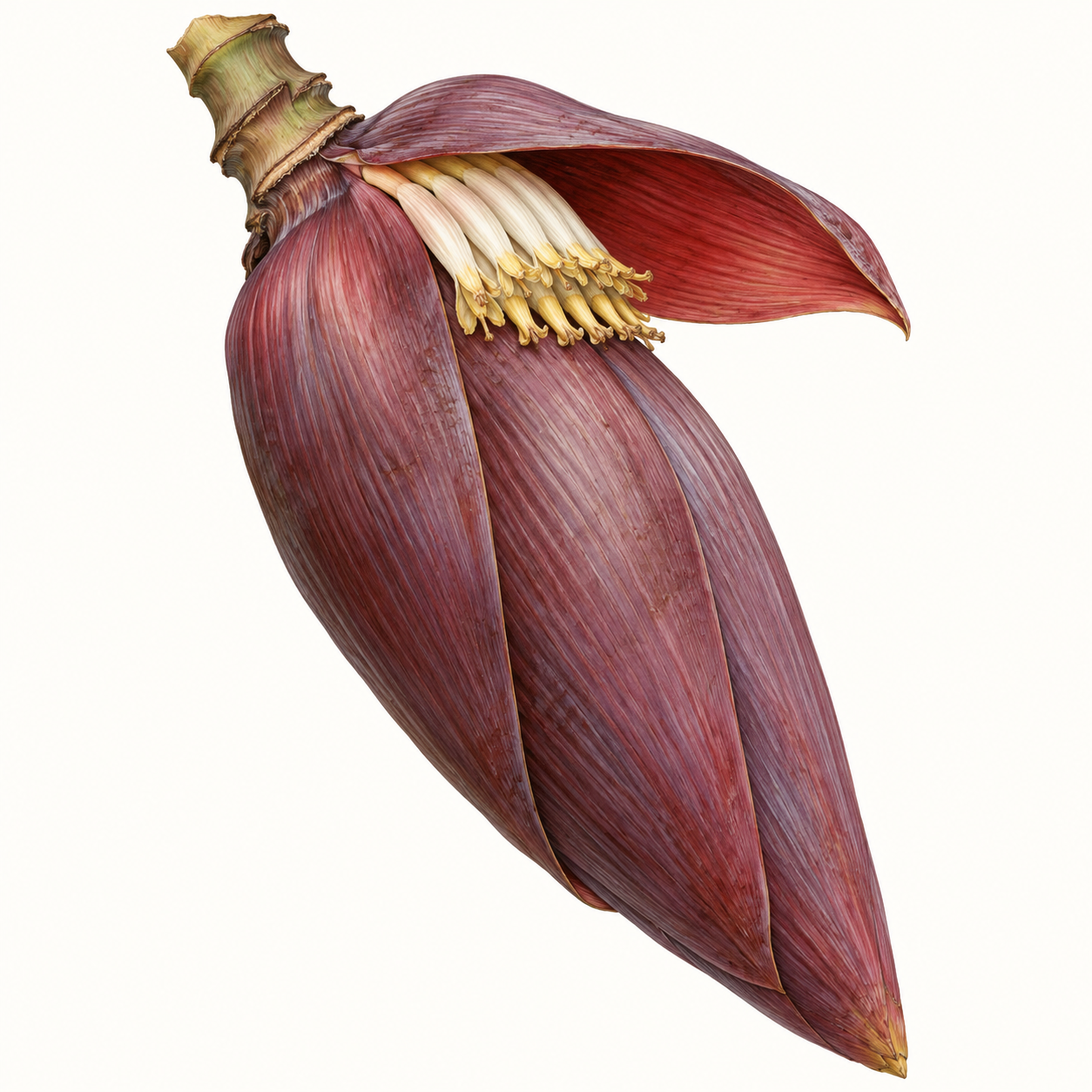
Banana blossom, also called banana heart, is the compact flowering bud commonly hanging beyond the developing fruit bunch. Its overlapping bracts enclose rows of small flowers. The conspicuous bracts are modified leaves, not individual petals; this card covers the tender prepared bud and flowers used as food, not banana fruit or pseudostem.
Ingredient details, preparation and research
Also known as: banana flower; banana heart; banana flower bud; edible banana inflorescence
Source plant or material
Flowering bud of edible Musa cultivars; many cultivated bananas have Musa acuminata and/or Musa balbisiana ancestry. The cultivar should be recorded when known.
Plant family / material: Musaceae (banana family).
Forms and route
Fresh food-grade blossom, cleaned and prepared as a vegetable; packaged or canned blossom according to its label. Flower flour, medicinal drinks and concentrated extracts are separate preparations and are not interchangeable with a cooked serving.
Food sources
Fresh or packaged blossom sold for food.
Vitamins and minerals
Banana blossom contains dietary fibre. Analyses of dried blossom preparations also identify plant phenolics; the fibre and nutrient content of a finished meal depends on the portion and preparation.
Practical preparation
Remove tough outer bud layers, thinly slice the tender portion, wash off sticky sap in salted water and rinse with fresh water, following the Pacific Food Guide. Use in a suitable food recipe; packaged products should follow their own instructions.
Food preparation
The Pacific Food Guide recommends trimming the tough outer layers, slicing the bud thinly, washing in salted water and rinsing in fresh water. TNAU’s thokku process additionally removes pistils before blanching and grinding the flowers with spices and oil.
Combination notes
For thokku, Tamil Nadu Agricultural University describes blanched, ground banana flowers combined with spices and oil. Its soup-mix example combines dried flower with banana flour, corn flour, dried vegetables and spices.
Traditional and reported uses
- Food: prepared blossom in soups, salads and other cooked dishes; banana flower pickle is documented by Tamil Nadu Agricultural University.
- Traditional lactation food: banana flower has been used with the aim of supporting milk supply; clinical findings vary by product and population.
Contraindications and cautions
- Remove tough outer layers and rinse away the sticky sap before preparing the tender bud.
- Concentrated blossom products differ from the prepared vegetable; their study findings belong to the tested product and purpose.
Similar items and how they compare
- Burro bananas (entry 253)
Another material from cultivated bananas.
Fruit, rather than the flowering bud; a regional fruit name does not authenticate a blossom cultivar.
- Feʻi bananas (entry 507)
Another banana food group.
A distinct Pacific cultivar group; its fruit context should not be copied onto all blossoms.
Lactation: positive and null results
A Malaysian study of 58 mother–infant pairs reported greater expressed milk volume with banana-flower-flour biscuits than with plain biscuits. The mothers recorded their own milk-expression logs, and the paper gives limited detail on allocation and blinding. A 2024 double-blind trial of 70 mothers of preterm infants found no significant milk-volume benefit from banana-blossom extract pills on days 7 or 14. Different products and populations were tested, so these findings cannot settle the effect of every customary blossom meal. For low milk supply, assessment of feeding, infant intake and growth remains important.
Blood sugar: a controlled trial did not show superiority
An eight-week trial in 42 Thai adults with prediabetes tested freeze-dried blossom powder. Blood sugar, HbA1c and other measured metabolic outcomes did not significantly differ from placebo. Some weight and blood-pressure measures improved within the blossom group, but between-group differences were not significant. Those within-group changes cannot establish a treatment benefit. The paper also contains adverse-event table inconsistencies; its broad safety conclusion should not be repeated. The trial provides no reason to replace prescribed diabetes care.
Botany, cultivation and exact part
Cultivated bananas have varied ancestry and flower-bud characteristics. Some plantain types retain a male bud and others lose it or do not produce one. A single species name or native country cannot describe every market blossom. Identify the edible cultivar and distinguish the small flowers from surrounding bracts when possible.
Evidence limits
Draft source synthesis, not a systematic review or clinical approval. No medicinal dosage, milk-supply guarantee, diabetes cure or photographed-plant identification is provided.
Entry sources
- University of Hawaiʻi: Pacific Food Guide, banana flower preparation
- Kew: Musa acuminata, botany and cultivated banana ancestry
- ProMusa: Plantain subgroup and variation in male buds
- Nordin et al. 2020: Banana flower flour biscuits, author institution record
- Rungruengsirichok and Phupong 2024: Placebo-controlled banana blossom extract trial
- Chotiprakornkul et al. 2025: Banana blossom powder trial in prediabetes
- Tamil Nadu Agricultural University: Banana flower pickle and male-bud processing
- Nordin et al. 2020: Original banana-flower biscuit study
Reference entry 610 · Content review date not recorded · Review scope and dates