


Key cautions
- Match the cultivar and food preparation before using nutrient comparisons.
What’s inside
Carbohydrate and carotenoid profiles differ substantially among cultivars and maturity stages. Some named Micronesian cultivars have measured provitamin-A carotenoids.
Uses in brief

- Cultivar-specific food
- Local dietary-diversity ingredient
History, folklore and reported uses
History, folklore and traditional uses
Field documentation from Pohnpei links Feʻi diversity with local names and food knowledge. Community-led nutrition work helped recognize overlooked cultivars rather than treating all bananas as nutritionally interchangeable.
Traditional, historical and reported uses
- Cultivar-specific food
Food or household practiceWhy this label?
Sources document this named food or material use; no therapeutic outcome is claimed.
ProMusa’s Pohnpei field account documents local banana diversity, including Feʻi types. The practical food identity should retain cultivar and intended maturity.
- Local dietary-diversity ingredient
Food or household practiceWhy this label?
Sources document this named food or material use; no therapeutic outcome is claimed.
The Pohnpei program studied and promoted familiar local food varieties. This is a community food-system role, not a claim that one cultivar is a universal replacement for balanced meals.
2 narrowly supported uses; no clinical efficacy or universal preparation is inferred.
Historical-use additions reviewed 2026-10-09
Regional reading paths
These sourced notes describe cultivation, trade, food traditions or material history. A regional connection does not claim exclusive origin.
Australia & Oceania
cultivated; Pohnpei and wider Pacific
Regional cooking and dessert banana cultivars.
Identity & detailed reference
Identity
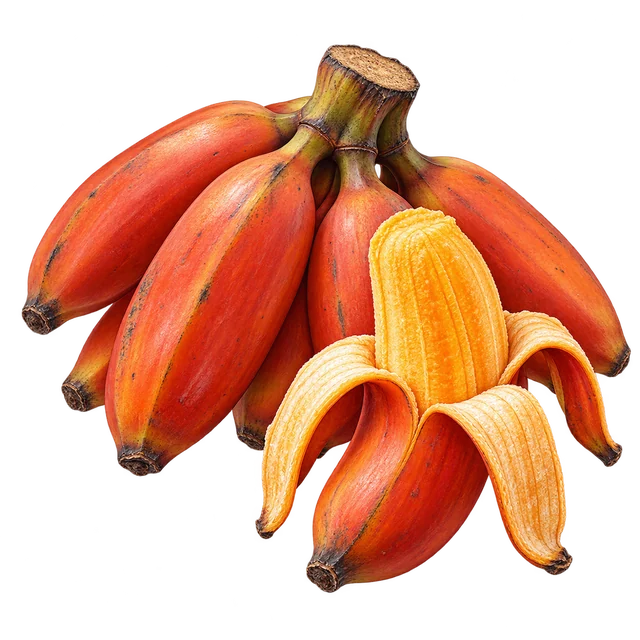
Musa Feʻi cultivar group; Pacific bananas including named Karat-type cultivars, distinct from Burro bananas and not a single standardized cultivar.
Ingredient details, preparation and research
Source plant or material
Musa Feʻi cultivar group; Pacific bananas including named Karat-type cultivars, distinct from Burro bananas and not a single standardized cultivar.
Plant family / material: Musaceae
Forms and route
Cultivar-appropriate cooked fruit and ripe dessert fruit; foods should identify the local cultivar where possible.
Vitamins and minerals
No one vitamin-A equivalent or riboflavin amount is applied to the entire Feʻi group. White/yellow/orange flesh and cultivar names require analytical context.
Absorption and preparation
Ripeness, cooking and the food matrix can change composition and availability. This card does not promise treatment of deficiency from an unspecified banana serving.
Practical preparation
Use an established food cultivar and the appropriate local culinary practice. Do not assume a cooking banana should be eaten exactly like a ripe supermarket dessert banana, or vice versa.
Traditional and reported uses
- ProMusa’s Pohnpei field account documents local banana diversity, including Feʻi types. The practical food identity should retain cultivar and intended maturity.
- The Pohnpei program studied and promoted familiar local food varieties. This is a community food-system role, not a claim that one cultivar is a universal replacement for balanced meals.
Contraindications and cautions
- Match the cultivar and food preparation before using nutrient comparisons.
Primary composition evidence
Englberger and colleagues measured vitamins and carotenoids in named Micronesian cultivars. The study expands knowledge of food diversity but does not provide a single composition for every Feʻi banana or an intervention result in this card.
Keep the group boundary visible
Feʻi is not the same cultivar group as the catalog’s Burro banana. Merging them would erase the very diversity that the field and laboratory research sought to document.
Evidence limits
This is a food/material reference, not evidence of disease treatment. Geographic and customary-use records do not establish a medicinal dose. Nutrient quantities are omitted unless a matching food form and serving have been verified.
Entry sources
- ProMusa / Bioversity: The bananas of Pohnpei, field photo collection
- Englberger et al.: Carotenoid and vitamin content of Karat and other Micronesian banana cultivars
- Island Food Community / FAO: Pohnpei food research and local-food program
Reference entry 507 · Recorded content review: 2026-10-09 · Review scope and dates