


Key cautions
- Choose clean pulp intended for food, excluding shell fragments and hard seeds. A cosmetic seed-oil product is not a pulp substitute.
- Discard moldy, wet-spoiled or contaminated powder. Large increases in a fiber-rich powder may cause gastrointestinal discomfort.
What’s inside
Carbohydrates, soluble and insoluble fiber, organic acids and vitamin C, with minerals varying by origin and handling. Heat, storage and dilution change the finished food.
Uses in brief

- Tart fruit drink
- Pulp in prepared foods
History, folklore and reported uses
History, folklore and traditional uses
Native/traditional food: Senegal, Sudan and southern African countries.
A closer look at its history
A dry fruit for drinks, milk and cereal dishes
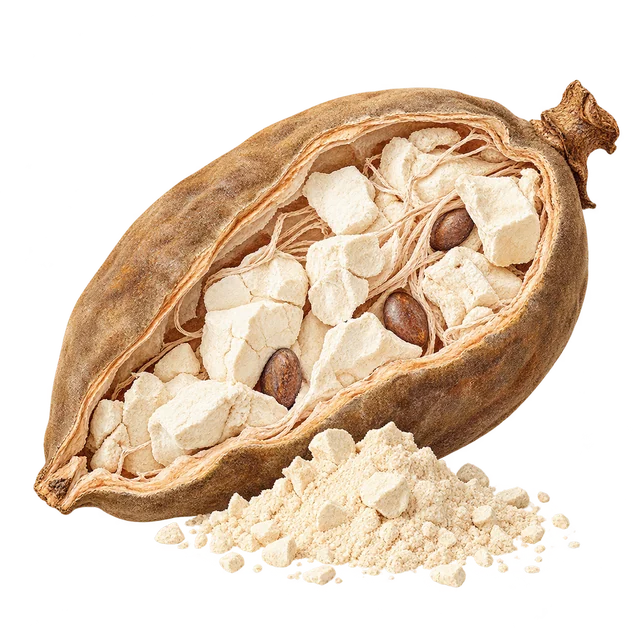
Baobab pulp has an unusual food form: it is already dry and powdery inside the woody shell. SANBI describes it dispersed in water for a tart drink, while the National Research Council records eating it with milk, with milk and porridge, or as flour added to cereal foods. Those uses place the pulp in everyday African food systems well before its recent life as a packaged powder. They also distinguish the fruit from baobab leaves, seeds and oil, which have their own processing histories and should not be treated as equivalent servings.
A tree that was also a landmark and a room
Baobabs’ massive trunks made them landmarks, gathering places and, where naturally hollow, usable spaces. SANBI records a tree near Leydsdorp used as a bar by prospectors during the late nineteenth-century gold rush, as well as other hollow trees used for storage or shelter. Bark fiber supplied ropes, mats and nets. These are documented material uses of the source tree, not uses of the fruit powder. SANBI also records legends about the tree’s root-like crown, but such stories are cultural interpretations; they do not establish medicinal or protective powers.
Additional history reviewed 2026-10-09
Traditional, historical and reported uses
- Tart fruit drink
Food or household practiceWhy this label?
The source supports the named food, cosmetic or material practice; no treatment effect is inferred and the card’s form and safety limits remain attached.
SANBI records the powdery pulp mixed with water for a refreshing drink. Use a food-grade product and safe water; the source’s historical fever claims are not adopted as treatment advice.
- Pulp in prepared foods
Food or household practiceWhy this label?
The source supports the named food, cosmetic or material practice; no treatment effect is inferred and the card’s form and safety limits remain attached.
The National Research Council describes baobab as an African food resource. Pulp powder can contribute acidity and body in foods, but the finished recipe determines the amount of sugar, fiber and vitamin C consumed.
2 sourced featured uses; cultural or material records are not clinical efficacy evidence.
Historical-use additions reviewed 2026-10-09
Regional reading paths
These sourced notes describe cultivation, trade, food traditions or material history. A regional connection does not claim exclusive origin.
Africa
Native/traditional food: Senegal, Sudan and southern African countries.
Tart fruit pulp in drinks and foods; distinct from seed oil.
Identity & detailed reference
Identity
The naturally dry edible pulp inside Adansonia digitata fruit. This pale pulp surrounds hard seeds; it is distinct from baobab seed oil, leaves, bark and fruits of other Adansonia species.
Ingredient details, preparation and research
Source plant or material
Adansonia digitata
Plant family / material: Malvaceae
Forms and route
Clean food-grade pulp pieces or powder and foods or drinks made from them. Sweetened beverage mixes, concentrates and cosmetic seed oils have different compositions.
Vitamins and minerals
Pulp contains fiber and vitamin C, unlike the separated seed oil. Actual serving size, storage and recipe dilution matter, so no universal nutrient dose or comparison with fresh fruit is assigned.
Absorption and preparation
Vitamin C can support non-heme iron absorption as part of a meal, but this card does not establish a special pairing or predict iron absorbed from a particular baobab drink.
Practical preparation
Use a reliably processed food powder in a normal recipe, mixing with safe water or other foods as directed. Keep dry pulp sealed and refrigerate prepared drinks promptly.
Traditional and reported uses
- Tart fruit drink
- Pulp in prepared foods
Contraindications and cautions
- Choose clean pulp intended for food, excluding shell fragments and hard seeds. A cosmetic seed-oil product is not a pulp substitute.
- Discard moldy, wet-spoiled or contaminated powder. Large increases in a fiber-rich powder may cause gastrointestinal discomfort.
Pulp is not seed
A direct composition study compared pulp and seeds of African fruits and found distinct nutrient profiles. Its laboratory measurements cannot establish clinical benefit or justify transferring seed, oil and pulp claims between preparations.
Evidence limits
Food-pulp scope; no infection treatment, vitamin dose or general claim for every baobab species and product.
Entry sources
- National Research Council, Lost Crops of Africa: Baobab
- SANBI: Adansonia digitata
- Primary study: Composition of pulp and seeds of three African fruits including baobab
Reference entry 327 · Recorded content review: 2026-10-09 · Review scope and dates