


Key cautions
- Use seed supplied for food and cook dried pulses properly. Do not consume chemically treated planting seed or assume an unfamiliar groundnut is this species.
- Legume allergy can occur. Hard seeds and whole roasted kernels may be unsuitable for people with chewing or swallowing difficulties.
What’s inside
Starch, legume protein, fiber, some fat and minerals. Composition varies by landrace and processing; the pulse is not nutritionally equivalent to oil-rich peanut.
Uses in brief

- Boiled pulse
- Flour and roasted foods
History, folklore and reported uses
History, folklore and traditional uses
Native/cultivated: Burkina Faso, Nigeria, Zimbabwe and wider Africa.
A closer look at its history
Africa’s own underground bean
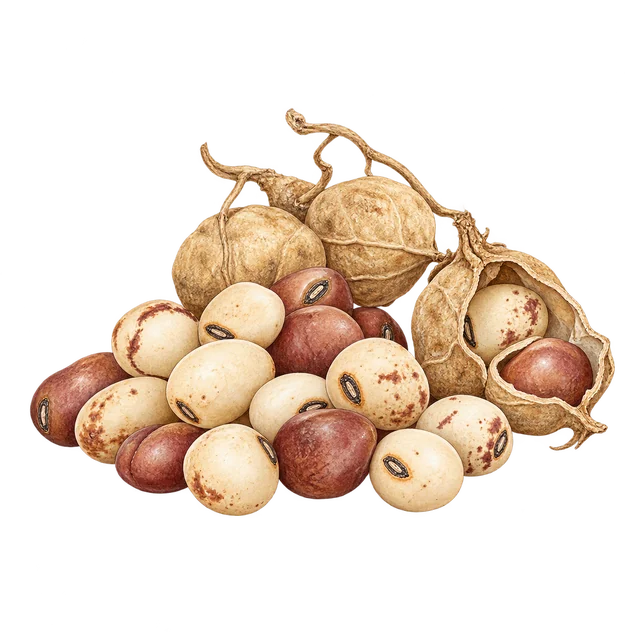
Bambara groundnut produces its pods below ground, but it is a distinct African legume rather than a local name for the American peanut. The National Research Council’s 2006 account describes farmers maintaining traditional landraces with varied seed colors and patterns, sometimes reflected in names such as dove eyes or butterfly. In Burkina Faso, the crop was grown both among other crops and in small separate stands, with much retained for household food. This diversity and its role before the next harvest explain its value beyond the small share reaching formal commodity markets.
A roadside food, a flour and a practical reserve
The same account records fresh Bambara beans boiled in their pods and sold ready to eat beside roads and in markets. Dried beans could be pounded into flour for porridge, cooked with maize meal, or roasted before milling into other dishes. Those forms connect field production with household preparation and small-scale sale. Its ability to yield under difficult conditions made it a useful reserve crop, although that does not mean every variety grows without constraints. The familiar word groundnut can conceal this separate crop’s own recipes, seed knowledge and trading traditions.
Additional history reviewed 2026-10-09
Traditional, historical and reported uses
- Boiled pulse
Food or household practiceWhy this label?
The source supports the named food, cosmetic or material practice; no treatment effect is inferred and the card’s form and safety limits remain attached.
The National Research Council describes beans boiled for household and market use. Fresh and dried seeds need different preparation, and the mature pod shell is not the edible serving.
- Flour and roasted foods
Food or household practiceWhy this label?
The source supports the named food, cosmetic or material practice; no treatment effect is inferred and the card’s form and safety limits remain attached.
The crop account records roasting and flour for porridges and mixed dishes. These preparations expand culinary use but retain the need for safe processing and storage.
2 sourced featured uses; cultural or material records are not clinical efficacy evidence.
Historical-use additions reviewed 2026-10-09
Regional reading paths
These sourced notes describe cultivation, trade, food traditions or material history. A regional connection does not claim exclusive origin.
Africa
Native/cultivated: Burkina Faso, Nigeria, Zimbabwe and wider Africa.
Cooked pulse, roasted seed and flour foods.
Identity & detailed reference
Identity
Bambara groundnut, Vigna subterranea, an African pulse whose pods form underground. It is not Arachis peanut, even though both names refer to ground-grown legumes.
Ingredient details, preparation and research
Source plant or material
Vigna subterranea
Plant family / material: Fabaceae
Forms and route
Fresh or dried seeds, boiled beans, roasted food products and flour intended for cooking. Pod shells and planting seed are not interchangeable with edible kernels.
Vitamins and minerals
This is a protein-containing starchy pulse with less oil than peanut. A varied diet is still needed; the older literature’s enthusiastic “complete food” language should not be read literally.
Absorption and preparation
Cooking and other validated processing affect digestibility and antinutritional compounds. Mineral content does not itself establish absorbed iron or zinc in every meal.
Practical preparation
Buy clean food-grade beans or a prepared product. Follow a reliable cooking method for the fresh or dried form; refrigerate cooked beans and keep flour dry and sealed.
Traditional and reported uses
- Boiled pulse
- Flour and roasted foods
Contraindications and cautions
- Use seed supplied for food and cook dried pulses properly. Do not consume chemically treated planting seed or assume an unfamiliar groundnut is this species.
- Legume allergy can occur. Hard seeds and whole roasted kernels may be unsuitable for people with chewing or swallowing difficulties.
Food potential and evidence limits
FAO and the National Research Council document long-standing use and crop adaptability. Those agronomic and nutritional descriptions are not human clinical trials and do not justify replacing therapeutic diets, supplements or infant feeds.
Evidence limits
Food-pulse profile with no blanket allergen clearance, complete-diet claim or processing-independent nutrient value.
Entry sources
- National Research Council, Lost Crops of Africa: Bambara Bean
- FAO Ecocrop: Vigna subterranea
- FAO: Compendium of forgotten foods and culinary traditions
Reference entry 326 · Recorded content review: 2026-10-09 · Review scope and dates