


Key cautions
- Do not eat raw or inadequately prepared taro.
- Fermentation is not a guarantee of safety or probiotic benefit; follow the producer’s cold-chain instructions.
What’s inside
Taro starch, water and microbial metabolites define the food. Microbial populations and acidity depend on processing and storage; no uniform probiotic culture is assumed.
Uses in brief

- Fermented staple food
- Sour-flavour preparation
History, folklore and reported uses
History, folklore and traditional uses
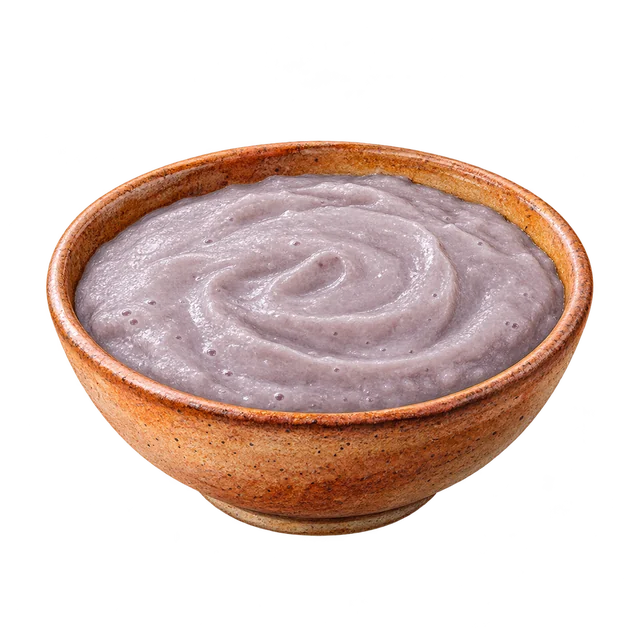
Poi has a central place in Hawaiian food traditions. Fermentation is a meaningful preparation distinction, but the word poi alone does not prove a product is fermented or has live organisms at consumption.
Traditional, historical and reported uses
- Fermented staple food
Traditional accountWhy this label?
Sources document this named food or material use; no therapeutic outcome is claimed.
The Pacific Food Guide identifies fermented taro poi within Hawaiian food preferences. The prepared paste is the food, not an isolated taro extract.
- Sour-flavour preparation
Food or household practiceWhy this label?
Sources document this named food or material use; no therapeutic outcome is claimed.
University fermentation research describes the development of sour character through microbial activity, a sensory distinction from fresh poi rather than a treatment indication.
2 narrowly supported uses; no clinical efficacy or universal preparation is inferred.
Historical-use additions reviewed 2026-10-09
Regional reading paths
These sourced notes describe cultivation, trade, food traditions or material history. A regional connection does not claim exclusive origin.
Australia & Oceania
traditional processing; Hawaiʻi
Fermented cooked-taro food.
Identity & detailed reference
Identity
Fermented poi made from cooked Colocasia esculenta corm; distinguish sour fermented poi from freshly prepared poi and from raw taro.
Ingredient details, preparation and research
Source plant or material
Fermented poi made from cooked Colocasia esculenta corm; distinguish sour fermented poi from freshly prepared poi and from raw taro.
Plant family / material: Araceae; fermented food
Forms and route
Prepared taro paste with a documented fermentation stage; plain and mixed products differ.
Vitamins and minerals
The source corm’s raw nutrition values cannot simply be copied to diluted fermented paste. Added milk, sugar or other ingredients belong to the finished-food assessment.
Absorption and preparation
Fermentation may change food chemistry, but it does not establish a clinically beneficial absorption effect or automatically remove all contamination risks.
Practical preparation
Choose a trusted producer and follow storage/use instructions. No room-temperature fermentation schedule, starter recipe or raw-taro processing protocol is supplied here.
Traditional and reported uses
- The Pacific Food Guide identifies fermented taro poi within Hawaiian food preferences. The prepared paste is the food, not an isolated taro extract.
- University fermentation research describes the development of sour character through microbial activity, a sensory distinction from fresh poi rather than a treatment indication.
Contraindications and cautions
- Do not eat raw or inadequately prepared taro.
- Fermentation is not a guarantee of safety or probiotic benefit; follow the producer’s cold-chain instructions.
Early fermentation research
The 1933 Hawaiʻi Experiment Station study examined manufacture and microbial changes. Its observations are valuable historical research, but its dated terminology and factory conditions are not a current household safety standard.
Potential probiotic research is preliminary
Later CTAHR work investigated bacteria in poi. Finding candidate organisms is not equivalent to demonstrating a health benefit from any purchased or homemade poi, whose strains, viability and serving may differ.
Evidence limits
This is a food/material reference, not evidence of disease treatment. Geographic and customary-use records do not establish a medicinal dose. Nutrient quantities are omitted unless a matching food form and serving have been verified.
Entry sources
- University of Hawaiʻi: Pacific Food Guide, Food Preferences
- Hawaiʻi Experiment Station: Manufacture and fermentation of poi, Bulletin 70
- University of Hawaiʻi CTAHR: Poi fermentation research, February 2009
Reference entry 513 · Recorded content review: 2026-10-09 · Review scope and dates