


Key cautions
- Avoid with ribwort-pollen allergy.
- This tea preparation is not recommended under age 12 in the EMA monograph; pregnancy and breastfeeding use is not recommended.
What’s inside
Leaf contains mucilage, iridoid glycosides such as aucubin, flavonoids and tannins. Drying can change the constituent profile.
Uses in brief

- Ribwort leaf tea has traditional use for throat irritation and cough associated with a cold.
History, folklore and reported uses
History, folklore and traditional uses
EMA documents longstanding leaf preparations for irritation of the mouth and throat and cough. Their traditional status does not prove clearance of an infection.
The assessment also records older topical uses for skin inflammation and wounds. Those records concern other preparations and are not instructions to put this tea in an open wound.
Traditional, historical and reported uses
- Medicinal leaf record
Traditional accountWhy this label?
Documents this named use; does not support broader disease claims or interchangeable formulations.
EMA documents longstanding leaf preparations for irritation of the mouth and throat and cough. Their traditional status does not prove clearance of an infection.
- Other historical routes
Historical recordWhy this label?
Documents this named use; does not support broader disease claims or interchangeable formulations.
The assessment also records older topical uses for skin inflammation and wounds. Those records concern other preparations and are not instructions to put this tea in an open wound.
Only documented uses are included. Historical practice does not establish clinical benefit or safe home use.
Health topics: evidence and cautions
These notes describe a specific research context and preparation. A topic link is not a treatment recommendation.
Respiratory health · Traditional reports
Form and route: dried-leaf infusion · oral
Ribwort leaf has traditional use for throat irritation and cough.
Evidence: documented traditional use; clinical evidence insufficient
EMA recognizes longstanding symptom use; this is not proof of a disease cure.
Limits
Not Plantago major or cooking-banana plantain; no proof of viral clearance.
Cautions
- Avoid with ribwort-pollen allergy.
- This tea preparation is not recommended under age 12 in the EMA monograph; pregnancy and breastfeeding use is not recommended.
Identity & detailed reference
Identity
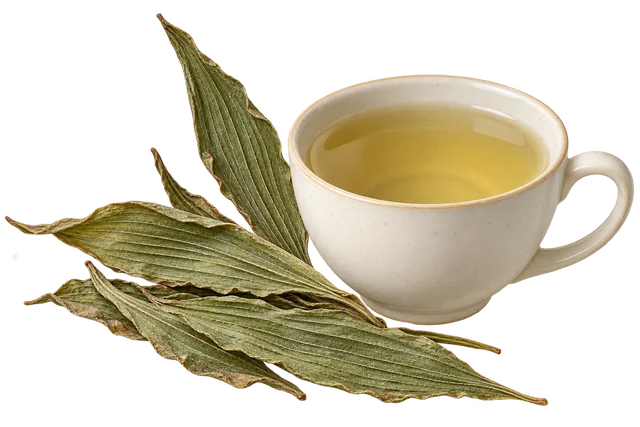
Plantago lanceolata dried leaf. It differs from broadleaf plantain (P. major), psyllium seed husk and the banana-like food called plantain.
Ingredient details, preparation and research
Also known as: Narrowleaf plantain
Source plant or material
Plantago lanceolata dried leaf. It differs from broadleaf plantain (P. major), psyllium seed husk and the banana-like food called plantain.
Plant family / material: Plantaginaceae
Forms and route
Dried-leaf oral infusion; other extracts, syrups and skin preparations have separate formulation limits.
Absorption and preparation
Leaf mucilage is discussed as a local coating material rather than an absorbed antiviral treatment. Whole-leaf tea is not a standardized source of every leaf constituent.
Traditional and reported uses
- Ribwort leaf tea has traditional use for throat irritation and cough associated with a cold.
Contraindications and cautions
- Avoid with ribwort-pollen allergy.
- This tea preparation is not recommended under age 12 in the EMA monograph; pregnancy and breastfeeding use is not recommended.
Why exact form matters
The current monograph distinguishes infusion from dry extracts and syrups, including different age limits. A result for a syrup cannot automatically be assigned to tea.
Local action and uncertainty
Mucilage can adhere to mouth lining in experimental systems. Controlled clinical evidence remains inadequate, and the exact mechanism is not settled.
Evidence limits
- Not Plantago major or cooking-banana plantain; no proof of viral clearance.
Entry sources
Reference entry 586 · Recorded content review: 2026-10-11 · Review scope and dates