


Key cautions
- Use edible-grade oil, not crude extraction material or an industrial refining residue.
- Do not repeatedly overheat oil or assume that antioxidant constituents prevent deterioration. Discard products that smell rancid.
What’s inside
Fatty acids, including oleic and linoleic acids, and variable tocopherols, sterols and gamma-oryzanol. Refining changes the concentrations of minor constituents.
Uses in brief

- Edible cooking oil
- Salad and food formulation oil
History, folklore and reported uses
History, folklore and traditional uses
FAO’s rice-processing account documents production in India, Japan and China. Using the bran for oil gives it a different destination from polished grain or fiber-rich bran foods.
Traditional, historical and reported uses
- Edible cooking oil
Food or household practiceWhy this label?
The cited source documents this material, preparation or cultural practice; it does not establish treatment efficacy.
Food-grade rice-bran oil is used as a culinary fat. The product’s refining and handling characteristics, rather than a generic smoke-point claim, should guide its intended use.
- Salad and food formulation oil
Food or household practiceWhy this label?
The cited source documents this material, preparation or cultural practice; it does not establish treatment efficacy.
FAO describes rice-bran oil as a salad oil. An oil-based dressing remains a mixed food whose salt, sugar and other ingredients are not properties of the bran itself.
2 supported featured food or cultural uses; no treatment claim.
Historical-use additions reviewed 2026-10-09
Regional reading paths
These sourced notes describe cultivation, trade, food traditions or material history. A regional connection does not claim exclusive origin.
Asia
Traditional/commercial processing: Asian rice-producing regions, including India and Japan.
Oil separated from stabilized bran for culinary use.
Identity & detailed reference
Identity
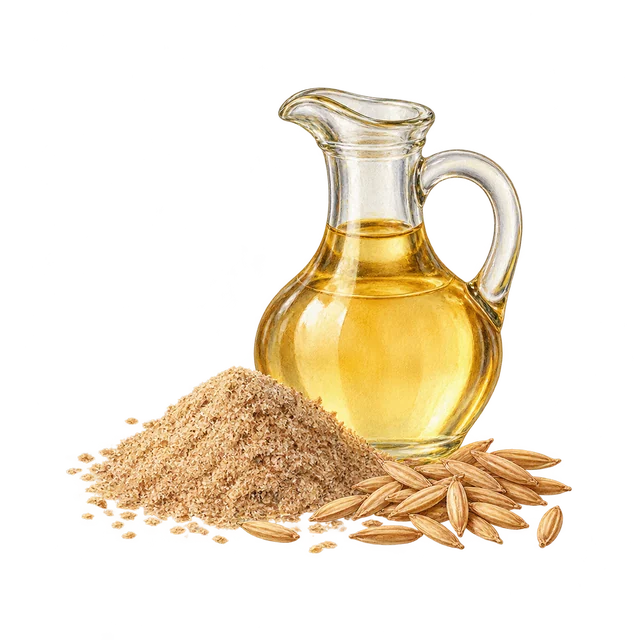
Fixed oil extracted from the bran fraction of Oryza sativa grain. It is distinct from whole brown rice, rice bran fiber, rice starch and isolated gamma-oryzanol supplements.
Ingredient details, preparation and research
Also known as: Rice bran oil; Oryza sativa bran oil
Source plant or material
Oryza sativa
Plant family / material: Poaceae
Forms and route
Commercial edible-grade refined oil and some specifically labelled less-refined food products. Crude processing oil and industrial by-products are not automatically ready for eating.
Vitamins and minerals
The oil provides fat but not the fiber or protein of whole bran. Minor vitamin-E-related compounds vary by refining method; no guaranteed serving value is inferred.
Absorption and preparation
The presence of gamma-oryzanol does not establish a clinically useful absorbed dose from cooking oil. A supplement preparation is not interchangeable with a meal.
Practical preparation
Store the closed bottle away from light and heat, and follow the manufacturer’s cooking guidance. Keep water and food debris out of stored oil; avoid treating home-extracted bran oil as a validated food product.
Combination notes
Use as a cooking or dressing fat according to the actual product; adding it does not restore the fiber removed from white rice.
Traditional and reported uses
- Edible cooking oil
- Salad and food formulation oil
Contraindications and cautions
- Use edible-grade oil, not crude extraction material or an industrial refining residue.
- Do not repeatedly overheat oil or assume that antioxidant constituents prevent deterioration. Discard products that smell rancid.
Refining and heat change composition
Original food-chemistry studies measured changes in rice-bran oil constituents through refining and heating. These help characterize an ingredient, but in-vitro antioxidant results do not demonstrate prevention or treatment of disease in consumers.
Evidence limits
Food-processing profile, not cholesterol-treatment advice; no current production rankings or universal smoke point.
Entry sources
- FAO: Rice in human nutrition, rice-bran uses
- Study of thermal stability of gamma-oryzanol in rice-bran oil
- Effect of refining on composition and in-vitro antioxidant activity of rice-bran oil
Reference entry 351 · Recorded content review: 2026-10-09 · Review scope and dates