


Key cautions
- Allergy and digestive upset are possible.
What’s inside
Root contains lectins, lignans, sterols, phenols and other compounds; extract profiles depend on manufacturing.
Uses in brief

- Historical use: Specified nettle root products have a traditional European role for BPH urinary symptoms after medical assessment.
History, folklore and reported uses
History, folklore and traditional uses
EMA traces root references to early European herbal writing, but dates its urinary role to the 1950s. This is a history of changing uses, not evidence of an ancient prostate treatment.
Traditional, historical and reported uses
- Urinary symptoms
Traditional accountWhy this label?
Reported use or research history, with the form and evidentiary limits stated in the entry. This label is not a treatment endorsement.
EMA recognizes specified oral root preparations through traditional use after medical assessment; its review did not establish efficacy.
- Digestive and worm remedies
Traditional accountWhy this label?
Reported use or research history, with the form and evidentiary limits stated in the entry. This label is not a treatment endorsement.
EMA records root use for diarrhoea and intestinal worms in older accounts. These reports do not establish efficacy or replace diagnosis.
- Hair and scalp context
Traditional accountWhy this label?
Reported use or research history, with the form and evidentiary limits stated in the entry. This label is not a treatment endorsement.
Older root hair-wash accounts concerned dandruff. That external tradition cannot support swallowing root for hair growth.
Only documented uses and research history are included. Modern study products do not inherit ancient clinical evidence.
Story sources
Health topics: evidence and cautions
These notes describe a specific research context and preparation. A topic link is not a treatment recommendation.
Prostate health · Traditional reports
Form and route: Specified root tea or oral dry/liquid extracts in the EMA monograph · oral
Specified nettle root products have a traditional European role for BPH urinary symptoms after medical assessment.
Evidence: Traditional use; efficacy not established
EMA found the available trials insufficient to prove efficacy of its listed root preparations. Its traditional-use assessment is based on long use.
Limits
Root is not leaf. Different extracts and root tea are not interchangeable; no cancer claim.
Cautions
- Allergy and digestive upset are possible.
- Blood in urine, fever, painful urination or urine retention need medical care.
Identity & detailed reference
Identity
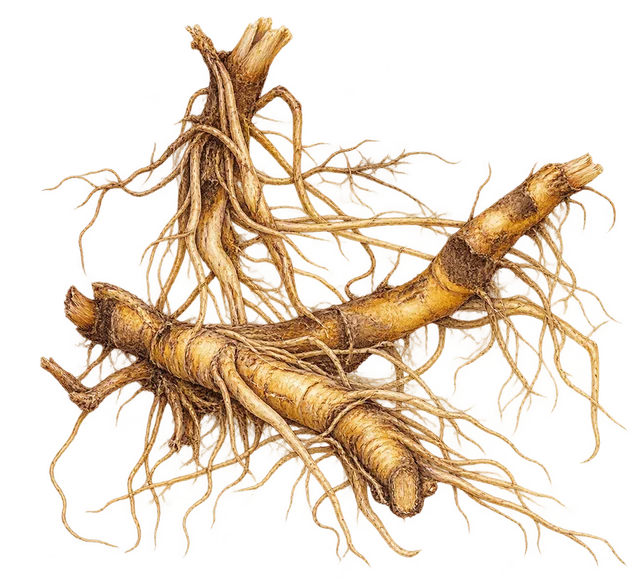
Dried underground parts of Urtica dioica or Urtica urens, including permitted mixtures or hybrids in the European Pharmacopoeia definition. Nettle leaf is separate.
Ingredient details, preparation and research
Source plant or material
Urtica dioica; Urtica urens
Plant family / material: Urticaceae (nettle family)
Forms and route
Specified root tea or oral dry/liquid extracts in the EMA monograph. Oral route only unless a historical context is expressly separated.
Vitamins and minerals
No universal serving values apply to this formulation. A constituent being present does not establish nutritional adequacy or clinical benefit.
Traditional and reported uses
- Specified nettle root products have a traditional European role for BPH urinary symptoms after medical assessment.
Contraindications and cautions
- Allergy and digestive upset are possible.
- Blood in urine, fever, painful urination or urine retention need medical care.
Similar items and how they compare
- Nettle leaf/herb (existing card 24)
The same plant name is used for different parts.
Leaf food and leaf preparations are not the root medicines assessed here.
Terms used in this card
BPH means benign prostatic hyperplasia, or noncancerous prostate enlargement.
Identity and composition
Dried underground parts of Urtica dioica or Urtica urens, including permitted mixtures or hybrids in the European Pharmacopoeia definition. Nettle leaf is separate. Root contains lectins, lignans, sterols, phenols and other compounds; extract profiles depend on manufacturing.
What the human evidence can show
EMA found the available trials insufficient to prove efficacy of its listed root preparations. Its traditional-use assessment is based on long use. Root is not leaf. Different extracts and root tea are not interchangeable; no cancer claim.
Safety and limits
Allergy and digestive upset are possible. Blood in urine, fever, painful urination or urine retention need medical care.
Evidence limits
- Root is not leaf. Different extracts and root tea are not interchangeable; no cancer claim.
- A product-specific result cannot establish every commercial preparation.
Entry sources
Reference entry 597 · Recorded content review: 2026-10-11 · Review scope and dates