


Key cautions
- Use food-grade noug, never bird feed or seed treated for planting. Those supply chains need not meet human-food handling requirements.
- Seed allergy is possible; stop after a reaction. Store oil-rich seed meal carefully and discard rancid or moldy products.
What’s inside
Protein, seed oil rich in linoleic acid, fiber and minerals; phytate and other antinutritional constituents vary by seed variety and processing.
Uses in brief

- Seed condiment
- Seed-and-honey food
History, folklore and reported uses
History, folklore and traditional uses
Native/cultivated: Ethiopian highlands.
A closer look at its history
Noug belongs to Ethiopian cropping systems
The 1996 IPGRI monograph by Getinet and Sharma describes niger or noug as an Ethiopian oilseed grown in rotation with cereals and pulses, with a separate important cultivation history on marginal land in India. This is a useful corrective to encountering the seed only in packets of bird food abroad. Its history includes farmers’ crop rotations, oil pressing and regional food production, not simply wildlife feeding. The old monograph’s production shares describe its own period and should not be read as current global market statistics.
Honey cakes, lamp oil and the remainder of the press
FAO’s crop account records Ethiopian cakes made by pressing the seeds with honey, as well as fried seeds and condiment uses. Extracted oil had roles in food, soap, paint and lighting, while the remaining seed cake fed livestock. The plant could also be incorporated as green manure and was useful to bees. These uses describe a small agricultural economy built around several products from one crop. Food-grade seeds, extracted culinary oil and treated or non-food bird-feed seed remain different materials; a familiar common name does not make their handling or intended use equivalent.
Additional history reviewed 2026-10-09
Traditional, historical and reported uses
- Seed condiment
Food or household practiceWhy this label?
The source supports the named food, cosmetic or material practice; no treatment effect is inferred and the card’s form and safety limits remain attached.
FAO records fried seed and condiment uses. Roasted or ground culinary material contributes texture and flavor without implying that raw bird-feed seed is suitable for people.
- Seed-and-honey food
Food or household practiceWhy this label?
The source supports the named food, cosmetic or material practice; no treatment effect is inferred and the card’s form and safety limits remain attached.
FAO documents Ethiopian cakes made with seeds and honey. This is a mixed food whose sugar, fat and portion size matter; honey does not establish a medicinal effect.
2 sourced featured uses; cultural or material records are not clinical efficacy evidence.
Historical-use additions reviewed 2026-10-09
Regional reading paths
These sourced notes describe cultivation, trade, food traditions or material history. A regional connection does not claim exclusive origin.
Africa
Native/cultivated: Ethiopian highlands.
Roasted seed condiments and seed-based foods; use food-grade seed, not bird feed.
Identity & detailed reference
Identity
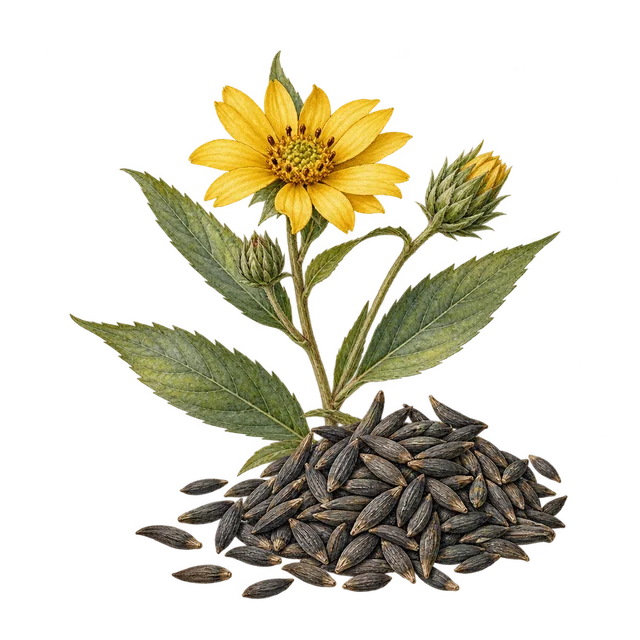
The food seed of Guizotia abyssinica, called noug or niger. These small oilseeds are distinct from black cumin and from any product labeled solely as bird seed.
Ingredient details, preparation and research
Also known as: Niger; noug seed
Source plant or material
Guizotia abyssinica
Plant family / material: Asteraceae
Forms and route
Food-grade cleaned seeds, roasted/ground seed ingredients and separately extracted oil. Animal-feed seed and agricultural treated seed are not food equivalents.
Vitamins and minerals
Niger seed contributes fat, protein and minerals, but laboratory values differ across accessions and growing conditions. An oil bottle omits most seed protein and fiber and must not inherit whole-seed claims.
Absorption and preparation
Phytate can reduce availability of some minerals. Measuring mineral content or an in-vitro antioxidant response does not establish how much a person absorbs from a prepared food.
Practical preparation
Follow a recipe intended for cleaned culinary noug. Keep dry seeds sealed; grind in small amounts and use or refrigerate the meal according to the product’s storage advice.
Traditional and reported uses
- Seed condiment
- Seed-and-honey food
Contraindications and cautions
- Use food-grade noug, never bird feed or seed treated for planting. Those supply chains need not meet human-food handling requirements.
- Seed allergy is possible; stop after a reaction. Store oil-rich seed meal carefully and discard rancid or moldy products.
Environment and processing affect composition
Ethiopian studies compare seed accessions and mineral/antinutritional constituents. They provide useful food-composition evidence, but do not show that noug replaces prescribed iron or zinc, or that laboratory antioxidant activity treats disease.
Evidence limits
Qualitative food profile; no bird-feed safety equivalence, supplement claim or universal fatty-acid percentage.
Entry sources
- FAO Ecocrop: Guizotia abyssinica
- Fatty-acid and polyphenol composition of Ethiopian niger-seed accessions
- Mineral and antinutritional contents of Ethiopian oilseed varieties
Reference entry 308 · Recorded content review: 2026-10-09 · Review scope and dates