


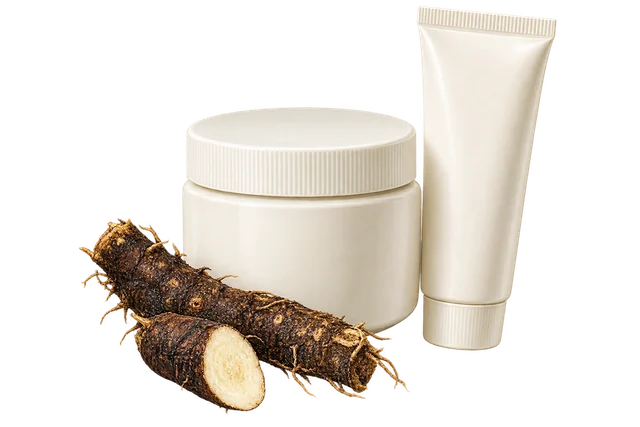
Key cautions
- Adults only; use no longer than 10 days under the product label.
- Pyrrolizidine alkaloids can harm the liver; only a controlled medicinal preparation is relevant. Never swallow it.
What’s inside
Root contains allantoin, mucilage, phenolic compounds and potentially liver-toxic pyrrolizidine alkaloids. Finished-product alkaloid control is essential.
Uses in brief

- Traditional short-term relief of minor sprains and bruises with a controlled comfrey-root skin medicine.
History, folklore and reported uses
History, folklore and traditional uses
EMA recognizes a longstanding minor-sprain and bruise use. This is a record of specific products, not permission to apply freshly gathered roots.
Traditional, historical and reported uses
- European medicinal record
Traditional accountWhy this label?
Documents this named use; does not support broader disease claims or interchangeable formulations.
EMA recognizes a longstanding minor-sprain and bruise use. This is a record of specific products, not permission to apply freshly gathered roots.
Only documented uses are included. Historical practice does not establish clinical benefit or safe home use.
Story sources
Health topics: evidence and cautions
These notes describe a specific research context and preparation. A topic link is not a treatment recommendation.
Injury and recovery · Traditional reports
Form and route: quality-controlled ethanol extract in cream or ointment · intact skin
Specific comfrey-root medicines have traditional use for minor sprains and bruises.
Evidence: documented traditional use
EMA separates this preparation from other comfrey extracts studied in trials.
Limits
Not oral comfrey, leaf poultices, open-wound care or proven ligament repair.
Cautions
- Adults only; use no longer than 10 days under the product label.
- Pyrrolizidine alkaloids can harm the liver; only a controlled medicinal preparation is relevant. Never swallow it.
Identity & detailed reference
Identity
Symphytum officinale root in a quality-controlled skin medicine. Root, leaf and whole-plant preparations are not equivalent.
Ingredient details, preparation and research
Source plant or material
Symphytum officinale root in a quality-controlled skin medicine. Root, leaf and whole-plant preparations are not equivalent.
Plant family / material: Boraginaceae
Forms and route
Controlled root ethanol extract in cream or ointment for intact skin; never oral use.
Absorption and preparation
Skin exposure and oral ingestion have different risks. The assessment does not establish a human absorption value that makes uncontrolled preparations safe.
Traditional and reported uses
- Traditional short-term relief of minor sprains and bruises with a controlled comfrey-root skin medicine.
Contraindications and cautions
- Adults only; use no longer than 10 days under the product label.
- Pyrrolizidine alkaloids can harm the liver; only a controlled medicinal preparation is relevant. Never swallow it.
- Do not apply to open wounds or use homemade extracts. Seek assessment for a serious injury.
What the trials cannot establish
EMA discussed trials of other comfrey preparations but did not use them to prove this exact extract works. Unknown composition prevents borrowing their results.
Part and chemical boundary
The assessment lists root constituents and distinguishes leaf experiments from root evidence. Finding allantoin in a root does not prove that root repairs a torn ligament.
Evidence limits
- Not oral comfrey, leaf poultices, open-wound care or proven ligament repair.
Entry sources
Reference entry 595 · Recorded content review: 2026-10-11 · Review scope and dates