


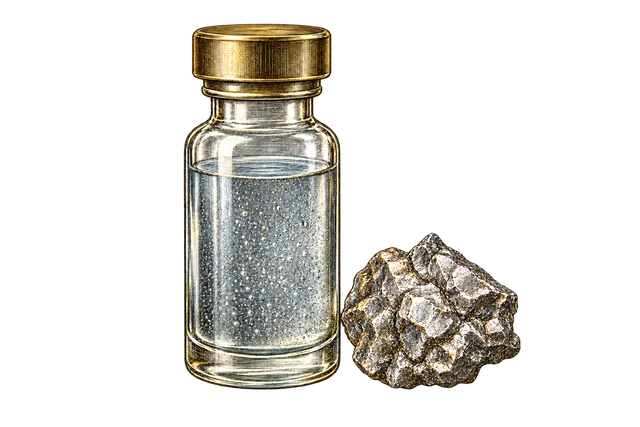
Key cautions
- Avoid oral colloidal silver: tissue accumulation can cause usually permanent blue-grey argyria.
- It can impair absorption of certain antibiotics and thyroxine; other organ toxicity is possible.
What’s inside
Silver particles and, depending on manufacture, silver ions; concentration and particle characteristics vary.
Uses in brief

- No established health benefit from oral colloidal silver; disease-treatment claims are unsupported.
History, folklore and reported uses
History, folklore and traditional uses
Silver-containing medical products have a history distinct from supplement marketing. The presence of silver in a professionally selected wound product does not validate drinking a silver suspension.
Traditional, historical and reported uses
- Influenza-era experimentation in Athens
Historical recordWhy this label?
A dated 1919 Public Health Reports account documents treatment experimentation during influenza; this is an uncontrolled historical record, not a modern efficacy trial.
Physician T. G. Filtzos’s January 1919 account of influenza in Athens describes colloidal-silver preparations among treatments doctors tried. Published in Public Health Reports, this uncontrolled historical observation establishes neither benefit nor equivalence to modern bottled products. These hazardous historical remedies should not be recreated.
- Modern sinus-remedy investigation
Human researchWhy this label?
A randomized crossover trial tested a specific nasal spray in patients and reported no meaningful advantage over saline; research setting is distinct from efficacy.
Scott and colleagues in Canada documented naturopathic colloidal-silver nasal-spray use for persistent sinus complaints and tested a commercial spray in a small randomized crossover trial. It showed no meaningful improvement over saline. This records an investigated use, not a recommendation or assurance of safety.
Only specifically supported historical or culinary uses are included; tradition is not evidence of effectiveness.
Historical-use additions reviewed 2026-10-08
Identity & detailed reference
Identity
Silver particles dispersed in liquid, often with dissolved ionic silver. It is not an essential nutrient or a plant extract.
Ingredient details, preparation and research
Also known as: Silver suspension
Source plant or material
Silver particles dispersed in liquid, often with dissolved ionic silver. It is not an essential nutrient or a plant extract.
Plant family / material: Not applicable
Forms and route
Commercial suspensions and sprays; this is a safety reference, not a preparation or ingestion guide.
Vitamins and minerals
No dietary requirement, recommended nutrient intake or nutritional deficiency indication applies to silver.
Absorption and preparation
Silver accumulation is a hazard, not an absorption goal. Do not pair it with food or supplements to increase uptake.
Traditional and reported uses
- No established health benefit from oral colloidal silver; disease-treatment claims are unsupported.
Contraindications and cautions
- Avoid oral colloidal silver: tissue accumulation can cause usually permanent blue-grey argyria.
- It can impair absorption of certain antibiotics and thyroxine; other organ toxicity is possible.
Evidence and safety
NCCIH reports that FDA does not regard colloidal silver as safe or effective for disease treatment. Small nasal-spray studies did not show meaningful benefit. Oral use may cause argyria and medicine interactions.
Scope of the reference
There is no ingestion recipe, dose or supplement recommendation here. Clinically selected silver-containing dressings or medicines require their own evidence and directions.
Evidence limits
- No safe oral treatment regimen is established.
Entry sources
- NCCIH: Colloidal Silver What You Need To Know
- Filtzos: Epidemic Influenza in Greece, Public Health Reports, 14 March 1919, pp. 507–508
- Scott et al. (2017): The effectiveness of topical colloidal silver in recalcitrant chronic rhinosinusitis
Reference entry 191 · Recorded content review: 2026-10-07 · Review scope and dates