


Key cautions
- Use identified food-grade fruit, not an ornamental or wild lookalike.
- Keep prepared foods under the storage conditions specified by the maker; a traditional ingredient does not make an unvalidated preserve shelf-stable.
What’s inside
Aromatic fruit flesh with pigments and ordinary fruit carbohydrate/fibre; no standardized medicinal fraction is assigned.
Uses in brief

- Culinary fruit
- Cooked fruit products
History, folklore and reported uses
History, folklore and traditional uses
AgriFutures places riberry’s native range in subtropical Queensland and New South Wales and describes a shift toward plantation supply. This is a specific Australian crop history, not proof that the many plants called lilly pilly share the same food profile.
Traditional, historical and reported uses
- Culinary fruit
Food or household practiceWhy this label?
Sources document this named food or material use; no therapeutic outcome is claimed.
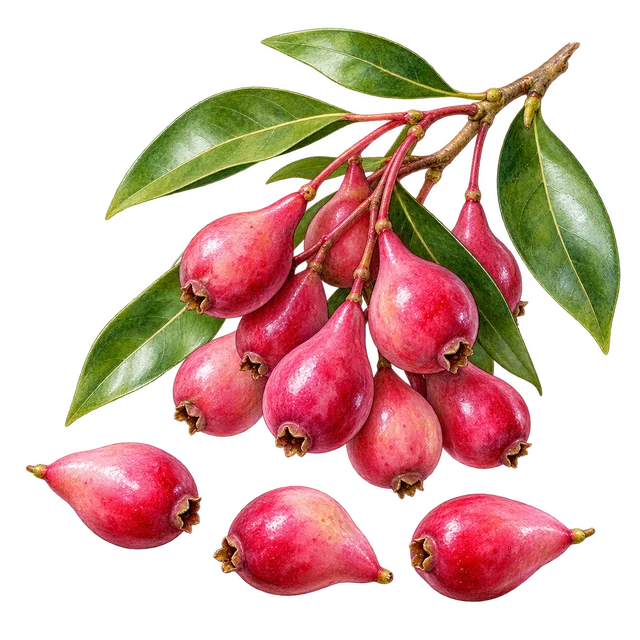
Riberry is produced as a native-food fruit ingredient. Its colour and aromatic character distinguish it from larger commercial orchard fruit.
- Cooked fruit products
Food or household practiceWhy this label?
Sources document this named food or material use; no therapeutic outcome is claimed.
The fact sheet notes a change from cerise/red toward pink on cooking. That gives a practical reason to test colour in the intended dish rather than assume a raw-fruit photograph represents the cooked result.
2 narrowly supported uses; no clinical efficacy or universal preparation is inferred.
Historical-use additions reviewed 2026-10-09
Regional reading paths
These sourced notes describe cultivation, trade, food traditions or material history. A regional connection does not claim exclusive origin.
Australia & Oceania
native; Australia, Queensland and New South Wales
Aromatic fruit ingredient.
Identity & detailed reference
Identity
Syzygium luehmannii; riberry fruit, one particular lilly-pilly species rather than every plant sold as lilly pilly.
Ingredient details, preparation and research
Source plant or material
Syzygium luehmannii; riberry fruit, one particular lilly-pilly species rather than every plant sold as lilly pilly.
Plant family / material: Myrtaceae
Forms and route
Fresh, frozen or dried food fruit; prepared fruit products.
Vitamins and minerals
A measured riberry sample does not characterize all Syzygium fruit or concentrated powders. No universal vitamin or mineral serving is given.
Absorption and preparation
Cooking, drying, straining and added ingredients change the food that is actually eaten. No special medicinal absorption claim or extract-to-food conversion is established.
Practical preparation
Use food-grade fruit and remove unwanted stalks or seeds according to the product or recipe. Refrigerate or freeze per supplier guidance.
Traditional and reported uses
- Riberry is produced as a native-food fruit ingredient. Its colour and aromatic character distinguish it from larger commercial orchard fruit.
- The fact sheet notes a change from cerise/red toward pink on cooking. That gives a practical reason to test colour in the intended dish rather than assume a raw-fruit photograph represents the cooked result.
Contraindications and cautions
- Use identified food-grade fruit, not an ornamental or wild lookalike.
- Keep prepared foods under the storage conditions specified by the maker; a traditional ingredient does not make an unvalidated preserve shelf-stable.
Supply and identity
Plantation production can provide documented cultivar and harvest information. It does not by itself guarantee every product is the same species; botanical identification remains useful when comparing suppliers and nutrition data.
Composition reference limits
The DAFF card labels riberry as S. luehmannii. Retaining that name prevents figures or marketing claims from spreading to unrelated lilly-pilly fruit. Finished sauces or dried fruit need their own form-specific values.
Evidence limits
This is a food/material reference, not evidence of disease treatment. Geographic and customary-use records do not establish a medicinal dose. Nutrient quantities are omitted unless a matching food form and serving have been verified.
Entry sources
- AgriFutures: Focus on Riberry
- DAFF: Australian native foods
- DAFF: Australian fruit, nut and vegetable composition cards
Reference entry 479 · Recorded content review: 2026-10-09 · Review scope and dates