


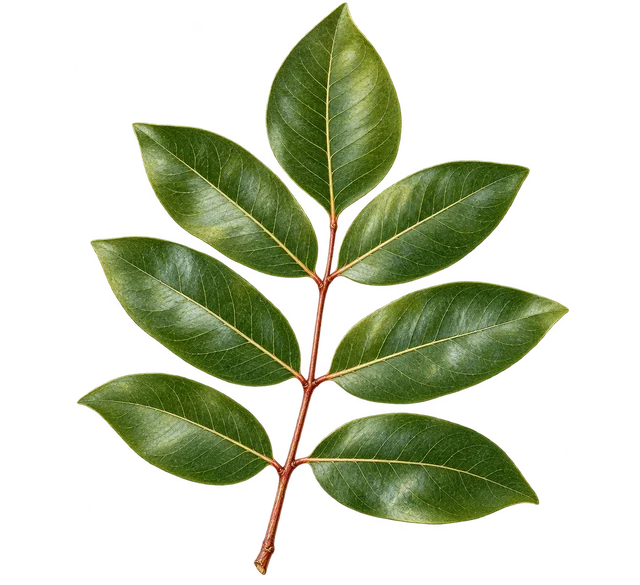
Key cautions
- Do not put homemade preparations on a suspicious lesion or postpone examination.
- Safety of the reported paste is not established. A changing or bleeding lesion needs clinical examination.
What’s inside
A Jordanian analysis found alpha-pinene and myrcene in distilled leaf oil. That oil profile does not quantify the whole-leaf historical paste.
Uses in brief

- A historical reference to Pistacia leaf use for skin cancer, with no verified treatment outcome.
History, folklore and reported uses
History, folklore and traditional uses
A 2016 survey recorded topical leaf-paste use for skin cancer. The report did not establish a subtype or successful outcome.
Traditional, historical and reported uses
- West Bank interview record
Traditional accountWhy this label?
Documents this named use; does not support broader disease claims or interchangeable formulations.
A 2016 survey recorded topical leaf-paste use for skin cancer. The report did not establish a subtype or successful outcome.
Only documented uses are included. Historical practice does not establish clinical benefit or safe home use.
Story sources
Health topics: evidence and cautions
These notes describe a specific research context and preparation. A topic link is not a treatment recommendation.
Skin cancer · Traditional reports
Form and route: Reported traditional paste; not a clinical product · topical; historical record only
A West Bank survey recorded leaf-paste use for skin cancer.
Evidence: Ethnobotanical survey only
This was an interview record, not a treatment trial.
Limits
No skin-cancer subtype or successful outcome was verified. The leaf is not mastic resin.
Cautions
- Do not put homemade preparations on a suspicious lesion or postpone examination.
Identity & detailed reference
Identity
Leaves reported as Pistacia palaestina in a West Bank survey. Kew now treats that name as a synonym of Pistacia terebinthus. It is not Pistacia lentiscus mastic resin.
Ingredient details, preparation and research
Source plant or material
Leaves reported as Pistacia palaestina in a West Bank survey. Kew now treats that name as a synonym of Pistacia terebinthus. It is not Pistacia lentiscus mastic resin.
Plant family / material: Anacardiaceae
Forms and route
Reported traditional topical leaf preparation; historical documentation only, not a standardized clinical product.
Traditional and reported uses
- A historical reference to Pistacia leaf use for skin cancer, with no verified treatment outcome.
Contraindications and cautions
- Do not put homemade preparations on a suspicious lesion or postpone examination.
- Safety of the reported paste is not established. A changing or bleeding lesion needs clinical examination.
Identity check
The reported scientific name is retained so readers can trace the survey. Kew places it under Pistacia terebinthus; the survey common names should not be used to substitute mastic resin.
Different plant parts
A chemical study found different volatile profiles in leaves, galls and fruit. It also records ripe fruit use in a regional seasoning mixture; this food context does not make the leaf paste edible or medically effective.
Evidence limits
- No skin-cancer subtype or successful outcome was verified. The leaf is not mastic resin.
Entry sources
- Jaradat et al. West Bank cancer-remedy survey
- Kew: Pistacia palaestina synonym record
- Flamini et al. Pistacia leaf and fruit oil composition
Reference entry 585 · Recorded content review: 2026-10-11 · Review scope and dates