


Key cautions
- Historical pit-storage accounts are not DIY fermentation instructions.
- Do not treat sourness, local tradition or a generic expiration estimate as proof of safety.
What’s inside
Fruit starch, water and fermentation metabolites form a tart paste. Organisms and chemical profiles vary with locality and processing.
Uses in brief

- Seasonal food preservation
- Tart paste in meals
History, folklore and reported uses
History, folklore and traditional uses
NTBG’s field research in Pohnpei and Kosrae documents seasonal breadfruit preservation and local names such as mahr, furo and bwiru. Those names and practices should stay connected to their communities and cultivars.
Traditional, historical and reported uses
- Seasonal food preservation
Traditional accountWhy this label?
Sources document this named food or material use; no therapeutic outcome is claimed.
Ethnobotanical fieldwork records fermentation as a way to keep surplus breadfruit available beyond fresh harvest peaks. This is an observed food-system function, not a validated home method.
- Tart paste in meals
Traditional accountWhy this label?
Sources document this named food or material use; no therapeutic outcome is claimed.
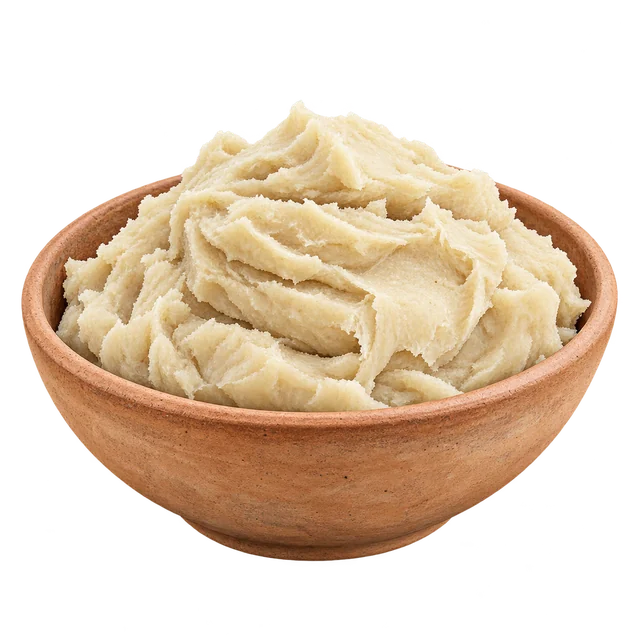
The preserved fruit becomes a sour, dough-like food used according to local taste and custom. This is a distinct culinary material from fresh cooked fruit.
2 narrowly supported uses; no clinical efficacy or universal preparation is inferred.
Historical-use additions reviewed 2026-10-09
Growing notes
This preparation comes from Breadfruit. The growing guide concerns the living plant, not making or extracting this product.
Read the source plant’s growing notesRegional reading paths
These sourced notes describe cultivation, trade, food traditions or material history. A regional connection does not claim exclusive origin.
Australia & Oceania
traditional processing; Pacific islands
Preserved fermented breadfruit food.
Identity & detailed reference
Identity
Pit-fermented breadfruit from locally identified Artocarpus food cultivars; a regional family of preparations rather than one universal recipe.
Ingredient details, preparation and research
Source plant or material
Pit-fermented breadfruit from locally identified Artocarpus food cultivars; a regional family of preparations rather than one universal recipe.
Plant family / material: Moraceae; fermented food
Forms and route
Traditionally fermented fruit paste and foods made from it; distinct from fresh breadfruit, dried flour and laboratory fermented beverages.
Vitamins and minerals
No universal nutrition or live-culture count is assigned. A later cooked food differs from uncooked fermented paste, and both differ from fresh fruit.
Absorption and preparation
Fermentation changes the food but does not establish enhanced absorption, a clinical probiotic effect or a reliable safety endpoint by smell alone.
Practical preparation
Use established, safely produced food and follow maker guidance. Do not build a fermentation pit, improvise times or temperatures, or copy historical storage durations as a modern shelf-life guarantee.
Traditional and reported uses
- Ethnobotanical fieldwork records fermentation as a way to keep surplus breadfruit available beyond fresh harvest peaks. This is an observed food-system function, not a validated home method.
- The preserved fruit becomes a sour, dough-like food used according to local taste and custom. This is a distinct culinary material from fresh cooked fruit.
Contraindications and cautions
- Historical pit-storage accounts are not DIY fermentation instructions.
- Do not treat sourness, local tradition or a generic expiration estimate as proof of safety.
Regional variation is the point
Pollock’s research describes breadfruit fermentation across Oceania rather than a single standardized procedure. Collapsing those practices into one household recipe would erase variation and bypass food-safety validation.
Traditional record versus modern claim
The university food resource corroborates preservation history. It does not establish that every batch is safe for a year, contains a named probiotic or supplies an experimentally verified nutrient advantage.
Evidence limits
This is a food/material reference, not evidence of disease treatment. Geographic and customary-use records do not establish a medicinal dose. Nutrient quantities are omitted unless a matching food form and serving have been verified.
Entry sources
- NTBG Breadfruit Institute: Ethnobotanical field research
- Nancy Pollock: Breadfruit Fermentation Practices in Oceania
- University of Hawaiʻi Nutrition Center: Breadfruit
Reference entry 514 · Recorded content review: 2026-10-09 · Review scope and dates