


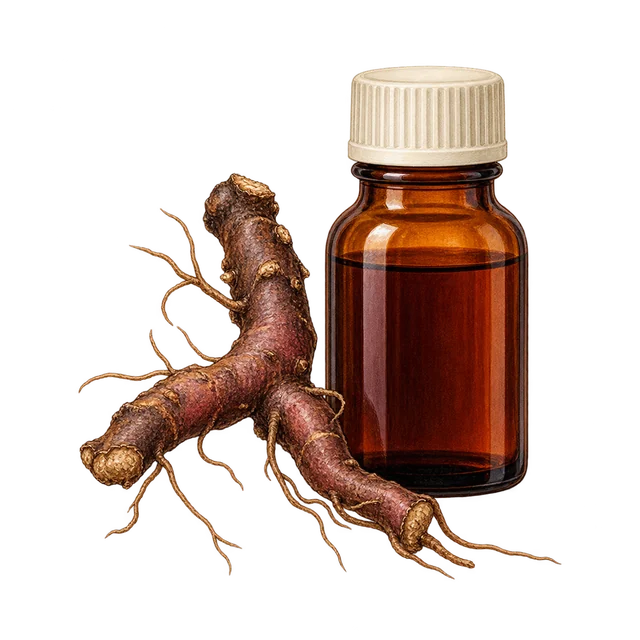
Key cautions
- Liver problems, allergy, stomach upset and mild bleeding have been reported.
- Use a labeled root product, not rose-geranium oil.
What’s inside
Root extracts contain phenolic compounds including coumarins. Presence of a coumarin does not itself imply the action of an anticoagulant drug.
Uses in brief

- Specific pelargonium-root extracts have traditional use for common-cold symptoms, with important limits to the clinical evidence.
History, folklore and reported uses
History, folklore and traditional uses
EMA recognizes longstanding use of defined root preparations for common-cold symptoms. Its traditional-use decision does not prove that the extract clears viruses.
Traditional, historical and reported uses
- Recorded cold-symptom use
Traditional accountWhy this label?
Documents this named use; does not support broader disease claims or interchangeable formulations.
EMA recognizes longstanding use of defined root preparations for common-cold symptoms. Its traditional-use decision does not prove that the extract clears viruses.
Only documented uses are included. Historical practice does not establish clinical benefit or safe home use.
Story sources
Health topics: evidence and cautions
These notes describe a specific research context and preparation. A topic link is not a treatment recommendation.
Respiratory health · Traditional reports
Form and route: defined oral liquid or dry extract · oral
Specific pelargonium-root extracts have traditional use for common-cold symptoms.
Evidence: documented traditional use; clinical evidence insufficient
EMA recognizes longstanding symptom use; this is not proof of a disease cure.
Limits
Bronchitis trials have limitations; no claim of treating pneumonia or killing a virus.
Cautions
- Liver problems, allergy, stomach upset and mild bleeding have been reported.
- Use a labeled root product, not rose-geranium oil.
Identity & detailed reference
Identity
Pelargonium sidoides root medicine; the EMA assessment also covers P. reniforme. Verify the species on a finished product.
Ingredient details, preparation and research
Source plant or material
Pelargonium sidoides root medicine; the EMA assessment also covers P. reniforme. Verify the species on a finished product.
Plant family / material: Geraniaceae
Forms and route
Defined oral liquid or dry root extracts. Rose-geranium leaf essential oil is a different material.
Traditional and reported uses
- Specific pelargonium-root extracts have traditional use for common-cold symptoms, with important limits to the clinical evidence.
Contraindications and cautions
- Liver problems, allergy, stomach upset and mild bleeding have been reported.
- Use a labeled root product, not rose-geranium oil.
- Stop and seek medical advice for signs of liver injury or allergy. Pregnancy and breastfeeding use is not recommended because safety data are inadequate.
Bronchitis evidence
Some clinical studies suggested symptom improvement, but EMA identified design and outcome problems. No claim of treating pneumonia or tuberculosis follows.
Composition is not a drug identity
The assessment distinguishes pelargonium coumarins from the structural features of anticoagulant coumarins. Reported bleeding or liver problems still warrant caution rather than a chemistry-based promise of safety.
Evidence limits
- Bronchitis trials have limitations; no claim of treating pneumonia or killing a virus.
Entry sources
Reference entry 584 · Recorded content review: 2026-10-11 · Review scope and dates