


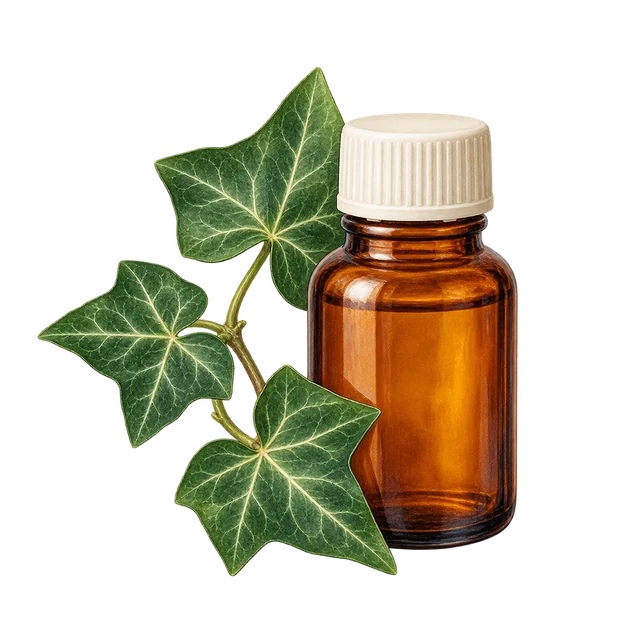
Key cautions
- Can cause nausea, diarrhea or allergy; breathing trouble after use needs urgent care.
- Do not give to children under two; follow the product label.
What’s inside
Triterpene saponins include hederacoside C; the leaf also contains flavonoids and potential allergens.
Uses in brief

- Defined ivy-leaf medicines can help bring up mucus during a chesty cough.
History, folklore and reported uses
History, folklore and traditional uses
EMA classifies this expectorant use as well established, drawing on published clinical evidence and European medicinal experience. This differs from a traditional-use-only classification.
Traditional, historical and reported uses
- European medicinal use
Human researchWhy this label?
Documents this named use; does not support broader disease claims or interchangeable formulations.
EMA classifies this expectorant use as well established, drawing on published clinical evidence and European medicinal experience. This differs from a traditional-use-only classification.
Only documented uses are included. Historical practice does not establish clinical benefit or safe home use.
Story sources
Health topics: evidence and cautions
These notes describe a specific research context and preparation. A topic link is not a treatment recommendation.
Respiratory health · Symptom support
Form and route: defined oral dry, liquid or soft extract · oral
Ivy-leaf medicines can help bring up mucus in a chesty cough.
Evidence: EMA well-established medicinal use
EMA cites clinical evidence for cough symptom relief.
Limits
It is not an asthma rescue drug; do not eat garden ivy or its berries.
Cautions
- Can cause nausea, diarrhea or allergy; breathing trouble after use needs urgent care.
- Do not give to children under two; follow the product label.
Identity & detailed reference
Identity
Hedera helix leaves processed into a defined medicinal extract. Garden leaves and berries are not a substitute.
Ingredient details, preparation and research
Source plant or material
Hedera helix leaves processed into a defined medicinal extract. Garden leaves and berries are not a substitute.
Plant family / material: Araliaceae
Forms and route
Oral dry, soft or liquid leaf extract in a labeled medicine. Combination products require their own evidence.
Traditional and reported uses
- Defined ivy-leaf medicines can help bring up mucus during a chesty cough.
Contraindications and cautions
- Can cause nausea, diarrhea or allergy; breathing trouble after use needs urgent care.
- Do not give to children under two; follow the product label.
- Avoid if allergic to ivy or other Araliaceae plants. Seek care when cough worsens or persists.
Evidence and limits
Clinical evidence concerns cough symptoms with specified extracts. Laboratory ideas about airway activity do not make ivy an asthma rescue treatment.
Plant chemistry
The assessment describes hederacoside C and other saponins as well as leaf allergens. This chemical profile is a reason to respect product quality, not to make garden-ivy remedies.
Evidence limits
- It is not an asthma rescue drug; do not eat garden ivy or its berries.
Entry sources
Reference entry 580 · Recorded content review: 2026-10-11 · Review scope and dates