


Key cautions
- Remove hard seeds from ripe bulbs and cook seeds separately before eating.
- The sticky latex can complicate handling; known latex or jackfruit reactions warrant caution rather than a home exposure test.
What’s inside
Carbohydrates and fiber in the edible fruit, with starch and other nutrients in seeds. Ripeness, brine and sweetening alter the finished composition.
Uses in brief

- Ripe fruit bulbs
- Young cooked vegetable
- Cooked seeds
History, folklore and reported uses
History, folklore and traditional uses
NParks documents jackfruit as a tropical Asian food with multiple edible forms. UF/IFAS separately describes young fruit as a cooked vegetable and ripe fruit for fresh use, reflecting its wider cultivation today.
Traditional, historical and reported uses
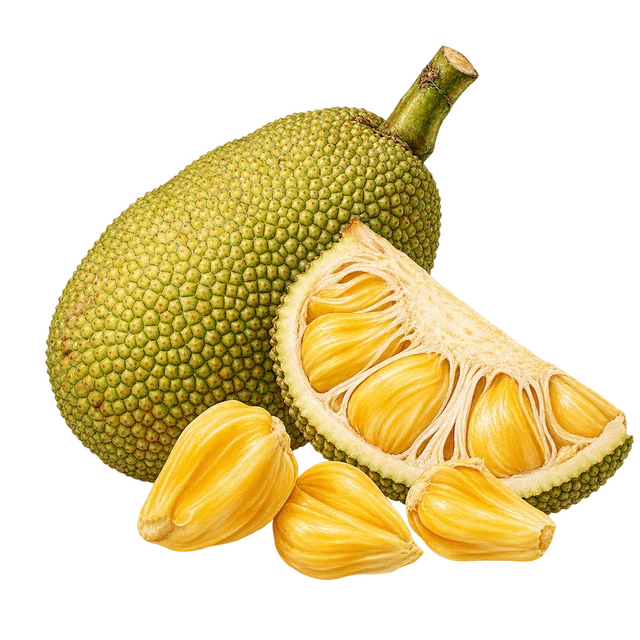
- Ripe fruit bulbs
Food or household practiceWhy this label?
The cited source documents this material, preparation or cultural practice; it does not establish treatment efficacy.
The sweet flesh around the seeds is eaten ripe or used in desserts and preserves. Remove seeds before serving the bulbs; sweetened canned products are a different food from fresh flesh.
- Young cooked vegetable
Food or household practiceWhy this label?
The cited source documents this material, preparation or cultural practice; it does not establish treatment efficacy.
Unripe fruit is cooked in curries, soups and other savoury dishes. It can provide a shredded texture, but a recipe using it still needs its own protein assessment.
- Cooked seeds
Food or household practiceWhy this label?
The cited source documents this material, preparation or cultural practice; it does not establish treatment efficacy.
NParks records boiling or roasting the seeds before eating. They are not interchangeable with the ripe flesh and should not be assumed ready to eat when raw.
3 supported featured food or cultural uses; no treatment claim.
Historical-use additions reviewed 2026-10-09
Regional reading paths
These sourced notes describe cultivation, trade, food traditions or material history. A regional connection does not claim exclusive origin.
Asia
Native/cultivated: tropical Asia; established in South and Southeast Asian cuisines.
Ripe flesh as fruit; young flesh and cooked seeds in foods.
Identity & detailed reference
Identity
Artocarpus heterophyllus edible fruit tissues and separately cooked seeds. Young jackfruit used as a vegetable differs from ripe sweet bulbs; rind, latex and medicinal extracts are separate materials.
Ingredient details, preparation and research
Also known as: Nangka; Artocarpus heterophyllus; Young jackfruit
Source plant or material
Artocarpus heterophyllus
Plant family / material: Moraceae
Forms and route
Ripe fresh bulbs, young cooked fruit, canned young fruit in brine, sweetened ripe preserves and boiled or roasted seeds. Each form needs its own preparation.
Vitamins and minerals
No common nutrient value covers young brined flesh, ripe sweet bulbs and cooked seeds. A meat-like texture is not a claim of equivalent protein, iron or vitamin B12.
Absorption and preparation
Cooking makes the seed and young-fruit preparations suitable for eating; no special pairing is established to turn jackfruit into a therapeutic food.
Practical preparation
Use a stable cutting surface and suitable tools, or buy prepared fruit. Rinse and drain canned young fruit as directed; refrigerate opened cans and cut fresh fruit promptly.
Combination notes
For a substantial plant-based meal, consider the whole dish rather than relying on jackfruit’s texture as a proxy for nutrition.
Traditional and reported uses
- Ripe fruit bulbs
- Young cooked vegetable
- Cooked seeds
Contraindications and cautions
- Remove hard seeds from ripe bulbs and cook seeds separately before eating.
- The sticky latex can complicate handling; known latex or jackfruit reactions warrant caution rather than a home exposure test.
Ripeness and plant part change the material
Botanical and horticultural sources distinguish ripe bulbs, young fruit and seeds. Research or food-table results for one should not be assigned to all products marketed as jackfruit.
Evidence limits
Food forms only; no bark, latex, wound-treatment or concentrated-extract advice.
Entry sources
- Singapore NParks: Artocarpus heterophyllus
- UF/IFAS: Jackfruit growing and food uses
- Kew POWO: Artocarpus heterophyllus
Reference entry 357 · Recorded content review: 2026-10-09 · Review scope and dates