


Key cautions
- Use authenticated labeled material; seek care if worse or lasting over a week.
- Persistent appetite loss, weight loss or swallowing problems need assessment. Use age-appropriate labeled products.
What’s inside
Polysaccharides include lichenan and isolichenan; bitter lichen acids are also present. Extract composition depends on processing.
Uses in brief

- Iceland moss has traditional use for irritated mouth or throat and related dry cough.
- A separate traditional use addresses temporary loss of appetite in adults.
History, folklore and reported uses
History, folklore and traditional uses
EMA accepts a longstanding use for throat irritation and dry cough, while noting that small studies without placebo controls cannot establish efficacy.
Traditional appetite use is separately recorded for adults. Bitter taste offers a plausible explanation, but it is not proof that the product treats the cause of poor appetite.
Traditional, historical and reported uses
- Soothing tradition
Traditional accountWhy this label?
Documents this named use; does not support broader disease claims or interchangeable formulations.
EMA accepts a longstanding use for throat irritation and dry cough, while noting that small studies without placebo controls cannot establish efficacy.
- Bitter appetite preparations
Traditional accountWhy this label?
Documents this named use; does not support broader disease claims or interchangeable formulations.
Traditional appetite use is separately recorded for adults. Bitter taste offers a plausible explanation, but it is not proof that the product treats the cause of poor appetite.
Only documented uses are included. Historical practice does not establish clinical benefit or safe home use.
Story sources
Health topics: evidence and cautions
These notes describe a specific research context and preparation. A topic link is not a treatment recommendation.
Respiratory health · Traditional reports
Form and route: tea or defined oral/oromucosal extract · oral or oromucosal as labeled
Iceland moss has traditional use to soothe an irritated throat and related dry cough.
Evidence: documented traditional use; clinical evidence insufficient
EMA recognizes longstanding symptom use; this is not proof of a disease cure.
Limits
Small uncontrolled studies do not prove efficacy; this is a lichen, not sea moss.
Cautions
- Use authenticated labeled material; seek care if worse or lasting over a week.
Identity & detailed reference
Identity
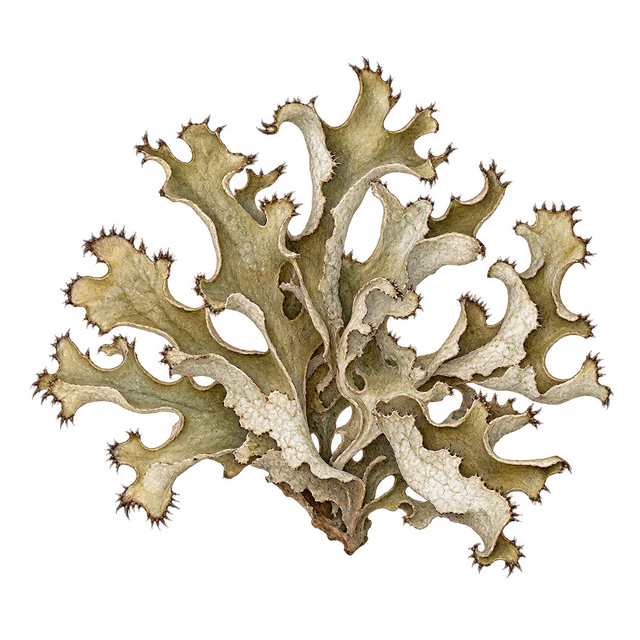
Cetraria islandica lichen thallus, the main body of the lichen. It is neither true moss nor sea moss.
Ingredient details, preparation and research
Source plant or material
Cetraria islandica lichen thallus, the main body of the lichen. It is neither true moss nor sea moss.
Plant family / material: Parmeliaceae; a lichen-forming fungus, not a flowering plant
Forms and route
Authenticated dried thallus or defined oral/oromucosal medicinal preparation.
Absorption and preparation
Soothing the mouth lining is a local proposed action; it does not establish that lichen compounds reach the lungs or treat an infection.
Traditional and reported uses
- Iceland moss has traditional use for irritated mouth or throat and related dry cough.
- A separate traditional use addresses temporary loss of appetite in adults.
Contraindications and cautions
- Use authenticated labeled material; seek care if worse or lasting over a week.
- Persistent appetite loss, weight loss or swallowing problems need assessment. Use age-appropriate labeled products.
Lichen identity and composition
The assessment describes the thallus and its distinctive polysaccharides. This material should not be confused with seaweed sold under similar moss names.
Evidence limits
- Small uncontrolled studies do not prove efficacy; this is a lichen, not sea moss.
Entry sources
Reference entry 577 · Recorded content review: 2026-10-11 · Review scope and dates