


Key cautions
- If avoiding gluten, obtain reliable ingredient and cross-contact information. Teff itself does not contain wheat gluten, but wheat and barley blends do.
- Use safely manufactured cooked bread or follow a validated product recipe. Fermented smell and visible bubbles do not certify the safety of raw batter.
What’s inside
Starch, protein, fiber and minerals depend on grain blend and processing. Fermentation produces acids and alters phytate; added fortificants have their own composition.
Uses in brief

- Flatbread for meals
History, folklore and reported uses
History, folklore and traditional uses
Traditional processing: Ethiopia and Eritrea.
FAO describes injera made with different cereals, and the teff chapter distinguishes the grain from the bread. Those variants are legitimate food forms, not evidence that every injera contains only teff.
Traditional, historical and reported uses
- Flatbread for meals
Food or household practiceWhy this label?
The source supports the named food, cosmetic or material practice; no treatment effect is inferred and the card’s form and safety limits remain attached.
FAO documents fermented batter cooked into injera. It is eaten with accompanying foods, so the nutritional adequacy of a meal depends on the whole plate.
1 sourced featured uses; cultural or material records are not clinical efficacy evidence.
Historical-use additions reviewed 2026-10-09
Regional reading paths
These sourced notes describe cultivation, trade, food traditions or material history. A regional connection does not claim exclusive origin.
Africa
Traditional processing: Ethiopia and Eritrea.
Fermented batter cooked as a sour, spongy flatbread.
Identity & detailed reference
Identity
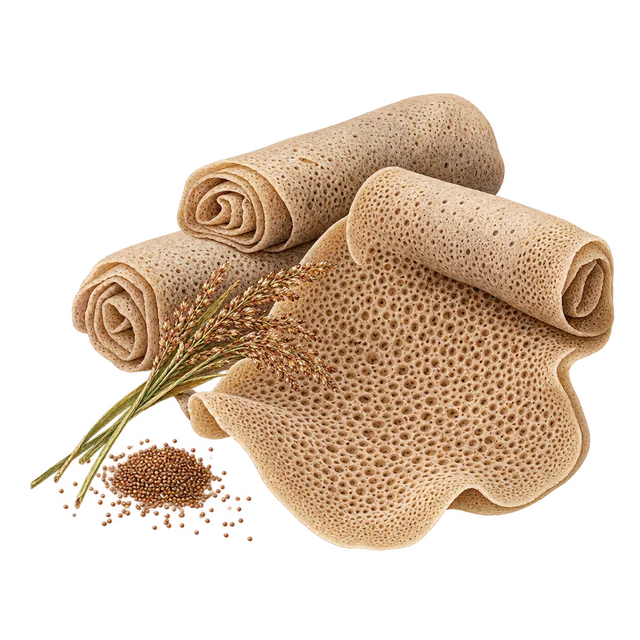
A fermented cereal batter cooked as a spongy sour flatbread. Teff is prominent, but injera may contain sorghum, wheat, barley or other grains; the name does not prove a gluten-free recipe.
Ingredient details, preparation and research
Source plant or material
Fermented cereal batter, commonly Eragrostis tef; other grains/blends occur
Plant family / material: Poaceae cereal substrates; mixed fermentation microbiota
Forms and route
Fresh cooked bread, chilled or packaged injera and commercial mixes requiring preparation. Raw fermenting batter and grain flour are different forms.
Vitamins and minerals
Water content and grain blend affect every comparison with dry teff. Iron measurements can be influenced by processing or fortification; no universal high-iron serving is assigned.
Absorption and preparation
A human study found improved iron absorption under a specific fortified-teff fermentation formulation. This does not establish the same effect in ordinary injera or in people with different iron status.
Practical preparation
Choose fresh or packaged bread with clear ingredients and storage guidance. Keep moist bread as directed and discard moldy portions rather than trimming mold and eating the rest.
Traditional and reported uses
- Flatbread for meals
Contraindications and cautions
- If avoiding gluten, obtain reliable ingredient and cross-contact information. Teff itself does not contain wheat gluten, but wheat and barley blends do.
- Use safely manufactured cooked bread or follow a validated product recipe. Fermented smell and visible bubbles do not certify the safety of raw batter.
The iron trial was formulation-specific
The cited trial tested fortified injera with particular phytase-related changes, including whole-wheat addition. It cannot be generalized as a gluten-free recipe or as treatment of anemia by any injera meal.
Evidence limits
Culinary and formulation-specific research, not an uncontrolled fermentation guide, anemia treatment or universal gluten-free claim.
Entry sources
- FAO: Cereal fermentations in African countries
- FAO: Sorghum and millets in human nutrition; fermented foods
- National Research Council, Lost Crops of Africa: Tef
- Human study: Whole-wheat addition during injera fermentation and iron absorption from fortified tef
Reference entry 317 · Recorded content review: 2026-10-09 · Review scope and dates