


Key cautions
- Color depends on cultivar and ripeness.
- Handle cut peppers as perishable produce.
- Use tested preservation methods.
What’s inside
Water, carbohydrate, fiber, vitamin C and carotenoid pigments, with amounts depending on cultivar, color and preparation.
Uses in brief

- Raw salads and strips
- Roasted and stuffed peppers
- Soups, stews and Caribbean seasoning
History, folklore and reported uses
History, folklore and traditional uses
Bell peppers belong to the American Capsicum crop lineage that spread widely through global food exchange. Today’s blocky, sweet cultivars should not be assigned a single ancient recipe or identical chemical profile.
The bright fruits are used raw and cooked across many kitchens. Jamaica’s tourism board, for example, includes sweet pepper among the seasonings of ackee and saltfish.
Traditional, historical and reported uses
- Raw salads and crisp strips
Food or household practiceWhy this label?
The specific claim documents a food preparation or recorded culinary practice; safety qualifications remain attached and no treatment effect is inferred.
NC State documents raw bell-pepper fruit and the crisp texture of colored forms. Wash before slicing and choose the color and flavor you enjoy.
- Roasted or grilled fruit
Food or household practiceWhy this label?
The specific claim documents a food preparation or recorded culinary practice; safety qualifications remain attached and no treatment effect is inferred.
NC State describes red and yellow peppers in grilled preparations. Heating softens the flesh and changes flavor; it also changes the raw-food nutrient reference.
- Stuffed peppers
Food or household practiceWhy this label?
The specific claim documents a food preparation or recorded culinary practice; safety qualifications remain attached and no treatment effect is inferred.
Illinois Extension includes several stuffed-pepper preparations. The pepper acts as an edible container; grain, meat, cheese or other filling determines much of the finished meal.
- Soups, stews and relishes
Food or household practiceWhy this label?
The specific claim documents a food preparation or recorded culinary practice; safety qualifications remain attached and no treatment effect is inferred.
Illinois Extension records peppers in soups, stews and relishes. A cooked dish and a shelf-stable preserve require different handling; use tested canning guidance for the latter.
- Jamaican savory seasoning
Food or household practiceWhy this label?
The specific claim documents a food preparation or recorded culinary practice; safety qualifications remain attached and no treatment effect is inferred.
Jamaica’s tourism board describes sweet pepper sautéed with onion, tomato and other seasonings in ackee and saltfish. This is a documented regional food use, not a recommendation to prepare unprocessed ackee without its separate safety guidance.
5 supported featured uses; food practices are not claims of treatment benefit.
Historical-use additions reviewed 2026-10-09
Story sources
- NC State Extension: Capsicum annuum Grossum Group
- University of Maryland Extension: Growing Peppers in a Home Garden
- Illinois Extension: Preparing Peppers
- Iowa State Extension: Peppers, Spend Smart Eat Smart
- National Center for Home Food Preservation: Peppers
- Oregon State Extension: Herbs and vegetables in oil
- Jamaica Tourist Board: Food
- NIH ODS: Vitamin C, health-professional fact sheet
- CDC: Preventing Food Poisoning
- AAAAI: Food Allergy
Health topics: evidence and cautions
These notes describe a specific research context and preparation. A topic link is not a treatment recommendation.
Injury and recovery · Support during care
Form and route: raw or cooked food · oral food
Bell peppers are one food option for vitamin C.
Evidence: food composition and nutrition guidance
NIH lists sweet peppers as a vitamin C source.
Limits
Food nutrient content does not prove a pepper-specific healing effect.
Cautions
- Use food as food, never as a wound dressing.
Regional reading paths
These sourced notes describe cultivation, trade, food traditions or material history. A regional connection does not claim exclusive origin.
Antarctica
Controlled Antarctic greenhouse research.
Cultivated food crop; not native Antarctic flora.
Identity & detailed reference
Identity
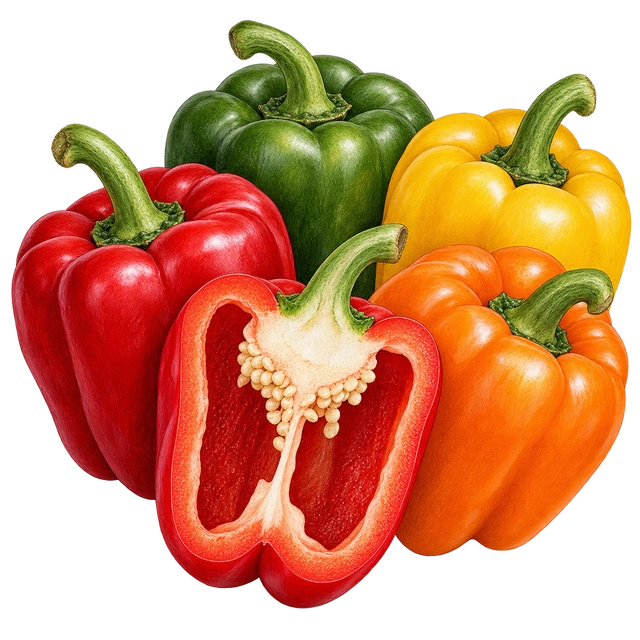
The edible non-pungent bell-pepper fruit. Green, red, yellow and orange forms belong here; the final color depends on cultivar as well as maturity. Not every green pepper will turn red.
Ingredient details, preparation and research
Also known as: Bell pepper; Sweet bell pepper; Sweet peppers (bell type); Red bell pepper; Green bell pepper; Yellow bell pepper; Orange bell pepper; Capsicum (bell type)
Source plant or material
Capsicum annuum L., Grossum Group
Plant family / material: Solanaceae
Forms and route
Fresh raw fruit; roasted, grilled, sautéed, stuffed or cooked fruit; frozen pieces and properly prepared pickles. Hot chile varieties and black pepper are different foods.
Vitamins and minerals
NIH ODS gives vitamin C references of 95 mg for ½ cup raw sweet red pepper and 60 mg for ½ cup raw sweet green pepper. These values do not quantify yellow/orange cultivars or cooked dishes.
Absorption and preparation
Vitamin C in a meal can help nonheme-iron absorption. Cooking can reduce vitamin C; no specific pepper-and-herb pairing is required.
Practical preparation
Wash whole fruit, remove the stem and seed core, then cut for the dish. Roast, grill or sauté as desired; refrigerate prepared food and follow tested methods for long-term preservation.
Combination context
No required medicinal combination.
Combination notes
Pair with beans, grains, onions or other meal ingredients. The vitamin C contribution can accompany plant-iron foods without being an anemia treatment.
Traditional and reported uses
- Raw salads and strips
- Roasted and stuffed peppers
- Soups, stews and Caribbean seasoning
Contraindications and cautions
- Avoid if you have a known pepper allergy. Use recognized food fruit; this card does not recommend eating ornamental pepper plants or leaves.
- Wash before cutting, use clean utensils and refrigerate cut pieces and leftovers. Keep away from raw-meat juices.
- Home-canned peppers, relishes and pickles need a tested method appropriate to that product. Do not improvise a shelf-stable oil-packed pepper recipe.
- Color does not guarantee a nutrient dose or medical benefit. Hot-pepper or capsaicin-product findings do not transfer to sweet bell peppers.
Similar items and how they compare
- Hot chile peppers
Some are also Capsicum annuum.
Pungency and culinary use differ; capsaicin remedies are not bell-pepper food claims.
- Black pepper (Piper nigrum)
Shares the English word pepper.
An unrelated spice plant, not the sweet vegetable fruit.
Color is cultivar plus maturity
Green commonly reflects an earlier harvest stage, while ripe color can be red, yellow, orange or another cultivar color. A four-color display should not imply one mandatory green-to-yellow-to-orange-to-red sequence.
Serving-specific nutrient references
The red and green numbers are separate raw-food entries. They are not a clinical comparison and cannot be assigned to every orange or yellow fruit.
Evidence limits
No medical efficacy, universal color ranking or transfer from capsaicin supplements is claimed. Regional sweet-pepper wording does not authenticate a particular cultivar.
Entry sources
- NC State Extension: Capsicum annuum Grossum Group
- University of Maryland Extension: Growing Peppers in a Home Garden
- Illinois Extension: Preparing Peppers
- Iowa State Extension: Peppers, Spend Smart Eat Smart
- National Center for Home Food Preservation: Peppers
- Oregon State Extension: Herbs and vegetables in oil
- Jamaica Tourist Board: Food
- NIH ODS: Vitamin C, health-professional fact sheet
- CDC: Preventing Food Poisoning
- AAAAI: Food Allergy
Reference entry 287 · Recorded content review: 2026-10-09 · Review scope and dates