


Key cautions
- Verify Eryngium foetidum food leaves.
- Wash and refrigerate herbs and prepared seasonings.
- Do not extend culinary use to medicinal oils or extracts.
What’s inside
A seasoning portion is usually small. This review does not assign nutrient badges from large fresh-leaf samples, dry-weight analyses or cilantro data. Aromatic compounds explain flavor but are not proof of a human therapeutic effect.
Uses in brief

- Puerto Rican sofrito
- Salsas, chutneys and table sauces
- Rice, soups and stews
History, folklore and reported uses
History, folklore and traditional uses
Kew records Eryngium foetidum as native to Mexico and tropical America. The herb has a long regional food presence and is also cultivated well beyond the Americas; its many names should not obscure the species distinction.
The University of Puerto Rico’s agricultural account documents recao production and its importance as a seasoning in Puerto Rican cooking. Trinidad and Tobago’s agriculture chart identifies shadon beni or bandania as the same species, anchoring another familiar Caribbean name.
A closer look at its history
Recao gives sofrito a different leaf
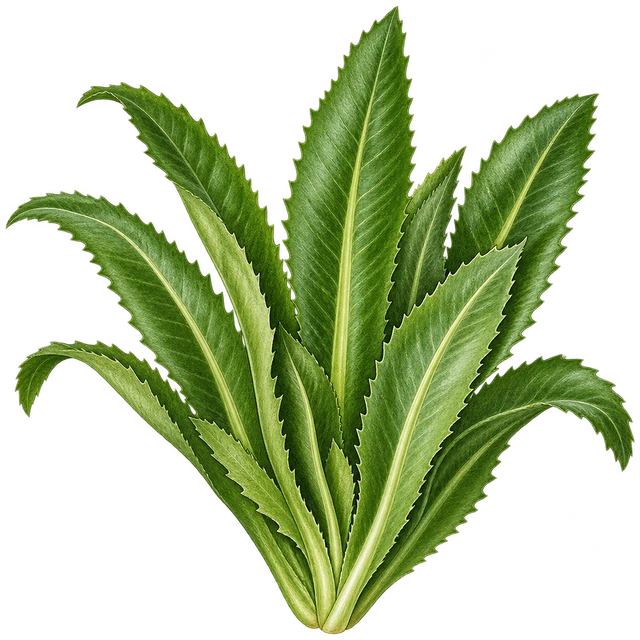
UF/IFAS records culantro as recao in Puerto Rico and a key component of sofrito with onions, garlic and peppers. Its long serrated leaves differ from cilantro, although the two share a family and a related aroma. The stronger, tougher leaf is commonly finely chopped, a preparation shaped by the plant’s texture.
Warm-season continuity in the herb garden
Culantro’s tolerance of summer heat gives cooks an alternative when cool-season cilantro bolts. Shady cultivation helps prolong its leaf harvest. This is a practical continuity of fresh flavor, not evidence that recao and cilantro are the same species or that all recipes use identical amounts.
Additional history reviewed 2026-10-10
Traditional, historical and reported uses
- Puerto Rican sofrito
Food or household practiceWhy this label?
The claim records a named culinary use of the stated plant part and preparation. Regional and modern-recipe boundaries are retained; no clinical efficacy is asserted.
UF/IFAS and Discover Puerto Rico describe culantro in sofrito with other aromatics. The blend seasons foods such as stewed beans; family recipes vary and may also contain ordinary cilantro.
- Salsas, chutneys and table sauces
Food or household practiceWhy this label?
The claim records a named culinary use of the stated plant part and preparation. Regional and modern-recipe boundaries are retained; no clinical efficacy is asserted.
UF/IFAS records culantro in salsa, chutney and sauces. Finely chopping the sturdy leaf makes its strong aroma easier to distribute through a small amount of condiment.
- Rice, soups and stews
Food or household practiceWhy this label?
The claim records a named culinary use of the stated plant part and preparation. Regional and modern-recipe boundaries are retained; no clinical efficacy is asserted.
UF/IFAS records culantro as a seasoning in these cooked dishes. This grouped use concerns aromatic flavor, not a medicinal infusion or disease-prevention effect.
3 distinct food uses are featured. Regional accounts describe culinary practice, not clinical treatment; no biblical identification is asserted.
Historical-use additions reviewed 2026-10-09
Story sources
- Kew Plants of the World Online: Eryngium foetidum L., accepted identity and native range
- UF/IFAS Gardening Solutions: Culantro, recao, leaf preparation and sofrito
- UF/IFAS Extension Nassau County (2017): Fact sheet, Culantro, culinary uses
- University of Puerto Rico Agricultural Experiment Station (2001): La producción de recao o culantro en Puerto Rico, Publication 162
- Trinidad and Tobago Ministry of Agriculture (2020): Vegetables, Root Crops and Herbs, shadon beni / bandania identity
- Discover Puerto Rico: Guide to Traditional Puerto Rican Food, sofrito and bean dishes
- FDA: Selecting and Serving Produce Safely
Growing notes
Eryngium foetidum; not cilantro (Coriandrum sativum).
- Season and light
- A heat-loving biennial commonly grown for leaves. Use a shaded warm-season site; shade delays bolting. In frost-prone areas keep it protected until warm outdoor conditions. [1]
- Soil and water
- Maintain moist but freely draining soil, in a bed or container. Germination may take about three weeks. [1]
- Harvest and flowering
- Take older outer leaves while leaving young central growth. Harvest only what is needed; finely chop tough leaves. Leaf harvest needs no fruit set. Bolting marks declining culinary quality. [1]
- Garden context
- Flowering plants may attract ladybugs and lacewings, but that does not establish reliable pest control for neighboring crops. No companion-plant benefit is assumed here. [1]
Growing sources and regional guidance
Growing notes reviewed 2026-10-10
Regional reading paths
These sourced notes describe cultivation, trade, food traditions or material history. A regional connection does not claim exclusive origin.
North America
Cultivated: Caribbean and Central America; Puerto Rico example.
Aromatic leaves season sofrito and other dishes.
Identity & detailed reference
Identity
Culantro is Eryngium foetidum, the long, toothed-leaf seasoning herb. It shares a plant family and related aroma with cilantro, Coriandrum sativum, but is a different species.
Ingredient details, preparation and research
Also known as: Recao; Shadon beni; Chadon beni; Bandania; Shadow beni; Sawtooth coriander; Long coriander; Cilantro ancho (regional name; not ordinary cilantro)
Source plant or material
Eryngium foetidum L.
Plant family / material: Apiaceae
Forms and route
Fresh edible leaves, finely chopped or blended as a seasoning; leaves in cooked dishes. Essential oil, medicinal teas and concentrated extracts are different preparations.
Absorption and preparation
No special nutrient-absorption advantage was verified for ordinary culantro seasoning. Laboratory oil composition cannot predict the effect of a leaf portion in a meal.
Practical preparation
Rinse culinary leaves, remove damaged material and finely chop or blend for even distribution. Add according to the recipe and taste; its aroma can be stronger than cilantro’s. Keep perishable herb mixtures refrigerated.
Food notes
Use the stated edible part and preparation; whole foods, isolated starches and extracts are different materials.
Combination context
No special medicinal pairing or nutrient-absorption combination is established for this named food.
Combination notes
Onion, garlic and peppers are documented sofrito companions. This is a flavor base whose exact ingredients vary, not a required medicinal combination.
Traditional and reported uses
- Puerto Rican sofrito
- Salsas, chutneys and table sauces
- Rice, soups and stews
Contraindications and cautions
- Use leaves from a reliable food source. Smell, a common name or an illustration is not enough to identify a wild plant for eating.
- Wash leaves under running water, use clean utensils and refrigerate fresh herbs and perishable prepared seasonings. Washing reduces contamination but does not sterilize raw herbs.
- A culinary leaf serving does not establish the safety of concentrated essential oil, extracts or repeated medicinal doses. This card does not recommend medicinal use, including during pregnancy.
- Avoid the herb if you have a known allergy to it. Cilantro substitution is a flavor choice, not an assurance against allergy.
Similar items and how they compare
- Coriander seed and cilantro leaf, card 95
Both plants are aromatic members of Apiaceae.
Cilantro and coriander seed are parts of Coriandrum sativum. Culantro is Eryngium foetidum, with long serrated leaves rather than divided cilantro foliage.
- Culantro essential oil or extract
They may derive from the same species.
Concentration and chemistry differ from fresh leaves. Food use does not authorize ingesting oil or support a treatment dose.
Culantro and cilantro must remain separate
The two herbs belong to Apiaceae but are different species. Both may occur in the same sofrito; that recipe overlap does not make their plant identities interchangeable.
A small culinary portion is the relevant food form
Historical agricultural literature includes large-sample and dry-weight nutrient descriptions alongside remedy accounts. Those are not a verified nutrient serving or clinical assessment for a few leaves in dinner.
Traditional remedy lists are not treatment evidence
The older Puerto Rican crop booklet reports medicinal traditions but does not establish safe, effective treatment regimens. This card keeps its featured uses culinary rather than turning those reports into advice.
Evidence limits
No treatment, reproductive effect or standardized supplement dose is endorsed. The card does not treat Coriandrum sativum nutrient figures, essential-oil experiments or old remedy lists as evidence for fresh-leaf health claims.
Entry sources
- Kew Plants of the World Online: Eryngium foetidum L., accepted identity and native range
- UF/IFAS Gardening Solutions: Culantro, recao, leaf preparation and sofrito
- UF/IFAS Extension Nassau County (2017): Fact sheet, Culantro, culinary uses
- University of Puerto Rico Agricultural Experiment Station (2001): La producción de recao o culantro en Puerto Rico, Publication 162
- Trinidad and Tobago Ministry of Agriculture (2020): Vegetables, Root Crops and Herbs, shadon beni / bandania identity
- Discover Puerto Rico: Guide to Traditional Puerto Rican Food, sofrito and bean dishes
- FDA: Selecting and Serving Produce Safely
Reference entry 268 · Recorded content review: 2026-10-09 · Review scope and dates