


Key cautions
- Use only cleaned seeds sold as food. Do not consume seed soaking liquids or products promoted for opioid effects.
- EFSA identifies morphine and codeine contamination as a food-safety concern. A familiar culinary tradition does not justify unlimited amounts or use of unprocessed seeds.
What’s inside
The seeds contain fixed oils, protein, fibre and minerals. External contamination with opioid alkaloids can occur during harvesting and handling; the edible seed name is not a zero-contamination guarantee.
Uses in brief

- Bakery fillings
- Dumpling and pastry toppings
History, folklore and reported uses
History, folklore and traditional uses
Cultivated and traditional processing: Czechia; Český modrý mák and Czech baked foods.
Traditional, historical and reported uses
- Bakery fillings
Food or household practiceWhy this label?
The linked sources document this material-specific use; no treatment outcome or universal safety is inferred.
VisitCzechia records poppy-filled kolache and other sweet dishes. The seeds provide nutty flavour and texture in a recipe, while sugar and other ingredients belong to the finished food.
- Dumpling and pastry toppings
Food or household practiceWhy this label?
The linked sources document this material-specific use; no treatment outcome or universal safety is inferred.
Czech food traditions also use ground poppy seed as a topping. This differs from concentrated preparations intended to extract compounds from seed surfaces.
2 supported material-specific uses; practices are not proof of treatment efficacy.
Historical-use additions reviewed 2026-10-09
Regional reading paths
These sourced notes describe cultivation, trade, food traditions or material history. A regional connection does not claim exclusive origin.
Europe
Cultivated and traditional processing: Czechia; Český modrý mák and Czech baked foods.
Cleaned food-grade seeds used in fillings and bakery toppings; not poppy latex, pods or tea.
Identity & detailed reference
Identity
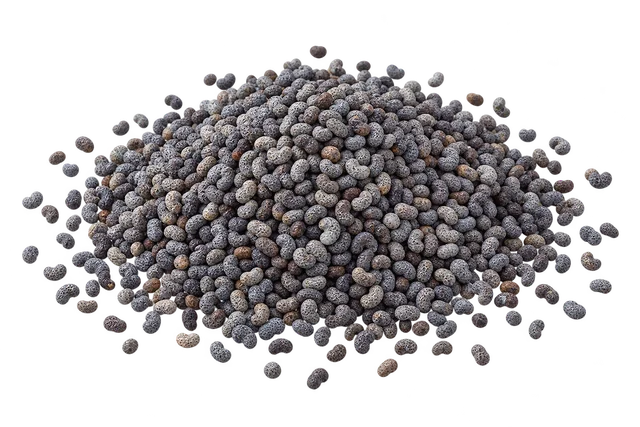
Culinary poppy seeds are mature seeds of food-crop Papaver somniferum supplied and processed for eating. This card excludes pods, latex, unwashed bulk material and opium preparations.
Ingredient details, preparation and research
Also known as: Blue poppy seeds; Culinary poppy seed
Source plant or material
Papaver somniferum L.
Plant family / material: Papaveraceae
Forms and route
Cleaned food-grade whole or ground seeds in bakery products and fillings. Poppy-seed oil is a different form; seed washing or soaking liquids are not beverages.
Vitamins and minerals
Seeds contribute fat, protein and fibre to a recipe. A light topping and a dense sweet filling differ greatly in both seed quantity and added sugar.
Absorption and preparation
Grinding changes texture and releases oil for a filling. No special medicinal absorption or detoxification procedure is established.
Practical preparation
Choose a reputable food supplier and use a normal culinary recipe for a topping or filling. Keep ground seeds protected from heat and air because their oil can become rancid.
Combination notes
Treat as a normal bakery ingredient, checking the complete recipe for allergens and added sugar.
Traditional and reported uses
- Bakery fillings
- Dumpling and pastry toppings
Contraindications and cautions
- Use only cleaned seeds sold as food. Do not consume seed soaking liquids or products promoted for opioid effects.
- EFSA identifies morphine and codeine contamination as a food-safety concern. A familiar culinary tradition does not justify unlimited amounts or use of unprocessed seeds.
- Seed allergy is possible; follow recalls and supplier instructions.
Similar items and how they compare
- Hemp hearts
Both are culinary seed ingredients.
Different species, food composition and contamination concerns apply.
A named regional food crop
The Český modrý mák record confirms a protected Czech food tradition. Regional identity is not a substitute for contamination control or a claim that all seed lots are identical.
Contamination is the important safety boundary
EFSA’s updated assessment considers both morphine and codeine. Its findings support careful food-grade sourcing, not home experimentation with unwashed seeds or extraction liquids.
Evidence limits
Culinary use only. No opioid extraction, medicinal seed beverage, pharmacological dose or home decontamination guarantee is included.
Entry sources
- VisitCzechia: Sweet delicacies of Czech cuisine, poppy-seed fillings and toppings
- EUR-Lex: Český modrý mák geographical indication
- EFSA: Opium alkaloids in poppy seeds, assessment update
Reference entry 374 · Recorded content review: 2026-10-09 · Review scope and dates